
Chipping sparrow
Spizella passerina
Description
How to identify
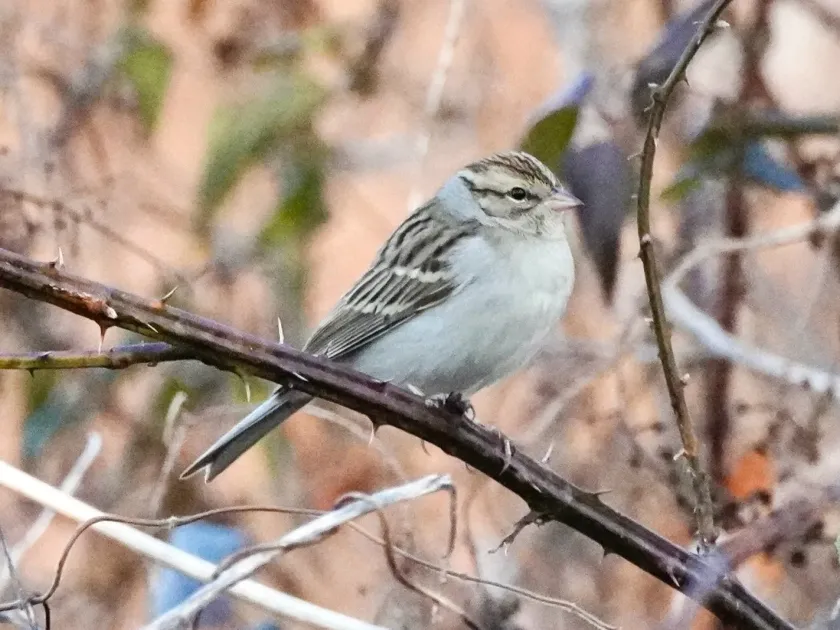
The Chipping Sparrow (Spizella passerina) is a small songbird belonging to the Passerellidae family within the order Passeriformes. Adults are easily identified by their bright chestnut crown, black eye-line, and grey bill.
Resembling a common house sparrow, this bird is distinguished by its more slender frame and contrasting head plumage. The typical body length ranges from 12 to 15 centimeters.
The back plumage is patterned with brown and black streaks, providing excellent camouflage against vegetation. Their underparts are a clean, grayish-white color.
While their primary diet during the breeding season consists of insects, they shift towards a plant-based diet, leading them to frequent agricultural fields in search of seeds.
These birds are either resident or migratory depending on the geographical region, preferring edges of woodlands and open areas that provide easy access to cereal grains.
What it damages
Chipping Sparrows primarily damage cereal crops, including wheat, barley, and oats. They are known to feed on grains during the milk and soft dough stages of development.
Significant damage is also reported in sunflower and sorghum fields, where flocks can consume a large portion of the seeds, particularly along field perimeters.
In addition to direct seed consumption, large flocks can cause physical damage to stems and stalks, potentially leading to lodging and harvest difficulties.
Contamination of harvested products with bird droppings poses sanitary risks, as moisture promotes the growth of mold and pathogenic fungi during storage.
In orchards and berry farms, Chipping Sparrows may feed on early fruits and flower buds, causing economic losses for small-scale growers and commercial farms alike.
When it appears
Bird activity in agricultural fields increases significantly during the crop maturation phase, which typically occurs from mid-summer through early autumn.
Migration triggers birds to form larger flocks, increasing their need for food resources and making crop protection crucial during these vulnerable months.
In the spring, damage can occur to newly planted cereal seedlings, as birds may dig up and consume germinating seeds from the top layer of the soil.
During the winter, the pest pressure often decreases as birds transition to feeding on weed seeds, although they may still visit grain storage facilities.
The birds' lifecycle is closely tied to plant phenology, meaning that the peak of crop raiding coincides precisely with the period when plants are most nutritious.
Signs of infestation
A typical indicator of their presence is the sight of small flocks with distinct chestnut crowns in fields, particularly during the early morning or late afternoon.
Ears of grain often show signs of partial feeding, including jagged edges on the glumes and missing seeds in the upper or middle sections of the grain head.
The presence of hulls, bird droppings, and broken stalks on the ground beneath the crop canopy strongly suggests that a flock has been feeding in the area.
The distinct noise of a flock and the rapid, synchronized flight pattern upon the approach of equipment or humans serve as a clear sign of pest activity.
Field edge inspections often reveal sparse patches where plants are trampled or stripped of grain due to the flock's persistent presence.
Control measures
Visual deterrents, such as reflective tape, scarecrows, or moving effigies resembling raptors, can be effective in discouraging birds from settling in fields.
The use of acoustic systems that broadcast distress calls or predator sounds is a proven method for repelling flocks from larger agricultural areas.
Installing protective netting on high-value plots or in plant breeding nurseries is the most reliable way to prevent harvest losses completely.
Regular maintenance of field boundaries, including the removal of dense brush and hedges, reduces the attractiveness of the area for nesting and cover.
- Harvesting crops as early as possible to reduce exposure time.
- Applying non-toxic, repellent seed coatings during planting to deter birds.
- Implementing crop rotation to manage the overall food availability for avian pests.
Taxonomy
- Latin name
- Spizella passerina
- Family
- Emberizidae
- EPPO code
- SPIZPA
Discussion
No discussions yet — be the first.