
Spizella sparrows
Spizella
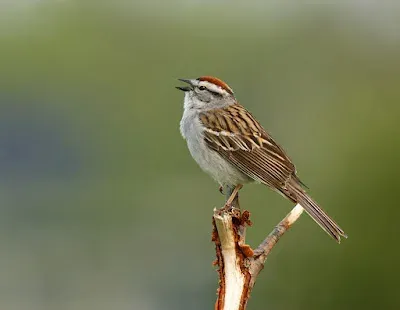
Description
How to identify
The genus Spizella includes small, inconspicuous songbirds of the Passerellidae family. In agricultural settings, these birds are recognized as potential pests due to their habit of foraging in flocks on cultivated crops.
These sparrows possess small, conical bills specialized for eating seeds, which makes them particularly attracted to various cereal crops and grass seeds.
A prominent member of this group is the Chipping Sparrow (Spizella passerina), which is frequently observed in open fields near shrublands or woodland edges.
They are characterized by high mobility and social behavior, often gathering in large groups to feed, which increases the impact of their feeding activities on farms.
Being diurnal creatures, they are most active during daylight hours, shuttling between foraging grounds and nearby resting cover.
What it damages
The primary damage caused by these sparrows involves consuming the seeds of wheat, barley, oats, and millet during the soft dough and maturation stages.
In addition to direct seed loss, the birds can cause mechanical damage by trampling crops, leading to stem breakage and facilitating fungal infections.
Orchards are also vulnerable, as these birds may feed on budding flowers and young shoots in early spring, thereby reducing the plant's future production potential.
Feeding damage is often most concentrated on the edges of fields bordering dense vegetation, where the birds find safe harbor from predators.
Furthermore, their presence contributes to the dispersal of weed seeds, which can lead to increased weed competition in the field during subsequent growing seasons.
When it appears
The period of greatest economic threat occurs when cereal grains reach the milk to dough stages, providing a high-energy food source for the birds.
In early spring, when other natural food sources are scarce, sparrows may target freshly sprouted fields or budding trees, leading to early-season crop thinning.
Autumn migratory movements often result in large, transient flocks settling on harvested or unharvested fields, causing damage to residual crops.
Winter activity is usually lower; however, the birds may congregate around livestock feedlots, storage bins, and exposed grain supplies.
Effective scouting should begin well before the grain starts to ripen to ensure that deterrent strategies are in place when the crop is most vulnerable.
Signs of infestation
The most reliable sign of feeding damage is the presence of empty husks or partially eaten grains in the ears of cereal crops.
Small droppings and scattered husks left beneath crop stems are clear indications of a resting or feeding flock's location within the field.
Visible patches of trampled or flattened crops often highlight where the birds have spent significant time feeding or loitering.
Frequent, short-range flights and nervous vocalizations when equipment or workers enter the field are strong indicators of bird presence.
A gradient of decreasing seed count moving from the field edge toward the center is a common pattern associated with bird-related crop loss.
Control measures
Bioacoustic devices that broadcast predator calls or distress signals are highly effective at discouraging sparrows from settling in fields.
Visual deterrents, such as shiny reflective tapes, eye-spot balloons, and predator decoys, work best when relocated periodically to maintain the birds' alertness.
- Utilizing bioacoustic deterrents during peak maturation stages.
- Rotating the placement of visual deterrents to prevent habituation.
- Employing netting for small, high-value experimental or garden plots.
- Expediting the harvesting process to limit the duration of exposure.
Implementing an integrated management strategy is essential, as individual deterrent methods may lose effectiveness over time if the birds acclimate to them.
Taxonomy
- Latin name
- Spizella
- Family
- Emberizidae
- EPPO code
- SPIZSP
Discussion
No discussions yet — be the first.