
Red-spotted seed bug
Spilostethus saxatilis
Description
How to identify
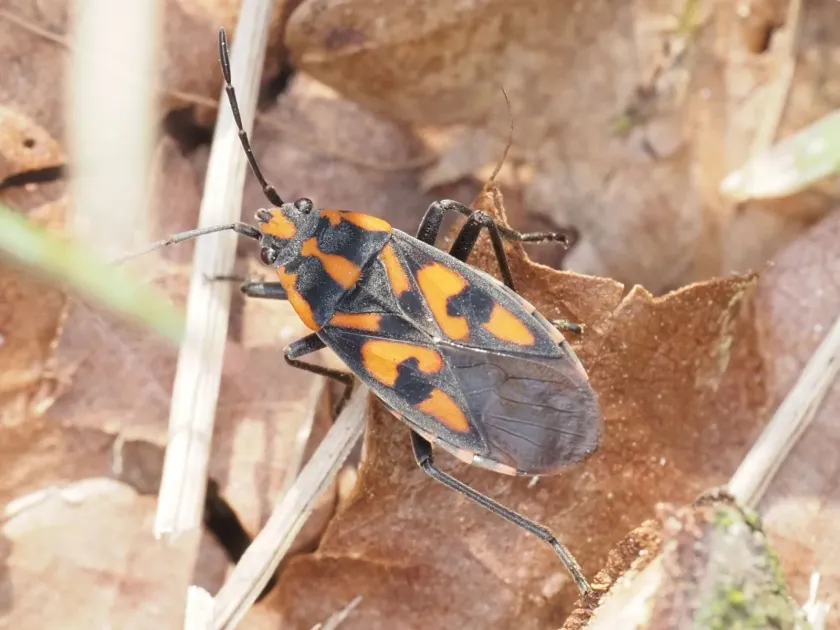
The Red-spotted seed bug (Spilostethus saxatilis) is a distinctive member of the Lygaeidae family. Its vibrant red coloration, marked with bold black patterns on the hemelytra (forewings), serves as aposematic signaling to warn predators of its chemical defenses.
Adults typically measure between 10 to 12 millimeters in length. The head and pronotum are predominantly black, which complements the striking contrast of the red abdomen and scutellum, making them easily recognizable in the field.
The life cycle involves incomplete metamorphosis. The insects pass through five nymphal stages before reaching adulthood. The nymphs are smaller and lack fully developed wings but maintain the same characteristic warning color pattern as the adults.
These bugs are primarily diurnal, preferring sunny and open environments where they can thermoregulate efficiently. They are highly mobile and tend to congregate in large numbers on host plants during warm weather.
Overwintering occurs in the adult stage. During the colder months, they seek shelter in leaf litter, under bark, or within dense grass clumps, demonstrating remarkable resilience against fluctuating environmental conditions.
What it damages
Spilostethus saxatilis is a polyphagous pest, known to feed on a wide variety of plants, with a clear preference for the Apiaceae (umbelliferous) family, including carrots, dill, and parsley.
By using their piercing-sucking mouthparts, these bugs extract sap from young stems and developing seeds. This feeding behavior drains the plant of vital nutrients, leading to stunted growth and reduced vigor.
The damage to seeds is particularly problematic for seed-producing operations, as the bugs can significantly impair seed quality and germination rates through their feeding activities.
Weeds often act as primary reservoirs for these insects. Before agricultural crops are well-established, the bugs multiply on wild plants and subsequently migrate to cultivated fields, causing severe localized damage.
In addition to direct feeding damage, the stress caused by large colonies of these bugs can lead to premature flower drop and the deformation of umbels, impacting the final harvest yield.
Signs of infestation
The most obvious sign of infestation is the direct observation of the brightly colored adults and nymphs congregating on the stems and flower umbels of host plants during the day.
Visual evidence of feeding includes tiny, whitish necrotic spots on the plant tissue, resulting from the bug's saliva injected during the sucking process, which can cause local tissue decay.
In cases of severe infestation, growers may notice wilting of plant tops, visible yellowing of leaves, and a general decline in the plant's health, often accompanied by seed shriveling.
The presence of insect excrement (frass) on the plant surfaces is another clear indicator that a colony has established itself and is actively feeding on the crop.
Due to their defensive secretions, a lingering, slightly pungent odor may be detected near the infested plants, which is a common characteristic of many species within the Lygaeidae family.
Control measures
Effective management begins with robust cultural practices, specifically the removal and destruction of weeds and wild Apiaceae species that serve as early-season host plants.
Deep autumn plowing or soil cultivation is a highly recommended practice to disturb overwintering sites, which helps to significantly decrease the population density of the next season.
When the economic threshold of damage is reached, systemic or contact-action insecticides can be employed, ensuring strict adherence to pre-harvest intervals and safety protocols for crop application.
Crop rotation serves as a preventive measure; by rotating non-host crops, farmers can disrupt the life cycle of the Red-spotted seed bug, making the field less attractive to the pests.
In small-scale or organic gardens, manual collection of the bugs early in the morning when their activity is lower can effectively reduce the population without the need for synthetic chemical treatments.
Taxonomy
- Latin name
- Spilostethus saxatilis
- Order
- Hemiptera (bugs, aphids, leafhoppers)
- Family
- Lygaeidae
- EPPO code
- SPITSA
Discussion
No discussions yet — be the first.