
Slender seed bug
Spilostethus macilentus
Description
How to identify
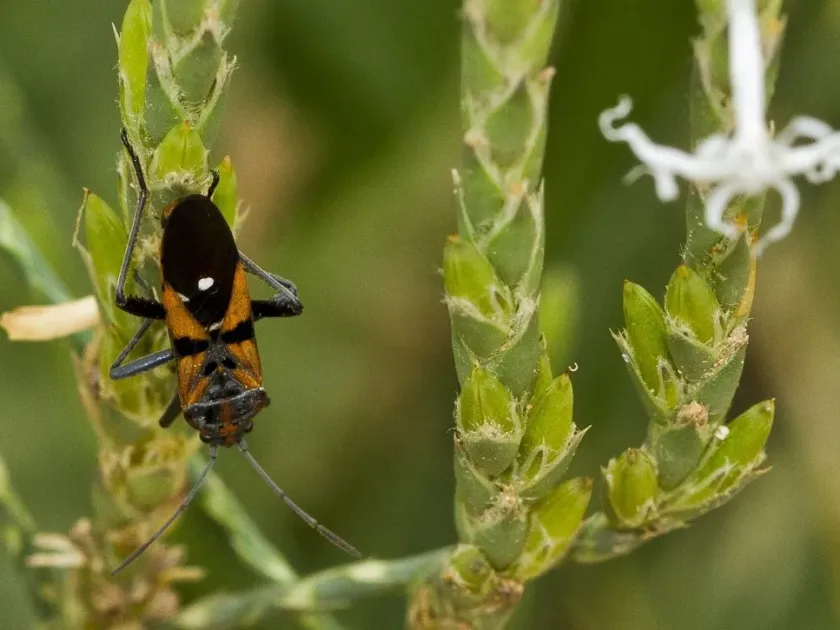
The slender seed bug (Spilostethus macilentus) belongs to the Lygaeidae family in the order Hemiptera. These insects are known for their distinct elongated body shape and striking warning coloration.
Adults typically display a bold pattern of black and orange-red markings, which serves as an aposematic signal to predators. They usually measure between 8 and 12 millimeters in length.
A key diagnostic feature of this species is the structure of the pronotum and the specific venation on the hemelytra. Their antennae consist of four segments, with the final segment often showing a slight thickening.
They possess a piercing-sucking mouthpart designed specifically to penetrate plant tissues. This allows them to feed effectively on sap and developing seeds, which are rich in nutrients.
The life cycle involves egg, nymph (five instars), and adult stages. Nymphs closely resemble the adults but lack fully developed wings and often exhibit slightly different coloration patterns before reaching maturity.
What it damages
Spilostethus macilentus is a generalist feeder capable of attacking a wide variety of plant species, including both wild weeds and essential agricultural crops.
The most significant damage occurs when these bugs feed on the seeds of oilseed and legume crops. By piercing the seed coat, they drain nutrients, leading to shriveled grains and reduced germination capacity.
In sunflower fields, they are known to attack the developing heads, causing substantial yield losses and impacting the quality of the seeds by reducing their oil content.
Mechanical damage caused by their feeding activities often introduces pathogenic fungi and bacteria into the plant tissue, leading to secondary infections that worsen the overall health of the crop.
High population densities can cause localized areas of wilting and necrosis, especially when the bugs aggregate on a single plant to feed during the critical seed-filling stages.
When it appears
Adult bugs overwinter in protected environments such as leaf litter, under tree bark, or in dried vegetation along the edges of agricultural fields, emerging as temperatures rise in the spring.
In the early season, they primarily feed on weed hosts to gain energy. As crops develop their generative organs, the bugs migrate to these more nutrient-rich food sources.
Peak activity generally occurs in mid-summer, coinciding with the flowering and seed-setting phases of most host crops. During this time, they mate and lay eggs, leading to a surge in local population numbers.
The length of their life cycle depends heavily on temperature; warmer years often lead to faster development and potentially higher rates of reproduction throughout the season.
As autumn approaches, activity levels taper off, and the bugs begin seeking suitable overwintering sites, often moving away from the harvested crop areas back towards field margins.
Signs of infestation
The most obvious sign of infestation is the presence of the bugs themselves, which are often found congregating on the heads of sunflowers or other seeding plants during warm, sunny days.
Visual inspection of the seeds often reveals tiny dark puncture marks where the bug's proboscis has entered the seed coat, sometimes surrounded by discolored tissue.
Accumulation of waste products (frass) on the surface of the plant parts, such as seed heads or leaves, is another clear indicator of a high-density infestation.
Plants may show premature yellowing or wilting, which is a symptom of excessive sap extraction and the general stress placed on the plant by a large number of feeding insects.
Malformed or undersized seeds within the seed head often point to previous feeding damage that occurred during the early stages of seed development.
Control measures
Effective management begins with robust cultural practices, specifically the removal of weed hosts along field margins to eliminate the bugs' early-season refuges.
Implementing a diverse crop rotation helps to disrupt the life cycle of the pest, making it more difficult for established populations to survive from one year to the next.
When the economic threshold is exceeded, application of systemic insecticides targeting Hemiptera can be effective, provided they are applied during the most vulnerable life stages.
Edge treatments, where only the perimeter of the field is sprayed as the bugs migrate from their overwintering sites, can provide significant control while minimizing the use of chemicals.
Encouraging natural biological control agents, such as predatory beetles and parasitic wasps, can help keep population levels in check, forming an essential component of an Integrated Pest Management strategy.
Taxonomy
- Latin name
- Spilostethus macilentus
- Order
- Hemiptera (bugs, aphids, leafhoppers)
- Family
- Lygaeidae
- EPPO code
- SPITMA
Discussion
No discussions yet — be the first.