
Spilostethus furcula
Spilostethus furcula
Description
How to identify
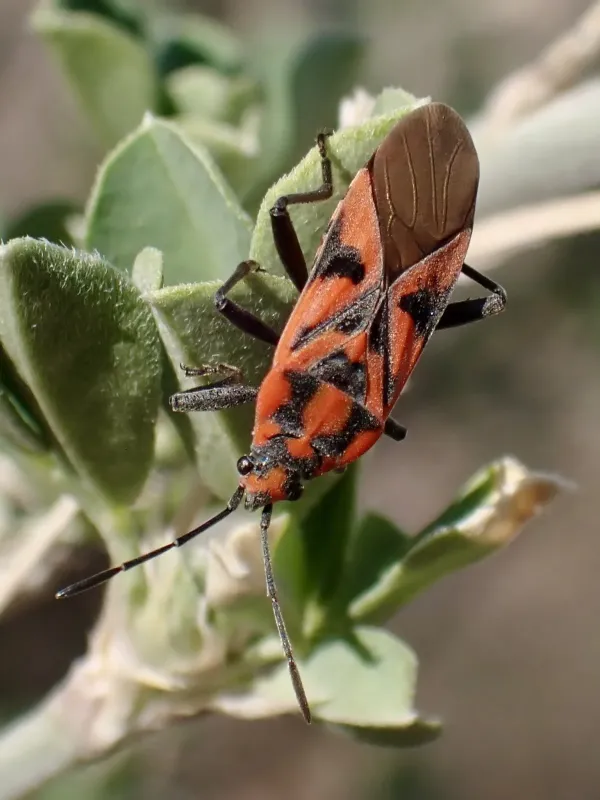
Spilostethus furcula is a species of true bug belonging to the Lygaeidae family. It is known for its distinct, bright, and contrasting black and red or orange coloration.
The adult insect has an elongated, oval-shaped body measuring approximately 8 to 10 mm in length, which is characteristic of the genus Spilostethus.
Its head is triangular, equipped with well-developed compound eyes and sensitive antennae, allowing it to efficiently navigate in search of food sources and mates.
Like other bugs in this order, it possesses a piercing-sucking mouthpart, which it uses to tap into plant tissues and extract nutrients from seeds or stems.
Nymphs share a similar body structure with adults but are usually smaller in size and exhibit slightly different color patterns as they progress through development stages.
##damage##This bug is a polyphagous pest, meaning it feeds on a variety of plants, often targeting crops in the field when it reaches the seed-filling stage.
The primary damage is caused by the extraction of sap from developing seeds, which leads to shriveled grains and a significant reduction in overall yield quantity.
In addition to sap extraction, the insect's feeding punctures can serve as entry points for secondary fungal infections, further degrading the quality of the harvest.
Young sprouts and stems may also be affected, resulting in stunted growth or physical deformation of the plant due to the loss of vital nutrients.
Under heavy infestation, the cumulative impact on crop health can lead to premature senescence and substantial economic losses for commercial farms.
When it appears
The life cycle of the pest is heavily dependent on seasonal weather patterns, with adults entering a state of dormancy during the colder winter months.
Overwintering typically takes place in protected areas such as dense plant debris, leaf litter, or the upper layers of soil where the insect can escape harsh conditions.
Activity resumes in the spring as temperatures rise, leading to the emergence of adults that begin feeding on wild plants before migrating to crop fields.
Throughout the summer, the insect completes its growth cycles, often leading to multiple generations if the climate remains favorable and food is abundant.
The peak presence in agricultural environments is usually observed during the late summer, coinciding with the grain filling and maturation phase of many crops.
Signs of infestation
A key indicator of an infestation is the visual observation of adults on flowers, seeds, or stems, especially during the warmer hours of the day when they are active.
The presence of exuviae (cast-off skins) on the surfaces of host plants provides evidence that the insect is successfully developing and molting in the immediate area.
Dark, discolored spots on the seeds or seed pods are direct signs of the bug's piercing mouthparts having extracted plant juices from those areas.
Large clusters of nymphs feeding on the same part of a plant indicate a localized outbreak that may spread rapidly across the field if left unmanaged.
Uneven ripening or the premature wilting of specific plant sections without an obvious disease cause often suggests the presence of sucking pests like this bug.
Control measures
The most effective long-term management strategy involves maintaining a clean field environment by removing weeds that act as early-season host reservoirs.
Crop rotation and maintaining spatial distance between fields can disrupt the life cycle of the pest and hinder the quick spread of populations.
When the population threshold for economic damage is reached, farmers should consider the application of targeted insecticides following local safety protocols.
Using monitoring tools like yellow sticky traps can help detect the arrival of the pest early, allowing for timely intervention before the damage becomes widespread.
Encouraging the presence of natural predators and parasitoids in and around the field margins provides a sustainable method for biological pest control.
Taxonomy
- Latin name
- Spilostethus furcula
- Order
- Hemiptera (bugs, aphids, leafhoppers)
- Family
- Lygaeidae
- EPPO code
- SPITFU
Discussion
No discussions yet — be the first.