
Spilostethus
Spilostethus
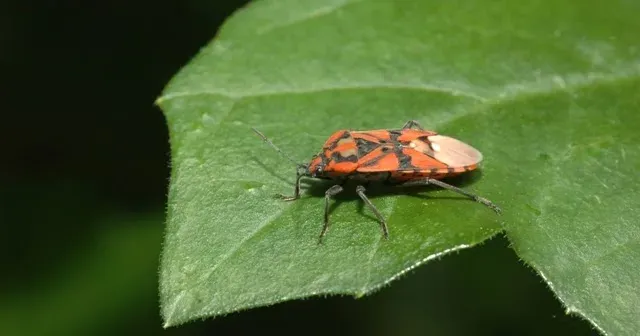
Description
How to identify
The Spilostethus genus belongs to the Lygaeidae family, commonly known as seed bugs. These insects are easily recognized by their striking red and black warning coloration.
Adults typically measure between 10 and 15 millimeters in length. Their bodies feature distinct, intricate patterns on the pronotum and hemelytra that serve as a defense mechanism against predators.
These bugs are predominantly diurnal, making them highly visible on foliage during sunny conditions when they are most active in searching for food.
The life cycle encompasses eggs, five larval instars, and adults. They overwinter in the adult stage within leaf litter, beneath tree bark, or in dry vegetation.
Reproduction starts in spring as temperatures rise, with females laying eggs in clusters either on host plants or within the upper layer of the soil.
What it damages
Spilostethus species are polyphagous pests, meaning they feed on a wide variety of plants. They primarily target seeds and developing plant tissues.
Key crops at risk include cereals, sunflower, and various Apiaceae family members such as carrots, fennel, and coriander, which are essential for commercial agriculture.
The bugs use their piercing-sucking mouthparts to penetrate plant tissues, injecting salivary enzymes that cause necrosis and stunt the growth of the plant.
Heavy infestations can significantly reduce crop yields, as the bugs frequently damage the embryos of developing seeds, rendering them non-viable.
Furthermore, feeding sites often become entry points for secondary pathogens like fungi and bacteria, leading to further decay of the host plant.
When it appears
Adult activity begins in late spring when ambient temperatures become consistently warm, facilitating metabolic processes.
The peak population density typically occurs during the summer months when seeds and fruits of the host plants are ripening.
A second generation often emerges by mid-August, coinciding with the maturation phase of various agricultural crops.
As autumn approaches and temperatures drop, adults begin their migration to overwintering sites, where they enter a state of diapause.
Environmental conditions during winter are critical; mild winters often lead to higher survival rates and more severe infestations in the following season.
Signs of infestation
The most obvious sign is the presence of clusters of red-and-black bugs on flowers, stems, or seed heads of the plants.
Visible punctures on leaves or stems appear as tiny light spots that eventually expand into larger chlorotic or necrotic patches.
In infested flower heads, seeds may appear shriveled, deformed, or show signs of premature shedding before the actual harvest time.
Frass or excrement observed on the surface of leaves and stems often serves as an indicator of a concentrated colony of bugs.
Stunted plant growth and premature wilting in specific sections of the field are classic indicators of significant sap-sucking pressure.
Control measures
Integrated pest management (IPM) is essential. Sanitation, including the removal of field margins and weed hosts, helps reduce overwintering sites.
Crop rotation should be implemented to disrupt the life cycle of the bugs by removing preferred host plants from the same field year after year.
When the economic threshold of damage is reached, systemic or contact insecticides are applied to minimize further yield losses.
- Cleaning fields of debris to remove hiding places.
- Using visual traps to monitor the migration of populations.
- Applying targeted chemical treatments during the early larval development stage.
Continuous monitoring of flowering crops during the critical growth phase is necessary to determine the optimal timing for protective measures.
Taxonomy
- Latin name
- Spilostethus
- Order
- Hemiptera (bugs, aphids, leafhoppers)
- Family
- Lygaeidae
- EPPO code
- SPITSP
Discussion
No discussions yet — be the first.