
Sphenarium purpurascens
Sphenarium purpurascens
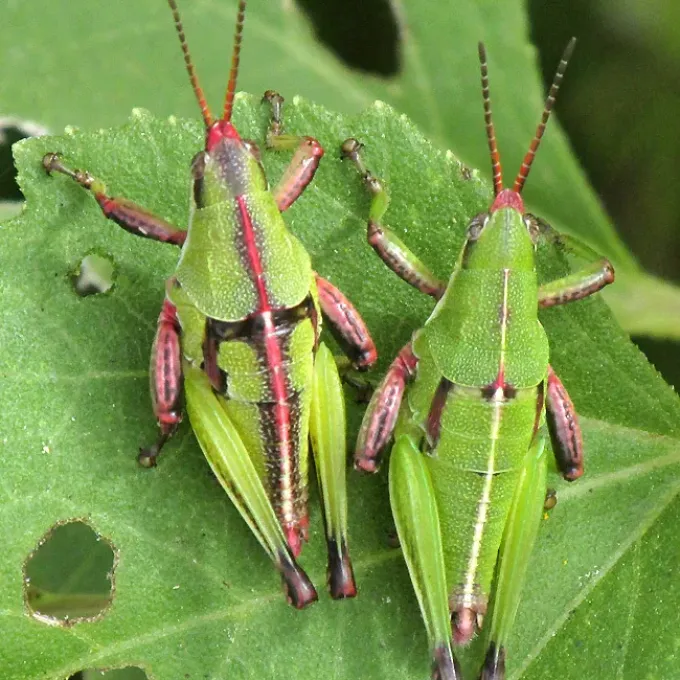
Description
How to identify
Sphenarium purpurascens is a species of grasshopper belonging to the family Pyrgomorphidae, within the order Orthoptera.
They are characterized by a robust body and a conical head shape, which is a common diagnostic feature for the members of this family.
The coloration of adults ranges from dull green to dark purplish-brown, providing excellent camouflage against the foliage of their host plants.
The hind legs are well-developed and muscular, allowing these insects to perform powerful jumps when disturbed or threatened by potential predators.
Nymphs exhibit similar structural characteristics to adults but lack fully developed wings, which gradually grow and mature through successive molting stages.
What it damages
This species is considered a significant agricultural pest, particularly known for its impact on staple food crops in the central highlands of Mexico.
Corn (maize) is one of the primary hosts, where the grasshoppers consume leaves, causing severe defoliation and reducing the plant's photosynthetic capacity.
Common bean crops also suffer extensive damage, with larvae and adults feeding on leaves and soft stems, which can lead to significant yield losses.
Beyond cultivated fields, the species feeds on various wild grasses and weeds, creating persistent populations in the areas surrounding agricultural lands.
Under conditions of high infestation density, the insects are capable of stripping entire fields of their green tissues, leaving only the structural veins of the plants.
When it appears
The life cycle of Sphenarium purpurascens is closely synchronized with the rainy season, which dictates the timing of their emergence and peak feeding activity.
The species survives the dry season primarily as eggs, which are deposited by females in the soil at the end of the reproductive period in late autumn.
Nymph emergence occurs in the spring, triggered by increased soil moisture and rising temperatures that align with the early growth stages of crops.
The developmental process consists of several nymphal instars, during which the insects are highly active and gregarious in their feeding habits.
Adults reach maturity during mid-summer, the time when they begin to mate and prepare for the next generation, often leading to large-scale swarming behavior.
Signs of infestation
The most evident sign of infestation is irregular, ragged feeding patterns on the margins of leaves, often leaving the midribs intact.
Presence of frass (fecal pellets) on the soil surface beneath the plants is a clear indicator of a concentrated feeding population of grasshoppers.
Visible damage to young sprouts and seedlings can result in significant gaps in plant density within the field, often mistaken for other agricultural issues.
Clustered groups of nymphs or adults can frequently be observed on the stems or leaves of host plants during the early morning or late afternoon.
Increased bird or predator activity near fields can sometimes serve as a biological indicator of high grasshopper concentrations in a specific area.
Control measures
Deep tillage or mechanical soil cultivation after the harvest is a critical method for destroying egg pods buried in the soil, preventing the next year's population.
Timely application of chemical insecticides is recommended when nymphs are young and highly susceptible to contact-based treatments to prevent adult maturation.
Regular scouting and monitoring programs are essential to determine the economic threshold and ensure that control efforts are applied at the most vulnerable stage.
Maintaining clean field borders by clearing away weeds and tall grasses reduces the overwintering and sheltering sites available to the pests.
Biological control, including the use of specific entomopathogenic fungi, is an area of ongoing research for sustainable management of grasshopper infestations.
Taxonomy
- Latin name
- Sphenarium purpurascens
- Order
- Orthoptera (locusts)
- Family
- Pyrgomorphidae
- EPPO code
- SPHMPU
Discussion
No discussions yet — be the first.