
Mexican grasshopper
Sphenarium mexicanum
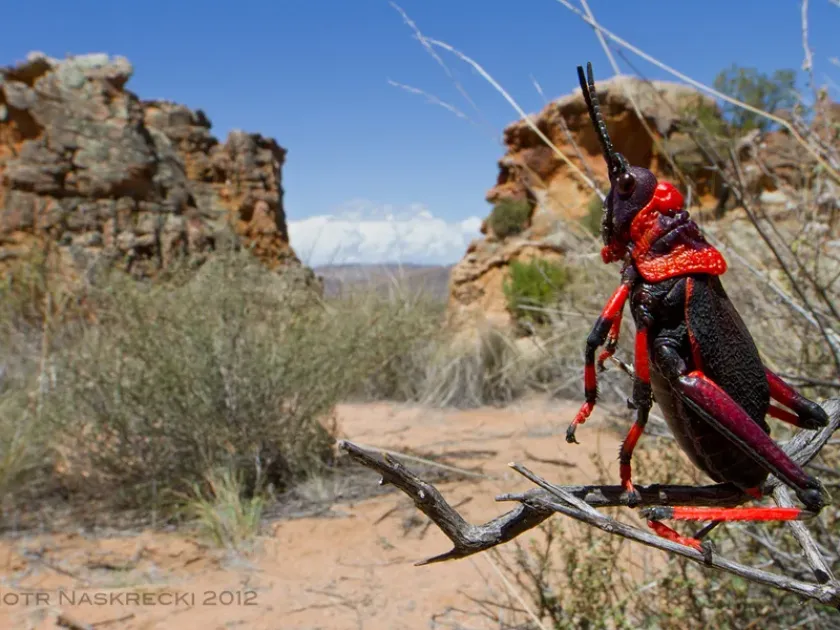
Description
How to identify
The Mexican grasshopper (Sphenarium mexicanum) is a member of the Pyrgomorphidae family within the order Orthoptera. It is a well-known pest in Mexican agriculture, recognized for its specialized feeding habits.
Adult insects have a robust body structure, which is ideal for jumping and traveling long distances between fields to find suitable food sources during the growing season.
The coloration of this species provides excellent camouflage, blending seamlessly with the green and brown tones of the vegetation it infests, making early detection difficult.
Their life cycle includes egg, nymph, and adult stages. Females lay eggs in the soil, which helps protect the offspring from extreme weather conditions and predators during the colder months.
Growth and development depend heavily on local climate, with populations typically peaking during the warmer and wetter months when host plants are most abundant.
What it damages
This pest primarily attacks maize crops, causing significant agricultural concern. It also feeds on various legumes and several species of wild grasses surrounding farmlands.
Grasshoppers exhibit voracious feeding behavior, capable of defoliating entire crop fields if the infestation density is high enough to warrant a major outbreak.
Damage often starts at the leaf margins and progresses until the entire leaf blade is consumed, leaving only the tough central midribs of the corn stalks.
Economic damage includes a significant reduction in biomass and grain yield, as the plants struggle to recover from severe mechanical damage and reduced photosynthesis capacity.
In addition to direct consumption, the wounds caused by grasshoppers make the plants more susceptible to bacterial and fungal infections that further reduce the crop quality.
Signs of infestation
Early symptoms of an infestation include the appearance of ragged, irregular holes in the corn leaves, which are caused by the initial feeding of younger nymphs.
A high volume of droppings (frass) visible on the ground beneath the plants is a clear indicator that a large population is currently feeding on the crop canopy.
Increased physical activity within the field, characterized by swarms moving between rows, is a primary visual sign of a maturing infestation during the late morning.
Visible scarring on the stems and husks of the corn plants suggests that the population has transitioned to a more destructive phase of feeding as the plant matures.
The presence of egg-laying activities in open soil areas during late summer is a sign that the next generation is already being established for the following season.
Control measures
Chemical control using systemic and contact insecticides is the most common method used by farmers to suppress grasshopper outbreaks during the nymphal stages.
Cultural practices, such as tillage after the harvest, are highly effective in exposing the egg pods to environmental extremes and natural predators, reducing the population baseline.
Integrated Pest Management (IPM) strategies, which combine the use of selective pesticides with biological agents, provide a more sustainable approach to long-term control.
Regular field scouting, particularly around the edges and borders, allows for the early detection of localized clusters, preventing the spread into the core crop areas.
- Scouting fields for early-instar nymphs.
- Maintaining clean fields free of alternative host weeds.
- Applying biological controls like entomopathogenic fungi.
Taxonomy
- Latin name
- Sphenarium mexicanum
- Order
- Orthoptera (locusts)
- Family
- Pyrgomorphidae
- EPPO code
- SPHMME
Discussion
No discussions yet — be the first.