
Sphenarium
Sphenarium
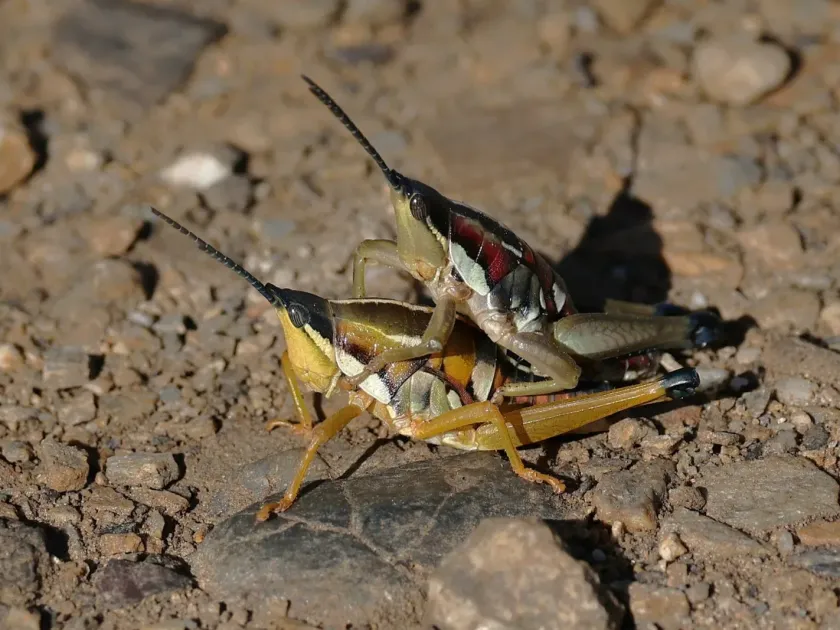
Description
How to identify
Sphenarium is a genus of insects belonging to the order Orthoptera and the family Pyrgomorphidae, also known as the rhombic lubber grasshoppers. These insects are typically medium-sized and possess protective or sometimes bright coloration to blend into their environment.
Adults exhibit a compact body structure with a characteristic conical-shaped head, which is typical for the Pyrgomorphidae family. Their life cycle consists of incomplete metamorphosis, progressing through egg, nymph, and adult stages.
Equipped with robust mandibles, Sphenarium insects are highly adapted for consuming dense plant tissues. Their legs are well-developed, enabling them to move effectively across stems and perform quick jumps when threatened.
These pests are prevalent in tropical and subtropical regions where environmental conditions support high population densities. Understanding their morphology is essential for field agronomists to identify the threat promptly.
Accurate identification requires examining the pronotal structure and wing development, which can vary significantly depending on the specific species within the genus.
What it damages
Sphenarium poses a serious threat to a wide range of agricultural crops, including cereals, legumes, and various vegetable plants. Significant economic losses often occur when population levels peak.
They feed on all aerial parts of the plant, including young leaves, flower buds, and stems. Such damage can severely hinder the vegetative development of the crops and result in reduced yields.
Late-stage nymphs and adults are the most destructive, often causing rapid defoliation across large field areas. This activity limits the photosynthetic capacity of the plants, causing them to weaken significantly.
Feeding damage also creates entry points for secondary pathogens, such as fungi and bacteria, leading to further decay and crop loss. This complexity makes managing the pest particularly challenging.
In most regions where Sphenarium is active, infestations tend to be localized initially but can quickly spread to neighboring fields if environmental conditions remain favorable for the pest.
When it appears
The life cycle of Sphenarium is heavily influenced by climatic factors, particularly soil moisture and temperature. Population explosions are frequently observed following the onset of the rainy season.
Females lay eggs in the soil, where they remain in a state of diapause until favorable conditions emerge. Overwintering occurs exclusively in the egg stage, which provides a high survival rate for the species.
Hatching typically coincides with the beginning of the active growing season for local crops, ensuring that nymphs have an immediate and abundant food source upon emergence.
Adults remain active throughout the warmest months of the year. Depending on the geographical location and local climate, the species may undergo one or two generations per season.
Peak activity generally occurs during the morning and evening hours, as these cooler intervals allow the insects to feed and navigate their habitat with optimal physiological efficiency.
Signs of infestation
The most immediate indicator of a Sphenarium infestation is the presence of irregular, notched edges on leaf margins. Their chewing mouthparts leave distinct marks that are characteristic of this orthopteran group.
Field observers may notice insect frass (excrement) concentrated around the base of damaged plants. Nymphs of various sizes are often visible on the lower and middle foliage of the affected crop.
Severe infestations lead to the stripping of leaf blades, leaving only the primary veins intact. This level of damage quickly causes the plant to wilt and, in extreme cases, perish.
Adult populations can often be detected by their sudden leaping behavior when disturbed by mechanical equipment or human presence. Sometimes, a subtle stridulation (chirping) sound may be audible.
Massive colonization of a field changes its overall appearance, resulting in a sparse and "eaten" look that signifies a significant decline in potential harvest quantity and quality.
Control measures
Managing Sphenarium requires an integrated approach, starting with cultural practices like deep plowing, which helps destroy egg pods embedded in the soil.
Chemical control using broad-spectrum insecticides should be implemented during the early stages of nymph hatching to prevent widespread damage. Timely intervention is crucial for crop preservation.
Biological control strategies focus on supporting local predator populations, including birds and parasitic insects, which naturally regulate grasshopper numbers in the environment.
Regular field scouting using sticky traps or visual surveys is essential to detect early signs of activity. Early detection allows for more precise and effective pest management interventions.
Maintaining clean field margins by removing weeds reduces the available habitat for the pests to breed and aggregate before they migrate into the main crop areas.
Taxonomy
- Latin name
- Sphenarium
- Order
- Orthoptera (locusts)
- Family
- Pyrgomorphidae
- EPPO code
- SPHMSP
Discussion
No discussions yet — be the first.