
Lesser shrew
Sorex minutus
Description
How to identify
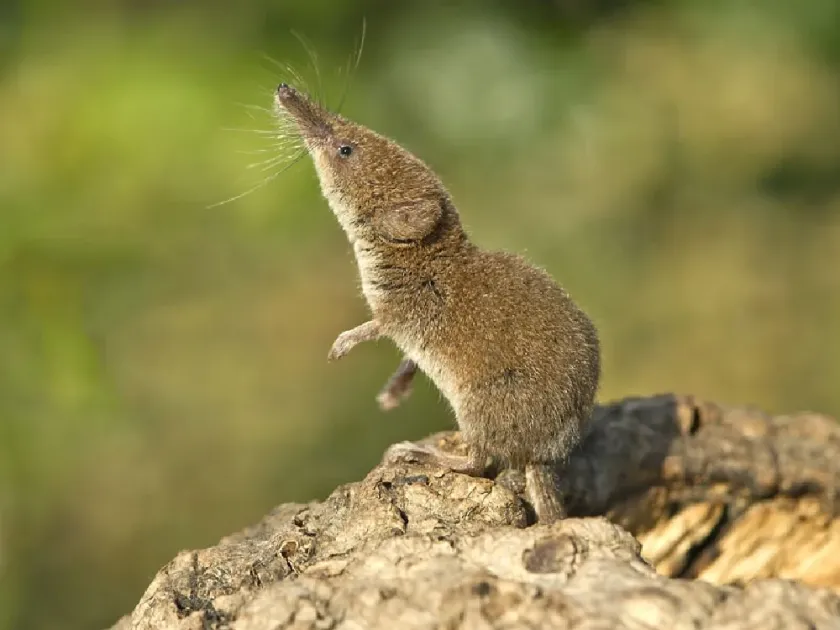
The lesser shrew (Sorex minutus) belongs to the order Eulipotyphla, family Soricidae. It is one of the smallest mammals, featuring a long, mobile snout and dense, brownish-velvety fur.
An adult individual typically reaches a length of 4.5 to 6.5 centimeters, with a tail that is nearly as long as its body. They have an extremely high metabolic rate, requiring them to feed almost constantly.
Unlike rodents, shrews have teeth with reddish or brownish tips, a diagnostic feature of the species. They are primarily solitary and nocturnal, leading a very secretive life.
Their preferred habitats are damp environments with dense vegetation, forest leaf litter, or abandoned garden beds. They rarely dig deep burrows, preferring to utilize existing spaces in the soil or under debris.
Agronomists should distinguish shrews from rodents, as their ecological roles in the field differ significantly, requiring different management approaches.
What it damages
The lesser shrew is not a crop pest in the traditional sense; its diet consists almost entirely of soil insects, larvae, earthworms, and other invertebrates.
Potential damage to crops is indirect and purely accidental. While searching for insects, shrews create narrow, shallow tunnels in the topsoil that can disturb the roots of seedlings.
In high populations, they may compete for food with other beneficial insectivores, such as ground beetles, which are essential for natural pest control in agricultural settings.
Direct consumption of plant material, such as seeds or roots, is extremely rare and usually occurs only when the shrew's natural food source is severely depleted.
Overall, shrews are considered beneficial to agriculture because they help suppress populations of actual crop pests, making their presence generally desirable.
When it appears
The lesser shrew remains active throughout the year. Peak activity occurs during the warmer months, corresponding with the life cycles of their insect prey.
During winter, they do not hibernate but remain active under the snow cover. They may occasionally move into garden structures if insect populations are present there.
The breeding season begins in April and can extend through September. Females can produce multiple litters per season, which allows for rapid population recovery.
Migration into agricultural areas is triggered by soil moisture levels. They favor moist, undisturbed soil where the diversity of invertebrate prey is at its maximum.
Shrew presence on farmland often correlates with periods of high soil humidity and the emergence of insect larvae in the spring.
Signs of infestation
The most visible sign of shrew presence is the appearance of tiny, shallow, thread-like surface tracks in the soil, often seen after irrigation or heavy rainfall.
Unlike mole tunnels, these paths are extremely narrow and collapse easily upon pressure, lacking the large soil mounds typically associated with rodents.
You may find small entrance holes near compost heaps or areas with heavy organic mulch, which provide the necessary humidity for their daily survival.
If you notice clear evidence of gnawing on root vegetables or plant stems, it is almost certainly the work of rodents rather than shrews, as shrews lack the gnawing capability of true mice.
Finding remnants of insect exoskeletons near soil cracks or under foliage is a common sign of shrew foraging activity.
Control measures
As shrews are highly beneficial in controlling garden pests, specialized control measures are rarely necessary and are often not recommended by agricultural experts.
If their presence is considered disruptive, the most effective method is regular soil cultivation. Loosening the soil destroys their tunnels and forces them to relocate.
Ultrasonic repellers, designed for rodents, can also be used, as shrews are sensitive to vibrations and auditory disturbances in their immediate environment.
Poisonous baits for rodents are ineffective and should never be used, as shrews are insectivores and will not consume grain-based products.
The best long-term management strategy is to maintain a tidy garden, removing excessive debris and waste piles that harbor insects, thereby making the habitat less attractive to them.
Taxonomy
- Latin name
- Sorex minutus
- Family
- Soricidae
- EPPO code
- SORXMI
Discussion
No discussions yet — be the first.