
Eurasian water shrew
Neomys fodiens
Description
How to identify
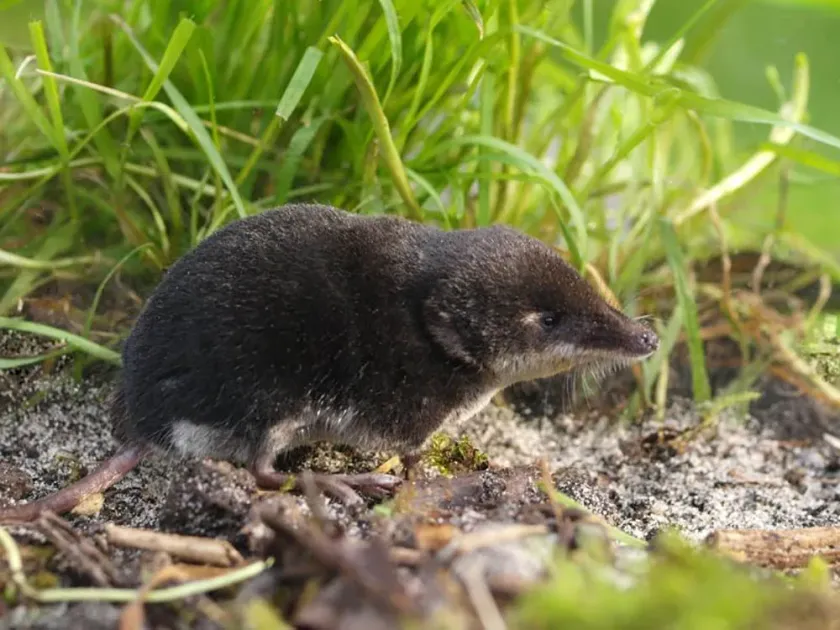
The Eurasian water shrew, scientifically known as Neomys fodiens, is a small semi-aquatic mammal belonging to the Soricidae family. It typically reaches a body length of 10 cm and possesses a dense, dark coat with a silver-white underbelly.
This species is highly adapted for an aquatic lifestyle, featuring stiff hairs that form a keel on its tail and fringes on its feet to aid in swimming. It is easily identified by its elongated, sensitive snout and small teeth with reddish tips.
The shrew prefers habitats near freshwater streams, ponds, and man-made irrigation channels. Due to its extremely high metabolic rate, it is an active hunter that requires frequent feeding throughout both the day and night.
Its biology is intrinsically linked to water sources, where it spends a significant amount of time diving for food. While it primarily feeds on aquatic invertebrates, its digging habits can have direct impacts on agricultural water infrastructure.
The reproduction cycle is quite rapid, with females capable of producing multiple litters during a single season. This high reproductive rate allows populations to expand quickly if the environment provides sufficient food and shelter.
What it damages
The primary agricultural damage caused by the Eurasian water shrew is not the consumption of crops, but the destruction of irrigation systems. By digging extensive tunnels, it compromises the structural integrity of channel banks.
Tunneling in embankments leads to water leakage, soil erosion, and the eventual collapse of drainage walls. This disrupts the water supply for crops and can lead to flooding or localized water shortages on farmland.
While the shrew is insectivorous, its burrowing activities often disturb the root systems of perennial plants near the water's edge. This can cause plants to wither or die due to poor soil contact and lack of moisture.
In addition to structural damage, the loose soil created by burrowing makes the surrounding ground unstable. This destabilization can lead to sinkholes or large cracks that pose hazards for agricultural machinery operating near water banks.
Furthermore, these burrows are often inhabited by secondary pests, such as voles or mice, which actively consume crops. Thus, the presence of the water shrew creates a favorable environment for other more destructive agricultural pests.
Signs of infestation
The most reliable sign of a water shrew's presence is the emergence of small burrows, about 3-4 cm in diameter, located along the waterline or in the embankments of drainage ditches.
Another indicator is the presence of small piles of excavated soil or sudden soil subsidence in areas adjacent to water, which suggest active tunnel creation and maintenance.
Symptoms in vegetation include unexplained wilting or yellowing of crops near the water source, indicating that the root systems have been damaged or that the soil beneath has become too aerated.
Observing prey remains, such as crustacean shells or fish scales, near the burrow entrances is another clear sign that the water shrew is actively hunting in the immediate vicinity.
Visual identification is possible during dusk or dawn, as the shrew is very active and will produce a distinct splash when diving into the water if it feels threatened by human presence.
Control measures
The most effective strategy for managing the water shrew is the structural reinforcement of irrigation channels. Using geogrids, stone riprap, or concrete lining prevents the animals from digging into essential water management infrastructure.
Maintaining a clean border around ponds and channels by mowing tall weeds and clearing debris reduces the cover available to the shrews, making the area less hospitable for establishing nests.
In cases of severe infrastructure damage, trapping may be necessary. However, it is essential to consult local wildlife protection regulations, as the Eurasian water shrew is protected in many jurisdictions.
Vibration-based deterrent devices can be installed along sensitive banks to discourage tunneling, though these are most effective when combined with physical soil stabilization efforts.
A balanced approach is recommended: because these shrews consume many insect pests, they should only be managed when their burrowing activity poses a clear risk to irrigation systems or crop stability.
Taxonomy
- Latin name
- Neomys fodiens
- Family
- Soricidae
- EPPO code
- NOMYFO
Discussion
No discussions yet — be the first.