
Bicolored shrew
Crocidura leucodon
Description
How to identify
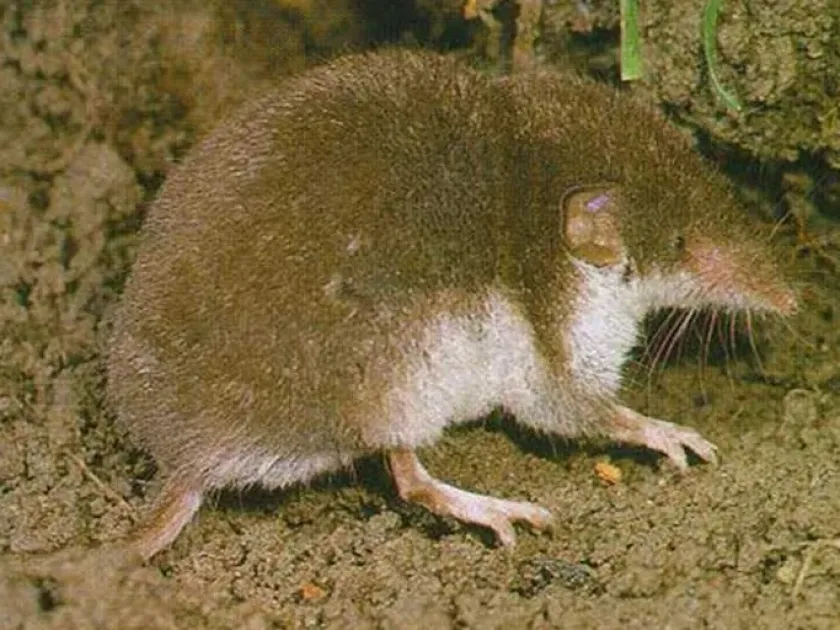
The Bicolored shrew (Crocidura leucodon) belongs to the order Eulipotyphla, family Soricidae. It is a small mammal characterized by a long, pointed snout and a distinct bicolored appearance.
The upper part of the body is covered with dark brown fur, while the belly is stark white, creating a clear line of separation along the flanks of the animal.
These creatures have poor eyesight and rely heavily on their tactile senses and acute smell to navigate their environment and locate prey in the soil or under debris.
Unlike true rodents, their teeth are adapted for a carnivorous diet, specifically designed for crunching through the chitinous exoskeletons of insects and larvae.
They are extremely active and fast-moving, maintaining a high metabolic rate that requires them to forage almost continuously throughout their activity period.
What it damages
The Bicolored shrew is not a herbivore, meaning it does not graze on crops, roots, or tubers, and therefore does not cause direct agricultural damage by consuming vegetation.
The primary issue arising from their presence is the physical disruption of soil structure caused by their burrowing activities as they seek out invertebrate prey.
These surface tunnels can displace the roots of young seedlings, particularly in greenhouse environments, potentially leading to dehydration and stunted growth of young plants.
While the mechanical damage to root zones can be an inconvenience, the shrew's impact is generally localized rather than widespread across large fields.
In many agricultural contexts, these shrews are considered beneficial, as they predate significantly on harmful insects, such as wireworms and beetle larvae, effectively acting as natural pest control agents.
When it appears
The Bicolored shrew is active throughout the entire growing season, with activity levels peaking as soon as the soil thaws and insect populations begin to emerge.
During the warm summer months, their activity is at its highest, coinciding with the peak abundance of soil-dwelling larvae and insects, which form the bulk of their diet.
As autumn approaches and temperatures drop, these shrews may move toward human structures, haystacks, or sheltered areas to find adequate protection for the winter.
They do not hibernate during the winter; instead, they retreat into deeper tunnels and become significantly less active on the surface of the soil until conditions improve.
In spring, snowmelt and high soil moisture can force them to move to drier surface areas, making them more frequently encountered by gardeners and farmers during early field prep.
Signs of infestation
The most common sign of their presence is the formation of shallow, winding surface tunnels that slightly lift the soil or the grass cover, creating a messy network.
These tunnels are narrow and often appear very close to the surface, showing no consistent path compared to the deeper, more structured tunnels made by other burrowing animals.
If young plants or seedlings in a garden bed show signs of wilting while the soil around them appears loose or creates air pockets, it may indicate shrew activity underneath.
A distinct, pungent, musky odor is often present in areas where Bicolored shrews are active, as they use scent markings to navigate and communicate within their territory.
Small, circular entrance holes without large mounds of excavated dirt are typical of shrew burrows, as they often reuse tunnels made by other small creatures.
Control measures
Because Bicolored shrews are insectivores and not rodents, standard anticoagulant baits and rodenticides are completely ineffective and should never be used against them.
If physical damage to seedlings becomes a problem, the most effective preventative measure is the installation of fine-mesh wire fencing around garden beds, buried at least 30-40 cm deep.
Regular cultivation and soil disturbance help to collapse their tunnels and discourage them from establishing permanent foraging routes in sensitive planting areas.
Sonic pest repellers may provide short-term relief by creating an uncomfortable environment for these sensitive animals, though their effectiveness is often debated.
Given their role as significant predators of agricultural pests, total eradication is rarely recommended; instead, managing their movement is the preferred approach for sustainable farming.
Taxonomy
- Latin name
- Crocidura leucodon
- Family
- Soricidae
- EPPO code
- KROKLE
Discussion
No discussions yet — be the first.