
White-toothed shrew
Crocidura
Description
How to identify
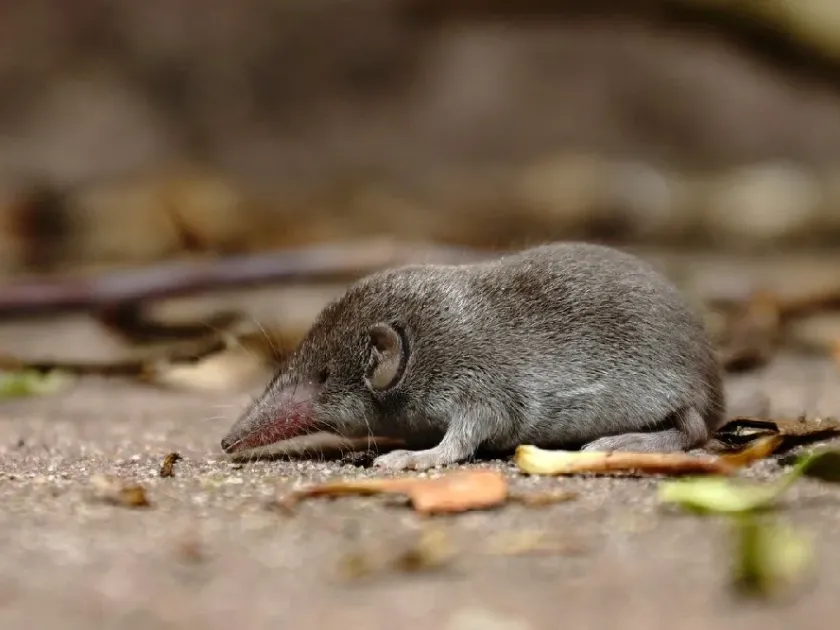
The white-toothed shrew (genus Crocidura) belongs to the order Eulipotyphla and the Soricidae family. They are small mammals often mistaken for mice due to their size and shape.
These animals are easily identified by their long, flexible snouts and velvet-like fur. Unlike rodents, they lack prominent incisors suitable for gnawing on tough vegetation.
Their teeth are characterized by white cusps, which distinguishes them from red-toothed shrews. They possess poor vision and rely primarily on their acute sense of touch and smell.
They are highly active, solitary creatures that hunt continuously throughout the day and night to fuel their extremely high metabolism.
Recognizing them as insectivores rather than rodents is the first step in understanding their role in the agricultural landscape.
What it damages
White-toothed shrews do not feed on plants, roots, or seeds; therefore, they are not categorized as agricultural pests in the traditional sense.
Their diet consists almost entirely of insects, larvae, earthworms, and slugs, making them efficient biological controllers of garden pests.
Minimal damage may occur to turf or delicate root systems when shrews create shallow tunnels, but this is usually incidental to their hunting activities.
They provide a valuable service by suppressing populations of harmful soil-dwelling larvae, such as wireworms and chafer grubs.
Economic losses associated with shrews are virtually non-existent, and their presence is often a sign of a healthy, biodiverse soil ecosystem.
When it appears
White-toothed shrews are active throughout the year as they do not hibernate during the colder months.
During spring and summer, their activity levels peak as they forage for insects in moist, nutrient-rich soil and decaying organic matter.
In autumn, they may seek sheltered areas near compost heaps or woodpiles to maintain their body temperature during cooler nights.
Throughout winter, they remain active under the soil surface or snow cover, continuing to hunt for invertebrates that remain dormant.
Their visibility is highest during periods of increased humidity, which drives their insect prey toward the surface.
Signs of infestation
The presence of narrow, shallow tunnels, often just below the soil surface or under lawn thatch, is a primary indicator of their activity.
Small, irregular holes leading to underground passages can be found scattered across the landscape where they have searched for food.
The absence of damage to crops, seedlings, or tree bark is the most reliable sign that the animal causing the activity is an insectivore, not a rodent.
Some species may emit a faint, musky scent from glandular secretions, which is often detectable in areas where they frequent.
Observing small mounds of soil that lack large debris or chewed plant material further confirms the presence of these beneficial insect hunters.
Control measures
Active control of white-toothed shrews is generally discouraged, as they are beneficial allies in managing garden insect populations.
If their activity creates an unwanted visual impact on a lawn, vibration-based ultrasonic deterrents are the most humane and non-toxic solution.
Chemical methods are strictly advised against, as these creatures are part of the natural balance and are protected in many regions.
Physical barriers or regular soil aeration are effective cultural practices to discourage them from nesting in specific sensitive areas.
- Use of ultrasonic vibration devices
- Maintenance of clean garden areas
- Protection of natural habitats for predator balance
Taxonomy
- Latin name
- Crocidura
- Family
- Soricidae
- EPPO code
- KROKSP
Discussion
No discussions yet — be the first.