
Northern short-tailed shrew
Blarina
Description
How to identify
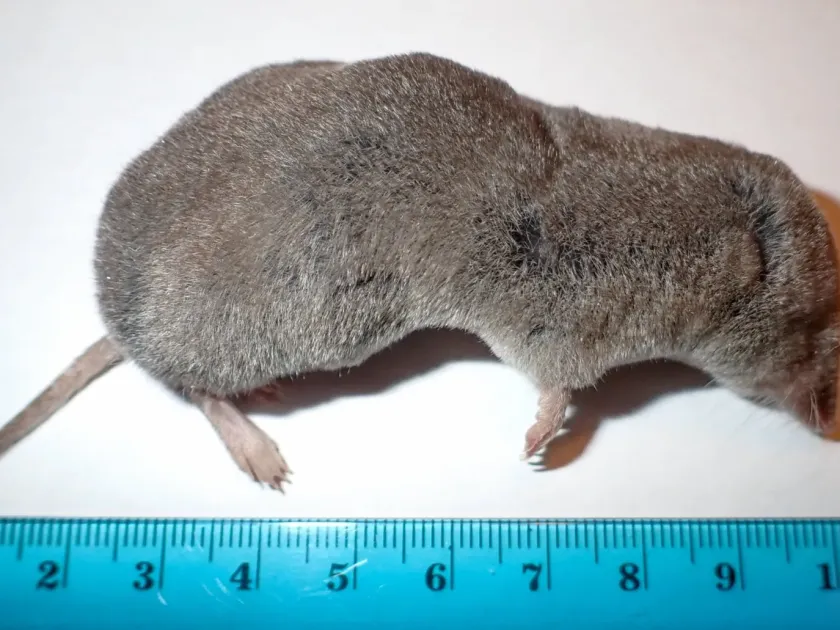
The Northern short-tailed shrew Blarina brevicauda belongs to the Soricidae family, order Eulipotyphla. It is a small mammal resembling a mouse, characterized by a long, flexible snout and a very short tail.
These animals possess dense, velvety dark gray or black fur. Unlike rodents, their teeth are reddish-tipped due to iron deposits, allowing them to effectively consume the hard exoskeletons of insects and invertebrates.
Adult shrews reach about 10-12 centimeters in length. They have tiny, almost invisible eyes, relying primarily on their exceptional hearing and tactile senses to navigate their environment.
They are elusive creatures that prefer traveling through dense vegetation or under layers of leaf litter. With an extremely high metabolic rate, they must forage continuously for food throughout the day and night.
While they play a vital role in natural ecosystems, their burrowing activities in managed agricultural plots often cause significant disturbances to plant root systems.
What it damages
The primary damage caused by shrews stems from their extensive underground tunneling. While hunting for grubs and earthworms, they undermine the roots of seedlings and young vegetables.
During tunneling, the animals often expose plant roots to the air, causing them to dry out quickly and potentially die, especially during periods of high temperature or drought.
When natural prey is scarce, they may damage germinating seeds or gnaw on the bark of underground stems or roots of young shrubs, leading to stunted growth or total plant loss.
Root damage frequently creates entry points for soil-borne pathogens and fungal infections. These plants become stressed, lose vigor, and show decreased yields compared to healthy crops.
Their persistent activity disrupts soil structure, creating hollow pockets that prevent roots from absorbing necessary moisture and nutrients effectively.
When it appears
The Northern short-tailed shrew remains active year-round, as it does not hibernate. Peak activity is typically observed in spring, coinciding with the critical planting season for many garden crops.
During summer, they are most active at night when increased soil moisture makes it easier to forage for invertebrates beneath the surface layer.
In autumn, they aggressively prepare for winter by expanding their burrows, which often increases the impact on the root systems of perennials and shrubs across the plot.
They continue to be active throughout the winter, moving under snow cover and mulch. They often reuse old tunnels, allowing them to remain mobile even in freezing conditions.
Given their short lifespan and rapid reproduction, shrew populations can recover quickly, making consistent monitoring of the garden essential for effective management.
Signs of infestation
The first indicator of shrew presence is the appearance of small, circular holes in the ground, approximately 2-3 centimeters in diameter, leading to deeper tunnel networks.
A distinctive sign is the development of raised ridges in the soil along garden rows, indicating that the animals are moving directly beneath the root zone of the crops.
Sudden wilting of healthy seedlings, despite sufficient watering, often confirms that the root system has been compromised by underground tunnels.
Piles of loose, fine soil on the surface of the garden bed indicate active excavation of new tunnels or the maintenance of existing burrow systems.
In some cases, high-pitched squeaking sounds heard during the evening, particularly in areas with heavy leaf litter or mulch, may confirm their presence.
Control measures
Frequent tilling or cultivation of the soil between rows is the most effective method, as it destroys tunnel systems and makes the area less hospitable for the animals.
The use of ultrasonic pest repellers can be an effective way to discourage shrews from frequenting specific garden beds without using toxic chemicals.
- Install wire mesh beneath planting beds for bulbs and delicate plants.
- Cultivate strong-smelling companion plants to deter shrew activity.
- Minimize deep mulch layers near the bases of young trees and crops.
Good garden hygiene is essential; removing debris piles and accumulated leaf litter reduces the insects and cover that attract shrews to the area.
If population density is high, mechanical live traps may be utilized, though chemical poisons are generally ineffective and not recommended due to the shrew's unique insectivorous diet.
Taxonomy
- Latin name
- Blarina
- Family
- Soricidae
- EPPO code
- BLARSP
Discussion
No discussions yet — be the first.