
Northern short-tailed shrew
Blarina brevicauda
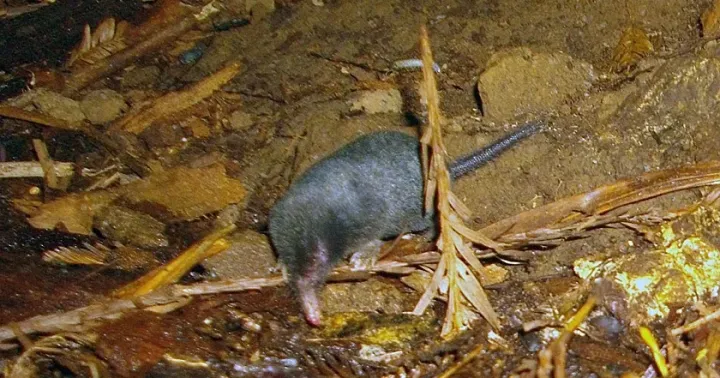
Description
How to identify
The northern short-tailed shrew (Blarina brevicauda) is a small mammal belonging to the order Eulipotyphla and the family Soricidae. It is characterized by a dense, velvety coat, a short tail, and a highly sensitive, mobile snout.
Unlike true rodents, shrews possess teeth with reddish-pigmented enamel, specifically adapted for a high-protein diet of insects, larvae, and invertebrates. Their body length ranges from 12 to 14 centimeters.
These animals are largely subterranean and elusive, spending the majority of their time in complex tunnel systems. They are rarely seen on the surface during daylight hours, preferring cool, damp, and sheltered environments.
A notable biological trait is their venomous saliva. The shrew's submaxillary glands produce a toxic substance that paralyzes prey, allowing it to overcome insects and even small animals larger than itself.
Their population density is highly dependent on soil moisture and dense vegetation cover. In agricultural landscapes, they prefer areas rich in organic matter and moist soils where their prey is abundant.
What it damages
While often considered beneficial for controlling insect populations, northern short-tailed shrews can cause significant damage to agriculture through their burrowing activities. Their tunnels often run directly beneath crop root zones.
By excavating tunnels, they disrupt the soil contact with plant roots, leading to dehydration of seedlings and young plants. This is particularly harmful during the early growth stages or in periods of drought.
The creation of air pockets in the root zone makes plants susceptible to root rot and other fungal infections. Once the soil structure is compromised, nutrient uptake is severely restricted, reducing crop yield.
Their burrowing also creates pathways for other rodents, such as mice and voles, to access protected crop areas. These secondary pests often exploit shrew tunnels to reach roots, tubers, and bulbs.
In intensive vegetable production, such as potato or carrot fields, the physical disturbance of the soil and root systems caused by shrew activity can lead to uneven growth and significant harvest loss.
When it appears
Northern short-tailed shrews are active throughout the year and do not hibernate. Their activity level remains high during all four seasons, as their high metabolic rate requires frequent feeding.
Spring and summer represent peak activity periods. During these months, they expand their foraging range into cultivated fields, attracted by the abundance of soil-dwelling larvae and favorable moisture conditions.
In autumn, they prepare for winter by reinforcing their tunnels and moving into protected locations. They continue their foraging activities as long as the soil temperature allows for movement.
Throughout winter, shrews remain active beneath the snow cover and within the soil profile. They continue to feed on dormant insect pupae and larvae, which keeps their population stable even in harsh conditions.
Frequent winter thaws may encourage shrews to come closer to the surface, potentially causing damage to the root systems of overwintering perennials and winter crops due to soil upheaval.
Signs of infestation
The primary sign of a shrew presence is the appearance of narrow, raised ridges on the soil surface in gardens or fields. These are indicative of their shallow tunnel systems.
Unlike mole tunnels, shrew tunnels are much smaller in diameter and often have frequent, tiny ventilation holes leading to the surface. These ridges are especially visible after rainfall or in loose soil.
The sudden wilting of healthy plants despite adequate irrigation is a strong indicator of shrew-induced damage to the root zone. Plants may exhibit stunted growth or poor coloration.
The discovery of small, frequent entry/exit holes near vegetation is another sign of active foraging. In some cases, damage to the base of stems or roots may be visible upon close inspection.
On lawns and pastures, yellowing of vegetation along tunnel paths is common, resulting from the mechanical separation of roots from the moist soil layer beneath.
Control measures
Effective management requires an integrated approach focusing on habitat modification. Frequent cultivation and harrowing of soil between crop rows disrupt the tunnel systems, discouraging shrews from settling.
Ultrasonic repellers, which create soil-borne vibrations, can be used to deter shrews due to their highly sensitive hearing and touch. Periodic adjustment of frequency settings is recommended for best results.
Physical barriers, such as burying fine-mesh hardware cloth or metal screening to a depth of 30-40 cm around the perimeter of garden beds, provide a long-term solution against burrowing.
Reducing the availability of mulch and organic debris at the end of the season decreases the number of insects, thereby removing the shrew's primary food source and making the site less hospitable.
- Installing tall poles to encourage the presence of avian predators like owls and hawks.
- Using natural deterrents like castor oil-based sprays around sensitive plant areas.
- Implementing deep autumn tillage to destroy winter shelters.
- Maintaining field hygiene to prevent build-up of insect larvae.
Taxonomy
- Latin name
- Blarina brevicauda
- Family
- Soricidae
- EPPO code
- BLARBR
Discussion
No discussions yet — be the first.