
Greater white-toothed shrew
Crocidura russula
Description
How to identify
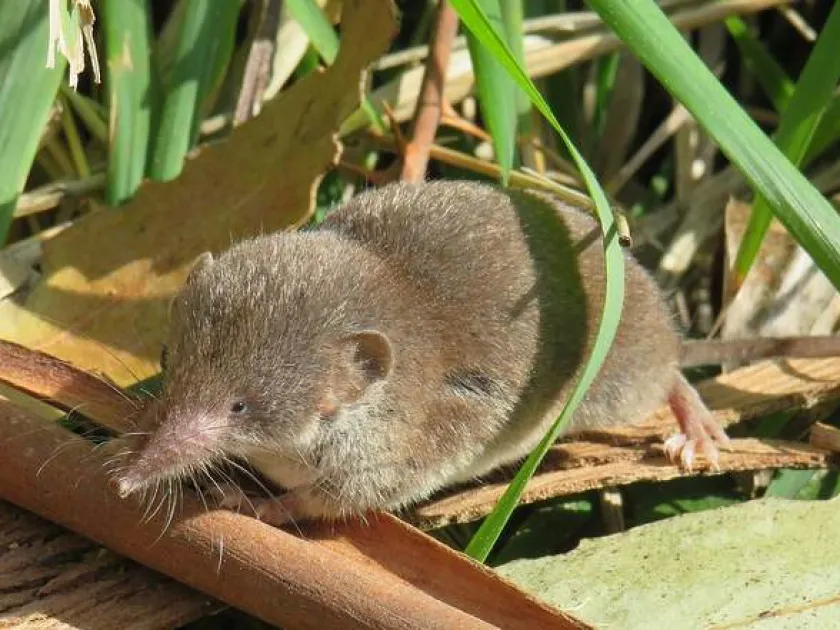
The Greater white-toothed shrew (Crocidura russula) is a small mammal belonging to the order Eulipotyphla. It is often mistaken for a common house mouse due to its size, but it possesses a distinct elongated snout, tiny eyes, and nearly invisible ears.
This species is characterized by its white-tipped teeth, which differentiate it from the red-toothed shrews. Its fur is velvety and brownish-grey, with a paler underbelly. A typical adult weighs between 10 and 15 grams.
Shrews are highly energetic, nocturnal creatures that possess an incredibly high metabolic rate. Because of this, they must feed almost constantly to survive. They are known for the "caravan" behavior, where young shrews follow their mother in a line, holding onto the fur of the preceding individual.
They do not hibernate and remain active throughout the winter months, searching for invertebrates under leaf litter, debris, or within the soil. They are generally solitary except during the breeding season.
The species is widespread in gardens, orchards, and agricultural fields where there is sufficient cover and a healthy population of insects to sustain their constant search for food.
What it damages
The Greater white-toothed shrew is not considered a crop pest. It is strictly an insectivore, meaning it feeds exclusively on insects, slugs, worms, and various soil-dwelling larvae. It does not possess the dentition or biological drive to feed on plant tissues.
Their "damage" is exclusively secondary and incidental. While hunting for insects, shrews may disturb the root systems of newly planted seedlings by digging small tunnels. If the soil is not firmed properly, these tunnels can cause the roots to dry out.
Gardeners often blame shrews for damage actually caused by true rodents (such as voles), which are known for gnawing on plant stems, roots, and bulbs. It is important to distinguish between the digging activity of a shrew and the feeding activity of a vole.
Because they consume large quantities of slugs and beetle larvae, they are actually beneficial to gardeners. They serve as a natural biological control agent against many common garden pests.
In most horticultural systems, their presence is a sign of a healthy, biodiverse soil environment rather than a threat. They help maintain the balance of the ecosystem by keeping invertebrate populations in check.
Control measures
Given their role as beneficial insectivores, active control measures are generally not recommended. Killing shrews will only lead to an increase in the populations of the actual pests they were helping to manage.
If their tunneling activity is causing damage to sensitive seedlings, simple preventative measures are best. Firming the soil around the base of new plants and ensuring adequate moisture levels will discourage the creation of tunnels in these zones.
Managing the garden environment by removing unnecessary piles of debris near vulnerable crops can encourage shrews to relocate their hunting grounds to the compost pile or the edges of the garden.
Avoid the use of toxic rodenticides, as these are indiscriminate and can kill shrews and other beneficial animals, as well as posing risks to pets and local wildlife.
- Encourage biodiversity to keep the ecosystem balanced.
- Use physical barriers to protect highly sensitive seedlings.
- Maintain soil moisture to prevent root zone drying.
- Avoid chemical pesticides to preserve natural predators.
Taxonomy
- Latin name
- Crocidura russula
- Family
- Soricidae
- EPPO code
- KROKRU
Discussion
No discussions yet — be the first.