
Water shrew
Neomys
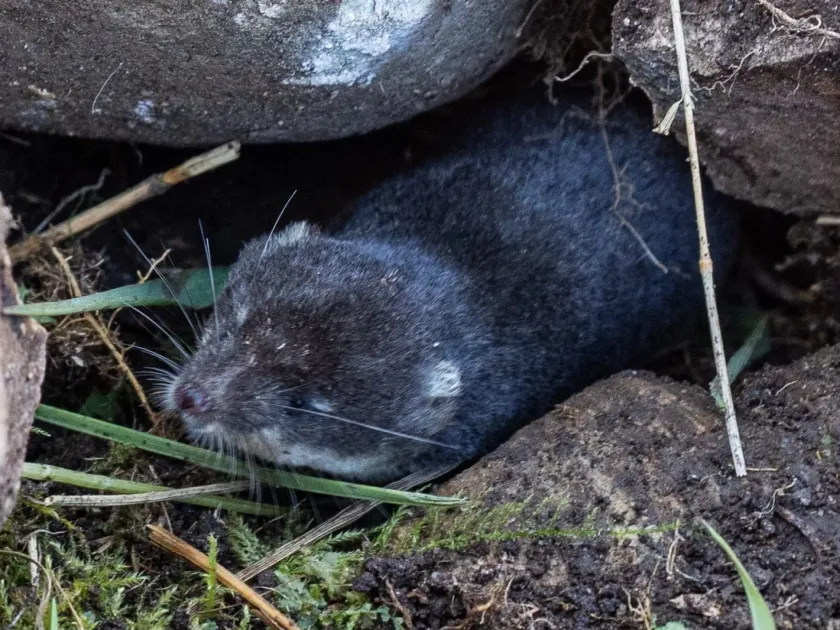
Description
How to identify
The water shrew (genus Neomys) is a small, semi-aquatic insectivorous mammal from the Soricidae family. It is characterized by a long, pointed snout, small eyes, and specialized swimming hairs on its hind feet.
Its fur is dense and velvet-like, providing excellent water resistance. The body length ranges from 7 to 10 cm, and the tail often features a distinct keel of stiff hairs that aids in swimming.
These animals typically inhabit areas near freshwater streams, rivers, and ponds. They belong to the order Eulipotyphla, which sets them apart from true rodents despite their similar size.
A key biological feature is the presence of musk glands, which produce a strong scent. While they are fascinating creatures, their biology makes them persistent diggers in moist soils.
Identification in the field is usually done by locating their characteristic burrow entrances near water bodies and observing the distinct tunneling patterns in soft soil.
What it damages
Water shrews are primarily insectivores, feeding on aquatic invertebrates, snails, and small fish. However, they cause significant damage to agriculture by constructing elaborate tunnel networks.
As they tunnel, they disturb the rhizosphere of young plants and seedlings. This mechanical damage prevents roots from accessing nutrients and water, leading to plant wilting and death.
In greenhouses and vegetable plots, their activity causes the soil to collapse, leaving roots suspended in air pockets, which makes them highly susceptible to drought stress.
Their predatory behavior can also deplete the population of earthworms, which are essential for soil aeration and nutrient cycling in productive agricultural land.
While they may occasionally consume harmful larvae, the extent of the damage caused by their tunneling far outweighs any benefits they provide to the crop ecosystem.
When it appears
They are most active during the spring and summer months, which coincides with the breeding season and the expansion of their foraging territories.
In autumn, when water levels recede and temperatures drop, they often relocate to drier areas, including gardens and farmland, searching for stable burrowing spots.
Although they do not hibernate, their activity levels decrease during the winter, though they continue to forage under the snow layer and in protected soil corridors.
Water shrews are nocturnal and crepuscular, meaning their most destructive digging activities occur under the cover of darkness, making them difficult to observe.
Population density is highly correlated with local water availability; moist, rain-fed years often see a spike in their presence near agricultural drainage systems.
Signs of infestation
The primary sign of their presence is a series of shallow, winding tunnels that cause the ground to ridge or collapse slightly over the path.
Unexpected wilting of healthy-looking crops, often in a line, suggests that a tunnel has cut through the roots of the affected plants.
Small mounds of excavated earth around burrow entrances, usually near water sources or moist ditch lines, are clear markers of an active shrew colony.
A distinct musky odor in localized areas, combined with damaged soil, is a strong indicator of water shrew presence rather than common voles or mice.
The absence of typical rodent droppings on the surface confirms that the animal is likely an insectivore rather than a grain-eating pest.
Control measures
The most effective management strategy focuses on modifying the environment to make it less attractive for these moisture-loving mammals.
- Install ultrasonic or vibrational pest repellers to deter them from sensitive garden areas.
- Keep the area around greenhouses and garden beds well-drained to discourage burrowing.
- Use buried fine-mesh hardware cloth around root zones for high-value plants to create a physical barrier.
- Regularly till the soil in unplanted areas to collapse and disturb their tunnel systems.
Chemical rodenticides are rarely effective as the water shrew is a carnivore that prefers live or fresh prey and often ignores cereal-based baits.
Physical exclusion remains the gold standard for protecting crops. By blocking their path at a depth of 30-40 cm, you can effectively prevent damage without needing toxic chemicals.
Taxonomy
- Latin name
- Neomys
- Family
- Soricidae
- EPPO code
- NOMYSP
Discussion
No discussions yet — be the first.