
Masked shrew
Sorex cinereus
Description
How to identify
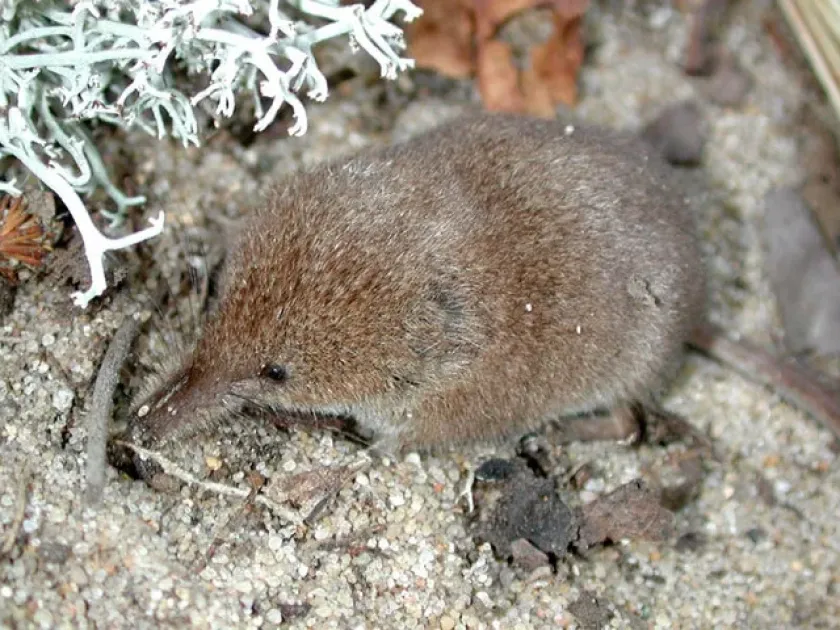
The masked shrew (Sorex cinereus) is a small mammal belonging to the family Soricidae. Often confused with rodents, it is easily identified by its long, pointed snout and tiny eyes.
The body is covered in soft, dense fur that is typically brownish-gray in color. They are among the smallest mammals in the world, with a very high metabolism that requires constant foraging.
These animals are extremely active, moving quickly through leaf litter, soil, and agricultural debris. They possess specialized teeth that are tipped with iron, giving them a distinct reddish-brown appearance.
In agricultural settings, they favor moist environments with high organic matter, where they can find an abundance of soil-dwelling insects and larvae.
The masked shrew is not a hibernator, meaning it remains active and continues to forage throughout the entire year, regardless of the season.
What it damages
Although shrews are primarily insectivores and benefit agriculture by consuming pests, they cause significant physical damage to crop root systems while tunneling.
By constantly digging through the soil, they dislodge the roots of young seedlings, leading to nutrient deficiencies, stunted growth, and death of the plant.
In cases of food scarcity or high population density, shrews may damage seeds, tubers, and root vegetables like carrots, beets, and potatoes, leaving distinct gnaw marks.
Their tunneling activity creates air pockets around the root zone, which causes premature drying of the soil and hinders proper water uptake by the crop.
The disturbance of the soil structure also facilitates the entry of soil-borne pathogens and fungi, which can lead to widespread infection in root crops.
When it appears
Masked shrews are active year-round, but their most visible impact on agricultural plots occurs during the peak planting and growing seasons in spring and summer.
During the spring, mating and nest-building activities lead to an increase in soil disturbance as the population expands across agricultural land.
Summer activity is highest in irrigated fields where moisture-rich soil attracts the insect population that serves as the shrew's primary food source.
In the autumn, as temperatures drop, shrews tend to move toward storage areas, haystacks, and garden sheds, which puts stored produce at potential risk.
Throughout the winter, while surface activity is reduced, they remain busy underneath the snow and within the frost-free layers of the soil.
Signs of infestation
A primary sign of infestation is the presence of numerous small, circular tunnels about an inch in diameter breaking the surface of the soil.
Plants wilting unexpectedly, despite adequate irrigation, often indicate that the root system has been undermined or severed by the tunneling activity.
Small, shallow pits or irregular "trails" on the surface of harvested root vegetables are a classic indicator of shrew feeding damage.
An accumulation of soil debris in concentrated patterns or a noticeable disturbance of the mulch layer can signal the location of active burrow entrances.
Farmers may sometimes detect a faint, musky odor near the burrow openings, as these mammals use scent glands to mark their territory.
Control measures
Deep cultivation and frequent tilling of the soil are the most effective methods to destroy shrew tunnels and force them to migrate to undisturbed areas.
Maintaining a clean farm environment by removing debris, wood piles, and dense weed cover eliminates the habitat shrews need for nesting and protection.
Ultrasonic repellent devices placed in high-risk areas can create a hostile environment, discouraging the shrews from nesting near valuable crop rows.
Encouraging biodiversity by providing perches for owls and hawks helps manage the shrew population naturally, as raptors are their primary predators.
For high-value crops, physical barriers such as underground wire mesh or specialized fencing can prevent the animals from accessing the root zone.
Taxonomy
- Latin name
- Sorex cinereus
- Family
- Soricidae
- EPPO code
- SORXCI
Discussion
No discussions yet — be the first.