
Shrew
Sorex
Description
How to identify
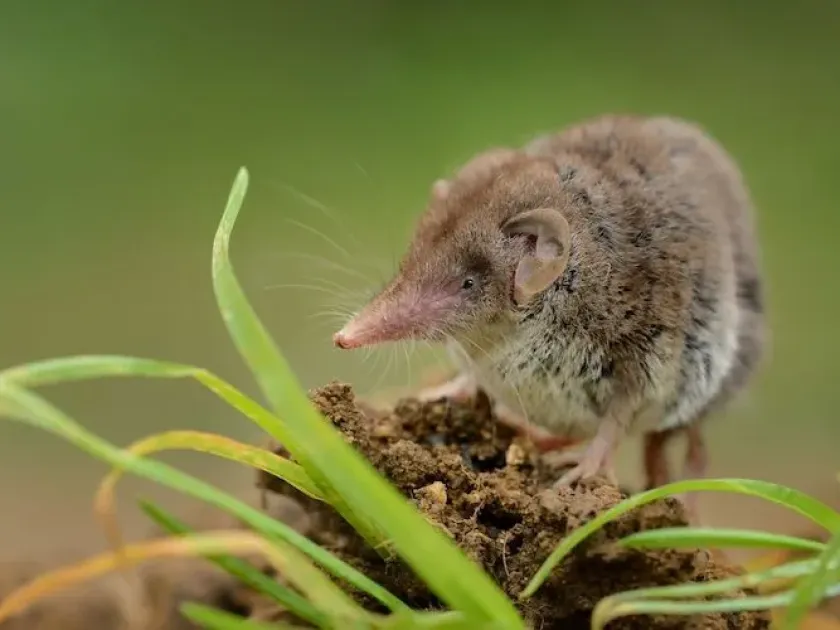
Shrews (genus Sorex) belong to the order Soricomorpha, family Soricidae. They look like small mice but have a distinctive long, pointed snout and velvety fur.
These animals have an incredibly high metabolism, which forces them to be active almost constantly. Because they need so much energy, they are always hunting for insects and worms within the soil.
Unlike true rodents, shrews do not dig deep, complex burrows. They often utilize existing tunnels made by moles or earthworms, which helps them move efficiently through the garden soil.
They have poor eyesight and rely heavily on their sense of smell and echolocation to navigate. Their ability to find prey in the dark makes them highly efficient predators in the garden ecosystem.
Although their lifespan is short, they are prolific breeders. A single shrew can produce several litters within one growing season, allowing their population to establish quickly in nutrient-rich soil.
What it damages
Shrews are not true herbivores and do not intentionally eat plant roots or stems. The damage they cause is primarily a side effect of their search for soil-dwelling insects.
As they tunnel through the soil, they disrupt the root systems of crops. This often creates air pockets around the roots, causing the plants to dry out and lose contact with nutrients.
Young seedlings are particularly vulnerable to this activity. A shrew tunnel running directly underneath a row of newly planted vegetables can cause the entire row to wilt and collapse within days.
While rare, shrews may gnaw on root vegetables like carrots or potatoes when their primary food source, such as larvae or beetles, is scarce, causing secondary damage to the harvest.
In greenhouses, where the soil is often loose and moist, shrew tunnels can cause significant disturbance to delicate plants. Repeated movement underneath the soil surface interferes with root stability and growth.
When it appears
Shrews remain active throughout the entire year, as they do not hibernate. Their activity level remains high even in winter, provided they can find food in the upper soil layers.
Spring is the season of peak activity. As the ground thaws, the activity of soil insects increases, drawing shrews toward cultivated garden beds to feed on the abundant prey.
During the summer, they migrate toward shaded and moist areas of the garden. They often congregate near watered garden beds, where the soil remains soft and supports a large insect population.
Autumn marks another period of high movement as shrews prepare for the winter months and establish nests in protected locations within the garden or near structures.
In winter, shrews stay beneath layers of mulch or snow. While they are less visible during these months, they continue to forage, and their tunnels can still impact perennial plant health if the ground is not fully frozen.
Signs of infestation
The most reliable sign of a shrew's presence is the appearance of small, round entry holes, usually about 1 to 2 centimeters in diameter, scattered across the garden beds.
Sudden wilting of plants in areas where no diseases or surface pests are present often points to underground tunnel activity that has severed or exposed the plant's root system.
Small, winding ridges or furrows on the surface of the soil, especially after rain, indicate that a shrew has recently used these as pathways to move through the garden.
Clusters of insect exoskeleton fragments found near tunnel entrances often suggest that these burrows serve as feeding stations for the shrew.
A faint, musky scent near garden beds is another indicator. Shrews use scent glands to mark their territory, and in high concentrations, this smell can be quite distinct to a careful observer.
Control measures
Ultrasonic sound devices are effective for shrew control. These devices emit vibrations that travel through the soil, making the environment uncomfortable and forcing the shrews to move away.
Planting strongly scented botanical barriers such as garlic, onions, or marigolds can discourage shrews from inhabiting specific parts of the garden due to their sensitive sense of smell.
Placing natural repellents like crushed garlic cloves or rags soaked in pine or birch tar inside the tunnels is a proven way to deter the animals without harming them.
For high-value crops, installing a fine-mesh metal barrier buried 30-40 centimeters deep around the perimeter of the bed provides physical protection against underground entry.
Because shrews are effective at controlling harmful garden insects, it is best to avoid lethal traps or poisons. Focus on humane exclusion and repellent methods to manage their population balance.
Taxonomy
- Latin name
- Sorex
- Family
- Soricidae
- EPPO code
- SORXSP
Discussion
No discussions yet — be the first.