

Pest · Coleoptera (beetles) · affects Maize, Winter rapeseed, Common sunflower
Maize weevil
Sitophilus zeamais
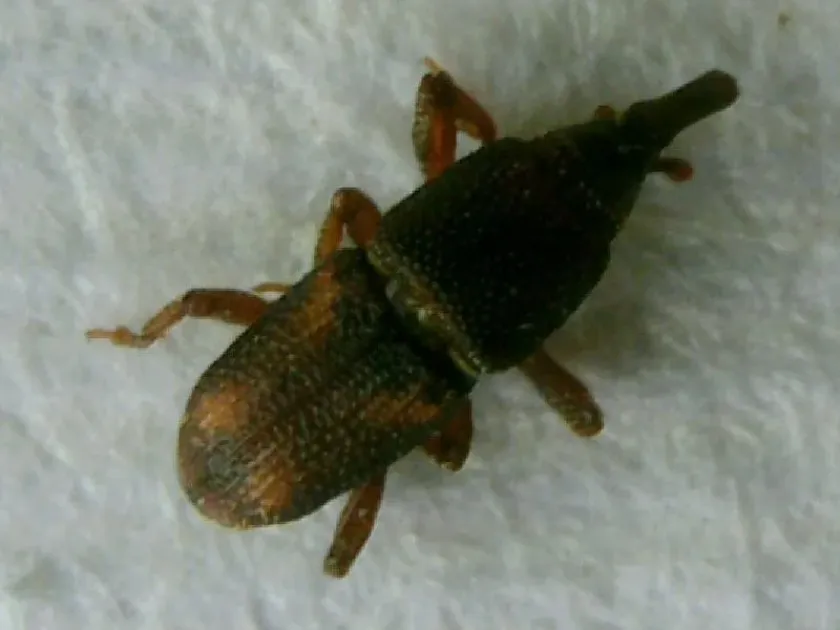
Description
How to identify
The maize weevil (Sitophilus zeamais) is a destructive pest belonging to the order Coleoptera and the family Curculionidae. These beetles are small, typically 3–4 mm long, with a distinct elongated snout characteristic of weevils.
They can be distinguished from similar species, such as the rice weevil, by their reddish-brown to black coloration and four faint reddish spots on their wing covers. Adults are strong fliers, which enables them to infest crops in the field before harvest.
The life cycle involves four stages: egg, larva, pupa, and adult. The female chews a small cavity in a grain kernel, deposits an egg, and seals the opening with a gelatinous substance, making early detection extremely difficult.
The larvae develop entirely within the kernel, feeding on the endosperm. Under optimal conditions of 25–30°C and high humidity, the insect can complete its life cycle in about 30 to 35 days, allowing for multiple generations per year.
This species is highly adaptable and can survive in a variety of stored grains. Its ability to fly distinguishes it from other common stored product insects, making it a persistent threat in both open-field storage and large-scale industrial silos.
What it damages
The maize weevil is a primary pest of stored maize, but it also causes significant damage to other cereals like wheat, barley, sorghum, and rice. It can even attack processed products like flour and pasta if storage conditions are poor.
Damage begins in the field, where adult beetles infest mature maize ears. When this grain is moved into storage, the population grows rapidly, spreading to the entire stock if the grain moisture content exceeds 13–14%.
The larvae hollow out the kernels, consuming the germ and starch. This drastically reduces the grain weight and renders the crop unsuitable for seed due to the loss of the embryo, which ensures future germination.
Infested grain becomes susceptible to secondary infections by molds and bacteria. The insects produce heat and moisture during their metabolism, which can lead to localized "hot spots" in the grain mass, potentially causing mass spoilage.
Economic losses include not only direct loss of grain mass but also significant costs associated with cleaning, drying, and treating infested batches to meet quality standards for human or animal consumption.
Signs of infestation
The most visible sign of an infestation is the presence of small, round emergence holes in the kernels. These holes are created by the new generation of adults as they bore their way out of the grain after pupation.
A dusty layer, known as grain dust or frass, is often found on the surface of the grain mass. This indicates that the weevils are actively feeding and reproducing, reducing the grain to fine powder and excrement.
Monitoring the temperature of the grain bulk is essential. A sudden rise in temperature within the silo or bin is a reliable indicator that an active pest population is present and causing biological heating in the storage environment.
Infested storage facilities often emit a distinct, musty, and sweetish odor. This smell is a byproduct of the insects' waste products and the subsequent growth of fungi that thrive in the damaged, humidified grain.
In cases where infestations are not yet visible to the naked eye, technicians use X-ray analysis or flotation methods to detect larvae hiding inside the kernels, ensuring early intervention before the population explodes.
Control measures
Effective management begins with strict sanitation of storage facilities. Removing leftover debris, dust, and old grain is crucial because these serve as breeding grounds for the weevils between harvest seasons.
Controlling moisture and temperature is the most sustainable prevention method. Drying grain to a moisture level below 13% and maintaining a low storage temperature helps suppress the development and reproduction of the beetles.
Fumigation is the primary chemical control method for heavily infested stocks. Gas-tight enclosures are treated with phosphine-based fumigants, which are highly effective at penetrating the grain and killing all life stages of the weevil.
Using pheromone traps helps in monitoring the adult population. By tracking numbers, managers can make informed decisions on when to apply treatment, preventing the spread from small pockets to the entire stored commodity.
- Cleaning and screening of grain before storage.
- Use of hermetic storage bags for small-scale preservation.
- Regular inspections of grain moisture and temperature.
- Application of approved insecticides for facility walls.
- Professional fumigation for large-scale infestations.
Content graph
Connections · Maize weevil
Most often together:
Marketplace
Products · 2
Biology
Taxonomy
- Latin name
- Sitophilus zeamais
- Order
- Coleoptera (beetles)
- Family
- Dryophthoridae
- EPPO code
- CALAZM
Community
Discussion
No discussions yet — be the first.