
Banana weevil
Cosmopolites pruinosus
Description
How to identify
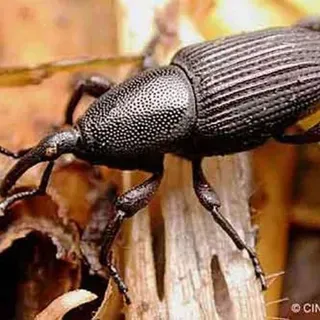
The banana weevil Cosmopolites pruinosus is a coleopteran pest belonging to the family Curculionidae. The adult is characterized by a dark brown to black body and a prominent snout, which is typical for the weevil group.
The life cycle consists of four distinct stages: egg, larva, pupa, and adult. The insect is primarily nocturnal, preferring to hide in the base of the banana plant or under organic debris during the daylight hours.
Larvae are legless, fleshy, and possess a well-developed, dark head capsule. They spend their entire developmental period inside the banana plant, feeding on the rhizome and pseudostem tissues.
This species thrives in warm, humid tropical environments, which facilitate rapid population growth. In such conditions, generations can overlap, leading to a constant presence of the pest throughout the year.
Because of their secretive nature, adults are difficult to spot during routine inspections. Monitoring usually requires specialized traps or careful excavation of the plant tissue to detect early signs of infestation.
What it damages
The primary host for this pest is the banana plant (genus Musa). It is considered a major threat to banana production, capable of causing significant yield losses in both commercial and subsistence farming.
Damage is primarily caused by larvae burrowing into the rhizome. This tunnel-making activity destroys the plant's vascular system, hindering the movement of water and nutrients from the soil to the leaves.
Secondary damage occurs when the open tunnels created by larvae become entry points for various fungal and bacterial pathogens. These infections often lead to rapid rotting of the plant base, accelerating plant death.
Severely infested plants display stunted growth and a general decline in health. The leaves often turn yellow and dry out as the internal tissues of the stem are consumed by the larvae.
Structural damage to the rhizome weakens the plant's anchorage. This makes the banana stools susceptible to "toppling," where plants fall over under their own weight or during minor wind events, resulting in complete loss.
Signs of infestation
One of the earliest signs of a banana weevil infestation is the general yellowing and wilting of leaves, which often mimics nutrient deficiency but fails to respond to fertilization.
Small, circular entrance holes near the base of the pseudostem are external indicators of weevil activity. Sometimes, sap or frass (excrement) can be seen oozing from these small holes.
Internal inspection of the rhizome reveals complex tunnel networks created by the larvae. These tissues are often blackened or necrotic due to the feeding damage and the associated secondary rots.
Adult weevils are elusive but can be found using nighttime surveys. Using a flashlight, one can detect the beetles resting on the outer layers of the plant or emerging from the soil base.
- Reduced bunch size and poor fruit development.
- Stunted appearance of suckers (new shoots).
- Toppling of plants during minor wind.
- Internal necrosis and tunneling in the rhizome.
Control measures
The most important control strategy is the use of pest-free planting material. Establishing new plantations with healthy suckers significantly reduces the initial risk of a weevil outbreak.
Good sanitation practices, such as removing and destroying old crop residues, are essential. This reduces the number of refuges and breeding sites available to the weevils after harvesting.
Chemical control involves the strategic application of insecticides to the soil or the base of the plant. However, this must be balanced with safety concerns regarding fruit residues and environmental impact.
Biological control agents, including entomopathogenic fungi like Beauveria bassiana and specific nematodes, show great promise in managing weevil populations in a sustainable and eco-friendly manner.
Pheromone traps are highly effective for both monitoring and mass-trapping adults. By integrating these methods with regular scouting and cultural techniques, farmers can effectively maintain control over this pest.
Taxonomy
- Latin name
- Cosmopolites pruinosus
- Order
- Coleoptera (beetles)
- Family
- Dryophthoridae
- EPPO code
- COSMPR
Discussion
No discussions yet — be the first.