
Cactus weevil
Cactophagus
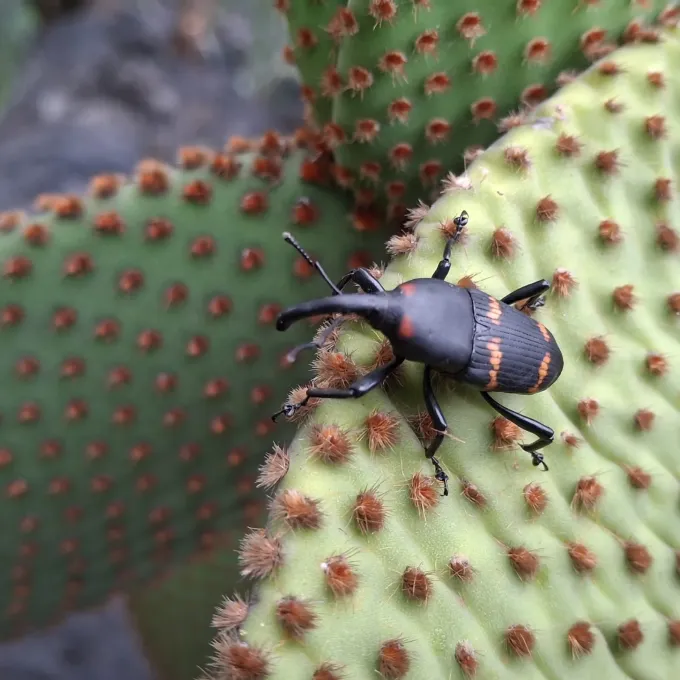
Description
How to identify
The cactus weevil (genus Cactophagus) is a destructive pest belonging to the family Curculionidae, order Coleoptera. These beetles are characterized by their elongated snouts and robust bodies, often measuring up to 20 mm in length, which allow them to bore effectively into succulent tissues.
Their coloration is typically dark brown or black, providing excellent camouflage against the dark spots or corky tissues of their host plants. Their hard, chitinous exoskeletons make them resistant to many standard contact insecticides, requiring targeted treatment strategies.
What it damages
These insects primarily infest various species of the Cactaceae family, particularly favoring fleshy genera such as Opuntia and Cereus. They are considered major pests in both botanical gardens and private cactus collections due to their ability to hollow out plants.
Both adults and larvae contribute to the damage, though larvae are the most destructive. Adults cause superficial wounding, while larvae tunnel deep into the stem, destroying the vascular system and preventing the plant from transporting water and nutrients effectively.
When it appears
The life cycle of the cactus weevil involves distinct stages: egg, larva, pupa, and adult. The female deposits eggs directly into the cactus flesh, where the emerging larvae begin feeding immediately, boring intricate tunnels throughout the plant's core.
Under warm greenhouse conditions, the weevil can complete its life cycle year-round. This continuous breeding capability makes it a persistent threat that can decimate a collection within a few months if left unchecked by proper management and monitoring.
Signs of infestation
Early signs of infestation include small, pinpoint entry holes on the cactus surface, often accompanied by sap bleeding or discolored soft patches. These symptoms are easily mistaken for fungal infections, so careful inspection is required to distinguish them.
Internal damage often manifests as a loss of turgor or a "hollow" feeling when the plant is gently pressed. In advanced cases, the internal stem structure becomes a honeycomb of tunnels filled with debris, leading to the sudden collapse of the plant.
Control measures
Effective control requires the application of systemic insecticides that are absorbed by the plant and kill larvae feeding internally. Regular drenching of the soil or stem injections are often more effective than simple surface spraying due to the pest's internal lifestyle.
Cultural control practices, such as quarantining new arrivals and removing heavily infested plants, are essential to prevent the spread of the weevil. Vigilance during the warmer months, when adults are more active, is critical for maintaining a healthy succulent collection.
Taxonomy
- Latin name
- Cactophagus
- Order
- Coleoptera (beetles)
- Family
- Dryophthoridae
- EPPO code
- CACHSP
Discussion
No discussions yet — be the first.