
Banana weevil
Cosmopolites sordidus
Description
How to identify
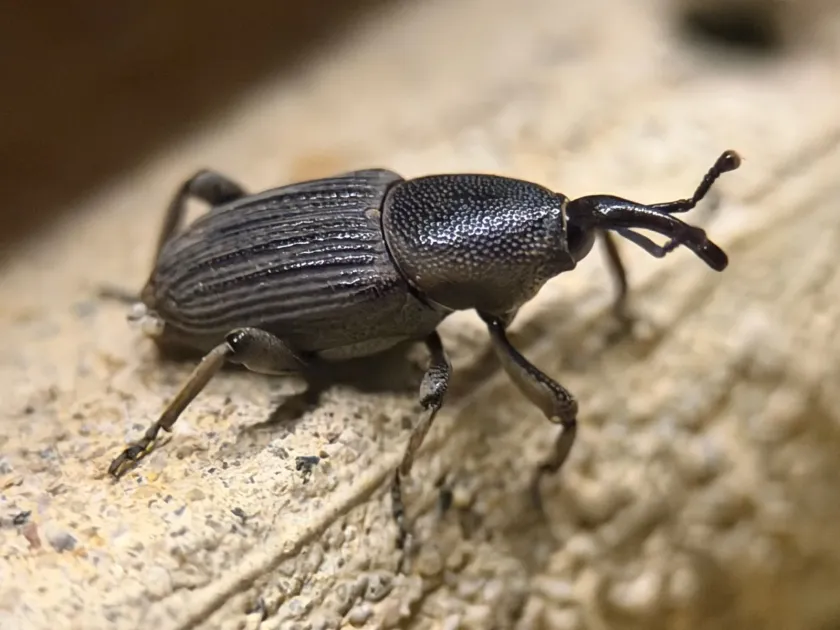
The banana weevil is a beetle approximately 10–12 mm long, characterized by its elongated snout. Its body is typically dark brown or black, allowing it to blend in perfectly with plant debris and organic matter on the ground.
Adult weevils are nocturnal and flightless in many regions, preferring to hide in the leaf bases or tunnels within the banana pseudostem during the daytime. They are highly secretive and rarely seen on the surface during the day.
The larvae are legless, creamy-white in color, and possess a prominent reddish-brown head capsule. They live entirely hidden inside the plant tissue, making them difficult to detect without destructive examination.
The species belongs to the Curculionidae family. These insects thrive in warm, humid conditions, which are ideal for their year-round breeding cycle in tropical banana-growing regions across the globe.
Females lay eggs singly in small holes they chew into the base of the pseudostem or rhizome. This placement ensures the larvae have immediate access to food as soon as they hatch from the eggs.
What it damages
The primary damage is caused by larvae tunneling through the rhizome and the base of the pseudostem. These tunnels disrupt the plant's vascular system, hindering the uptake of nutrients and water.
Infested plants show reduced vigor, stunted growth, and yellowish leaves. In severe cases, the plants may collapse, as the structural integrity of the rhizome is compromised, especially during heavy wind or fruit load.
Banana weevil infestations can lead to significant yield losses. Fruits on infested plants often fail to reach standard market sizes, and the overall plant density in a plantation may decrease over time.
Young banana suckers are highly susceptible. Infestation in the early stages of plant development often kills the sucker before it establishes a strong root system, preventing successful plantation establishment.
The tunnels created by the larvae serve as entry points for secondary pathogens, including bacteria and fungi, which cause rot and accelerate the decline of the banana plant.
Signs of infestation
Early symptoms include a noticeable decline in growth rate. Infested plants look less healthy than surrounding, uninfested ones, and may exhibit wilting during the hottest parts of the day.
Small entry holes for egg-laying may be visible near the base of the pseudostem. Additionally, you might notice frass (larval excrement mixed with plant material) being pushed out from the feeding tunnels.
Cutting into the rhizome reveals the characteristic tunneling damage. The presence of internal cavities filled with brownish waste is a definitive sign of an active infestation that requires immediate attention.
Plant toppling or snapping at the base during wind gusts is a common sign in heavily infested plantations. The base of the plant becomes riddled with galleries, weakening its support structure.
Uneven ripening and smaller bunch sizes are frequent observations in infested areas. Because the plant cannot transport nutrients effectively, the fruit remains undersized and of poor quality.
Control measures
Prevention is the best strategy. Always use clean, certified planting material to ensure that new plantations start free from weevil eggs or larvae, preventing long-term infestations.
Sanitation is critical in established fields. Regularly remove and destroy old pseudostems and stumps, as these are the primary habitats where the adult beetles hide and breed.
Trapping is an effective monitoring and control tool. Use cut pseudostem segments placed on the ground; adult beetles will gather under them, allowing for easy manual collection and destruction.
Biological control agents, such as the fungus Beauveria bassiana, have shown potential in suppressing weevil populations. These fungi infect the beetles, offering an environmentally friendly alternative to chemical pesticides.
- Maintain rigorous field hygiene.
- Use pheromone-baited traps for monitoring.
- Apply insecticides locally only when absolutely necessary.
- Ensure proper plantation spacing.
- Regularly inspect the base of pseudostems for signs of attack.
Taxonomy
- Latin name
- Cosmopolites sordidus
- Order
- Coleoptera (beetles)
- Family
- Dryophthoridae
- EPPO code
- COSMSO
Discussion
No discussions yet — be the first.