
Dark carrion beetle
Silpha obscura
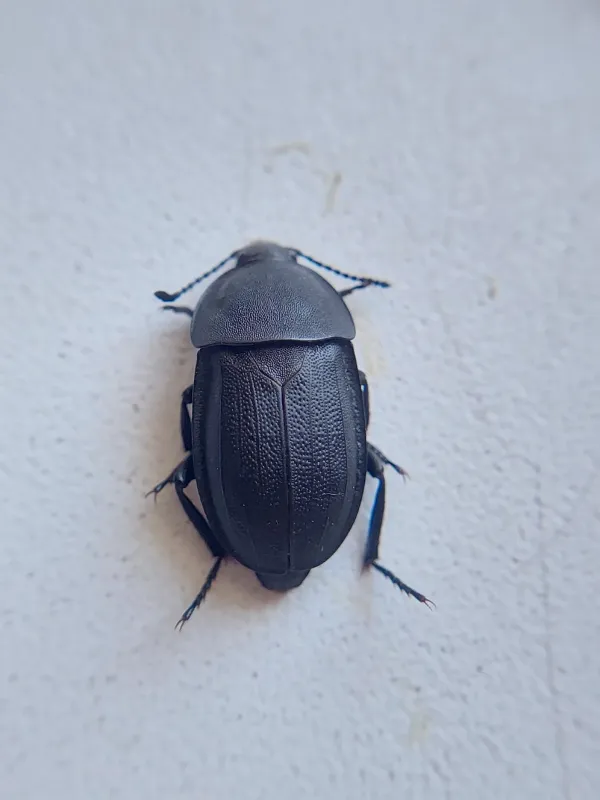
Description
How to identify
The dark carrion beetle, known scientifically as Silpha obscura, belongs to the Silphidae family. Adult beetles typically measure between 12 and 16 millimeters in length.
The body is oval, flattened, and has a characteristic matte black coloration, distinguishing it from other more metallic-looking species in the family.
The pronotum features expanded lateral margins, and the antennae are club-shaped, which is a standard morphological trait for the Silphidae group.
The larvae are flat, dark brown to black, and possess a segmented body shape that some describe as being similar to woodlice.
Adult beetles are capable of sustained flight, allowing them to disperse quickly across agricultural fields to locate food sources and overwintering sites.
What it damages
Although carrion beetles are primary decomposers, Silpha obscura can act as an opportunistic pest, causing damage to various cultivated crops when their primary food is scarce.
Commonly affected crops include sugar beets, cabbage, radishes, and various other cruciferous vegetables, as well as some grasses and forage plants.
Damage is caused by both adults and larvae feeding on the foliage. They typically chew irregular holes in the leaves or skeletonize them, leaving only the veins behind.
Young seedlings are the most vulnerable, as any significant feeding can quickly result in plant death or severe stunting of growth.
The highest level of pest pressure is usually found in fields located near forested areas or sites with excessive accumulation of leaf litter and organic debris.
When it appears
Adult beetles overwinter in the soil or under layers of decaying plant matter. They emerge in early spring as soon as the soil temperatures rise sufficiently.
The primary reproductive season occurs between May and June. Females lay their eggs directly into moist soil that is rich in organic nutrients.
The larval stage is most active during the first half of the summer, which coincides with the period when most crops are in their initial growth stages.
Pupation takes place within the soil, and the new generation of adults usually emerges in late summer before they seek shelter for the winter.
Environmental conditions, particularly high humidity during spring, play a critical role in the survival rate of the larvae and the overall density of the population.
Signs of infestation
The most visible sign of infestation is the presence of eaten leaf edges or holes in the foliage, which may be mistaken for damage from other leaf-chewing insects.
Field inspections conducted in the morning or evening hours often reveal the presence of adults hiding near the base of the plant or under soil clumps.
Larvae can often be found in the upper soil layers directly beneath the foliage of the plants they have been feeding on during the night.
Severe infestations lead to yellowing and wilting of the plants due to the loss of photosynthetic area and potential damage to the stem base.
In extreme cases, the total loss of leaf tissue in seedlings leads to bare patches in the field, necessitating replanting in the affected areas.
Control measures
Effective management begins with sound agronomic practices, such as rigorous crop rotation and the prompt removal of weeds and harvest residues from fields.
Deep autumn plowing is a highly recommended practice to disrupt the life cycle of the beetle by exposing overwintering larvae and pupae to extreme weather.
When economic damage thresholds are exceeded, targeted application of approved insecticides may be necessary to protect the vegetable crop yields.
- Regular scouting to assess population numbers in early spring.
- Elimination of nearby breeding sites, such as compost heaps or waste areas.
- Encouraging natural predatory insects that help keep carrion beetle populations in check.
Soil moisture management is vital, as overly wet fields create an environment that favors the survival of the larvae and keeps them in close proximity to crop roots.
Taxonomy
- Latin name
- Silpha obscura
- Order
- Coleoptera (beetles)
- Family
- Silphidae
- EPPO code
- SILPOB
Discussion
No discussions yet — be the first.