
Shijimiaeoides battoides
Shijimiaeoides battoides
Description
How to identify
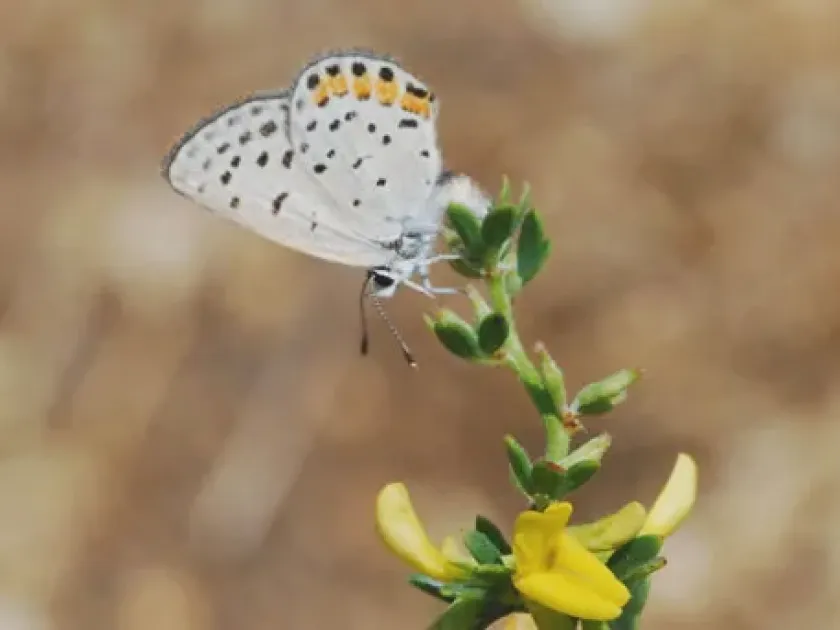
The insect Shijimiaeoides battoides belongs to the order Lepidoptera, family Lycaenidae. The adult is a small butterfly with a distinct wing pattern typical of this genus, primarily found in East Asia.
The species exhibits sexual dimorphism, with adult wing coloration ranging from dark brown to blue tones with a metallic sheen. Identification of this species often requires professional inspection of wing morphology or genital structures.
Larvae pass through several developmental stages, during which their appearance and dietary preferences change. In early instars, they often exhibit a greenish color for camouflage on host plants.
Pupae usually possess protective coloration and are attached to stems or the base of host plants. The lifecycle is strictly associated with specific ecosystems where their host plants thrive.
The species demonstrates complex survival strategies, including potential symbiotic relationships with ants, which is common for many members of the Lycaenidae family.
What it damages
The primary damage is caused by larvae feeding on reproductive and vegetative organs. Budding, flowering parts, and ovaries are damaged first, leading to significant yield losses in seeds and fruits.
This insect specializes in plants of the Fabaceae family, often found on species within the Sophora genus. Damage to growth points and reproductive organs significantly reduces the overall viability of the crop.
In cases of high pest density, massive flower shedding occurs, directly impacting the economic productivity of the plantation. Secondary damage to tissues makes the plant susceptible to fungal and bacterial infections.
The intensity of the damage depends on the phenological state of the host plant and climatic conditions. Larvae pose the greatest threat during the flowering stage.
The damage extends to both wild populations and agricultural crops if they are located within the insect's natural range.
When it appears
Adult activity occurs during the summer months when favorable temperatures facilitate mating and oviposition. The timing depends on the region and accumulated temperature sums.
The lifecycle typically includes one or two generations per year. Overwintering usually occurs as a pupa or egg in a state of diapause within the soil or plant debris.
Peak larval density is recorded during the flowering phase of host plants, as these stages provide the nutrients required for rapid development.
Larval emergence is synchronized with the appearance of the first buds, ensuring access to essential nutrients for the developing insects.
The completion of the lifecycle occurs by late summer or early autumn, after which the insect enters a dormant stage.
Signs of infestation
The main symptom of an infestation is the presence of holes in buds and hollowed-out flowers. Larval frass can often be found on the surface of damaged plant parts.
Leaves may show jagged edges or holes if younger instars start feeding on vegetative mass when reproductive organs are scarce.
Deformation of inflorescences and premature wilting are common. Damaged plant parts often change color to brown or yellow due to tissue necrosis.
The presence of butterflies near fields during the flowering period serves as a warning signal to conduct field inspections for egg clutches.
In cases of high infestation, plants look stunted, with a noticeable delay in the growth of reproductive shoots.
Control measures
Recommended control strategies include agrotechnical methods, such as deep autumn plowing, which helps destroy overwintering pupae in the soil.
Biological control involves the conservation and attraction of natural enemies, such as parasitoid wasps and predatory insects, which help suppress population growth.
Chemical insecticide application is effective only during periods of mass larval emergence when the pests are most vulnerable to treatments.
Maintaining crop rotation and spatial isolation from wild host plant reservoirs is a critical component of a successful integrated pest management program.
Regular monitoring using pheromone traps allows for the precise determination of the onset of flight, enabling timely and targeted protection measures.
Taxonomy
- Latin name
- Shijimiaeoides battoides
- Order
- Lepidoptera (butterflies)
- Family
- Lycaenidae
- EPPO code
- SHIJBA
Discussion
No discussions yet — be the first.