
European serin
Serinus serinus
Description
How to identify
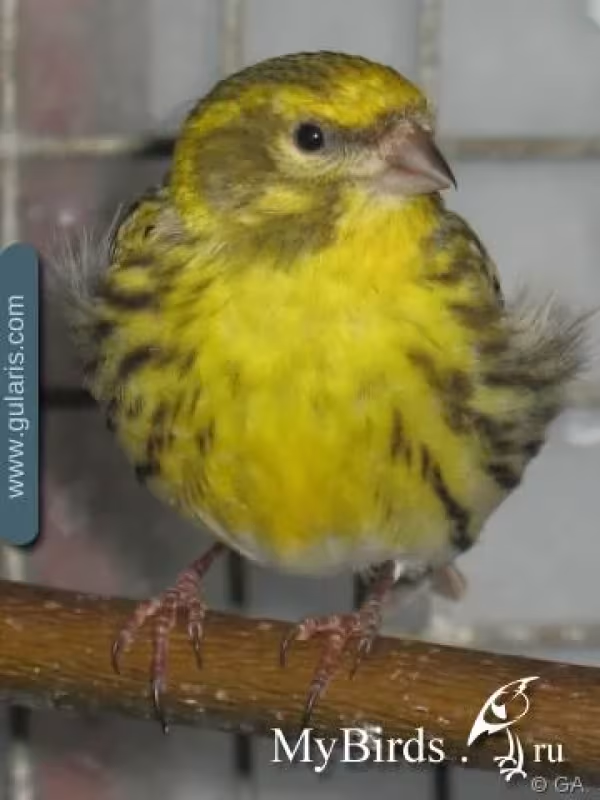
The European serin (Latin: Serinus serinus) is a small passerine bird belonging to the finch family (Fringillidae). It is characterized by a short, conical bill that is highly efficient at husking various types of seeds.
Adult males exhibit a striking yellow-green plumage, particularly vibrant on the breast and rump. Females and juveniles are generally duller, with streaky greyish-brown feathers that provide excellent camouflage in wild vegetation.
These birds are small, typically weighing between 10 and 15 grams and reaching a body length of approximately 12 centimeters. Despite their size, they possess high mobility and are capable of traveling long distances in search of food.
They are primarily distributed across Europe and parts of North Africa and Asia. In agricultural landscapes, they often favor fields adjacent to orchards, scrublands, or forest edges, which serve as safe havens.
The serin is a social species, often gathering in flocks that can grow significantly in size during the late summer and autumn, which correlates with their increased presence on agricultural land.
What it damages
The primary economic damage caused by the European serin is the consumption of ripening seeds from various agricultural crops. Sunflowers, oilseed rape, and various cereals are the most commonly affected species.
Damage to the seed heads can lead to reduced germination rates, which is particularly detrimental to seed production farms where seed quality is of paramount importance.
On sunflower fields, serins peck out individual seeds from the head. These puncture wounds make the plant tissue vulnerable to secondary fungal infections and rot, further degrading the harvest.
In cases of significant infestation, the flock can devastate the yield of an entire sector of the field within a few days, creating patchy losses that complicate mechanized harvesting.
Beyond seed consumption, these birds may also target young seedlings, plucking them from the soil, which results in reduced plant density and potentially necessitates field replanting.
When it appears
The damage potential is at its highest during the summer and autumn months, coinciding with the seed maturation phases of major crops like cereals and sunflowers.
During the spring breeding season, their activity is more localized near nesting sites; however, as the chicks fledge, the size and range of the flocks increase significantly.
Autumn marks a period of high risk, as birds consolidate into larger groups before migration. At this stage, they are actively seeking high-energy food sources to sustain themselves during the coming winter.
The duration of the damage period is largely dependent on local climate conditions, with southern regions experiencing longer periods of potential exposure for late-harvest crops.
Agronomic monitoring should be intensified during the wax-ripening stage of the grain, as this is when the crop becomes most nutritionally attractive to the serin.
Signs of infestation
A primary indicator of infestation is the appearance of damaged crop heads, particularly sunflower disks with irregular holes and missing seeds in the center or peripheries.
Significant amounts of hulls and bird droppings concentrated in specific areas of the field or along the edge of nearby tree lines serve as clear evidence of a bird flock's feeding site.
Reduced density of plant stands in areas where birds have been active is another sign, often visible shortly after emergence or during the harvesting period.
The sound of the birds' repetitive, high-pitched songs in the early morning is a distinct indicator of their presence near or within agricultural settings.
The presence of large groups of birds perched on nearby power lines or fences often precedes a descent onto the field for feeding, signaling an immediate need for protective intervention.
Control measures
Effective control measures include the use of acoustic repellents, such as sound systems that broadcast predator calls or distress signals to deter the flock from landing.
Visual deterrents, including reflective tape, holographic scare-birds, or predatory bird silhouettes, can provide temporary relief but require regular movement to prevent the birds from habituating.
Timely harvesting remains the most crucial agronomic practice, as it minimizes the time window during which the crop remains vulnerable to avian damage.
Maintaining clean field edges by limiting overgrown scrubland can also reduce the local population density, though this must be balanced with environmental preservation goals.
- Utilization of automated propane cannons or acoustic dispersal systems.
- Strategic installation of protective netting for high-value seed trials.
- Regular field scouting to identify and mitigate early-stage bird congregation.
Taxonomy
- Latin name
- Serinus serinus
- Family
- Fringillidae
- EPPO code
- SERNSE
Discussion
No discussions yet — be the first.