
Pine siskin
Carduelis pinus
Description
How to identify
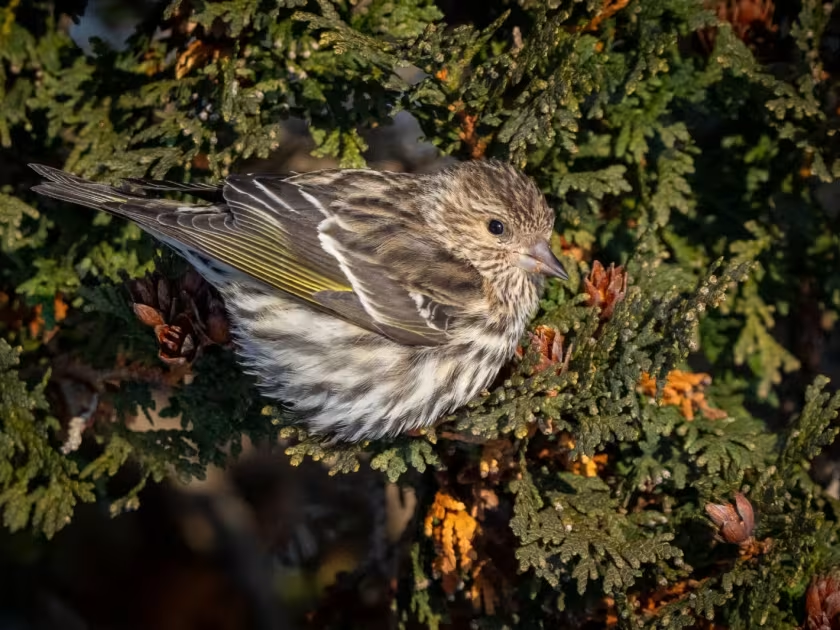
The pine siskin (Carduelis pinus) is a small songbird belonging to the finch family (Fringillidae), order Passeriformes. Visually, it resembles the common siskin but differs in its more subdued plumage, characterized by brown and buff tones and distinct yellow patches on the wings.
Its primary identifying feature is a narrow, pointed beak, perfectly adapted for extracting seeds from tightly closed coniferous cones. During flight, these birds often produce sharp, characteristic calls, which help detect their presence in the canopy before visual confirmation.
Males exhibit brighter colors during the nesting season, whereas females and juveniles appear more uniform, providing camouflage within the coniferous branches. The total body length of an adult typically does not exceed 13 centimeters.
The birds exhibit high mobility and flock behavior. When searching for food, they move through the canopy, often hanging from the tips of thin branches, similar to chickadees, to reach otherwise inaccessible cones.
While native primarily to North America, these birds' biological habits are closely tied to coniferous forests, where they can cause significant damage to forest nurseries and young plantations.
What it damages
The pine siskin's primary food source consists of seeds from coniferous trees such as pine, spruce, fir, and larch. They cause direct economic loss by consuming seeds directly from the cones before they can naturally disperse.
They pose a specific threat to breeding nurseries where valuable coniferous varieties are grown. The loss of even a portion of the seed harvest can disrupt reforestation plans and result in significant financial deficits.
Beyond seeds, pine siskins may consume buds and young shoots of coniferous trees during periods of food scarcity. This causes growth deformity and weakens the vitality of young seedlings.
Active foraging by flocks can lead to damage to a significant percentage of cones on a tree, rendering them unsuitable for commercial collection and processing in forestry operations.
In years of low seed production, the birds become more aggressive and migrate over wider areas, expanding the range of potentially affected objects, including ornamental plantings in parks and gardens.
When it appears
Peak activity for the pine siskin occurs during the autumn and winter seasons when other food sources are limited. It is during this time that bird flocks concentrate in areas with abundant coniferous growth.
In the spring, during the flowering and development of young cones, siskins may damage buds, which indirectly impacts seed yields for the current year.
The species' migratory cycles significantly influence when the pest will appear in a specific area. During harsh winters, birds migrate south in search of food, which can lead to sudden invasions of previously unaffected forest areas.
The summer period is characterized by a diet shift to insects, which somewhat reduces pressure on coniferous crops; however, juveniles begin showing interest in ripening cones as early as late August.
Therefore, population monitoring and the implementation of protective measures should be planned while accounting for seasonal migrations and the biological growth phases of the coniferous trees.
Signs of infestation
The first sign of the pest's presence is the accumulation of shredded cones under the tree. Birds often leave cone scales that they did not finish eating or that fell during the feeding process.
Upon careful inspection of the canopy, one can observe nibbled buds or damaged bark at the attachment points of the cones. This confirms that birds have been actively feeding in that specific area.
Auditory cues, such as the specific chattering of a flock, serve as a reliable indicator of pine siskin presence in coniferous canopies during the early morning hours.
The presence of droppings on lower branches and the forest floor also indicates a prolonged stay by a flock on a specific tree or group of trees.
If a nursery reports a decrease in viable seed yield during cone collection, this serves as an indirect but reliable signal that birds have caused damage during the fruit maturation stage.
Control measures
To protect forest nurseries from pine siskins, bioacoustic installations that simulate the calls of predatory birds are used to deter pests from the protected territory.
The use of protective netting to cover valuable seed trees or plots with high-value genetic material is the most effective physical method of control.
Regular monitoring of cone conditions and timely harvesting before the birds can cause significant damage is recommended to minimize economic losses.
The deployment of visual deterrents, such as reflective tape or predator decoys, may provide short-term effects, but birds acclimate to these quickly, necessitating periodic rotation of such tools.
- Bioacoustic deterrents
- Canopy protective netting
- Timely seed material harvesting
- Population density monitoring
Taxonomy
- Latin name
- Carduelis pinus
- Family
- Fringillidae
- EPPO code
- CRDLPI
Discussion
No discussions yet — be the first.