
Citril finch
Carduelis citrinella
Description
How to identify
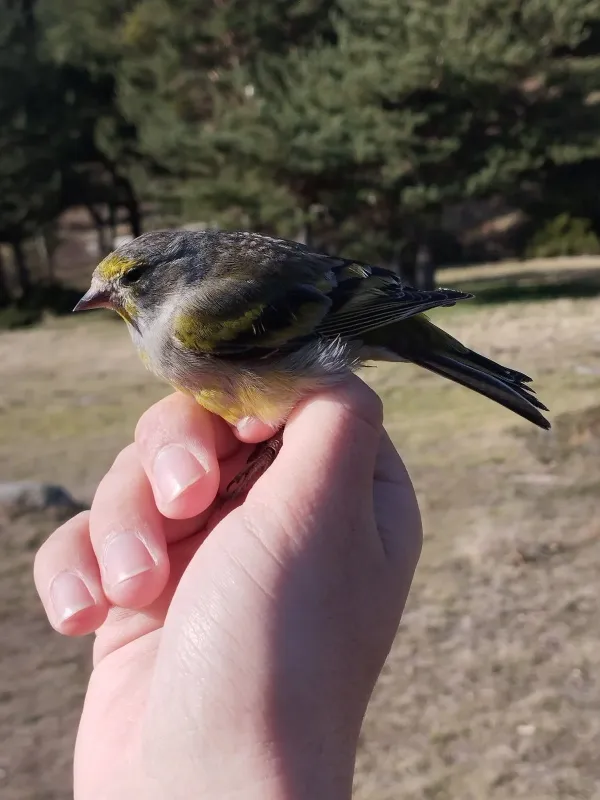
The Citril finch (Carduelis citrinella) is a member of the Fringillidae family within the Passeriformes order. It is a small songbird characterized by its distinctive lemon-yellow plumage, especially in males.
The bird possesses a strong, conical beak designed for husking seeds, which allows it to easily extract nourishment from various plant sources including agricultural crops.
This species primarily inhabits mountainous regions and coniferous forests in Central and Southern Europe. While they are essentially mountain birds, they often venture into nearby agricultural fields during food shortages.
The biology of the species involves nesting in high branches of conifers, which makes them difficult to manage through habitat destruction, thus requiring deterrent-based approaches.
They are generally considered a minor pest; however, their social structure and tendency to form small flocks can lead to localized damage in specific farming environments.
What it damages
Citril finches are known to feed on seeds of crops such as sunflowers, rapeseed, and various small grains during their maturation stage.
Beyond seeds, these birds can be problematic for orchards in early spring, as they often consume buds and developing flower shoots, reducing the future fruit set.
In regions where agricultural fields are adjacent to their natural mountain habitat, the birds may cause cumulative losses to the seed quality of specific high-value crops.
By consuming the kernel of the seed, they directly reduce the weight and viability of the harvest, which is particularly detrimental for commercial seed producers.
The damage is typically sporadic and happens during the period of grain filling, making constant observation during the dough stage essential.
Signs of infestation
Evidence of a Citril finch infestation includes scattered husks, broken plant debris, and emptied seed coats found under the damaged plants.
Visual inspection of sunflower heads or grain spikes often reveals irregular feeding marks where the finches have used their beaks to strip the seeds.
The presence of small, active flocks during the early morning hours is a primary indicator that the birds have established a feeding rhythm on the property.
Edge damage is common, as birds tend to concentrate their activities on the perimeter of the field that provides the easiest access to cover.
Farmers may also observe the birds' specific vocalizations or detect traces of droppings on the leaves and soil surface within the affected zones.
Control measures
Effective management includes the installation of visual deterrents like reflective tape, holographic scarecrows, or wind-activated rotating devices.
Bio-acoustic systems that play distress calls are highly recommended, as they discourage the finches from settling on the field without requiring harmful chemicals.
Practicing timely harvesting is the most reliable agronomical solution to minimize the duration of exposure for mature seeds to potential bird pressure.
Drones can be utilized for both monitoring and gentle dispersal of birds from large fields, providing a non-lethal and efficient control method.
Given the conservation status of certain populations in mountain areas, all control efforts must focus on non-lethal exclusion and repellent techniques.
Taxonomy
- Latin name
- Carduelis citrinella
- Family
- Fringillidae
- EPPO code
- SERNCI
Discussion
No discussions yet — be the first.