
Oriental greenfinch
Carduelis sinica
Description
How to identify
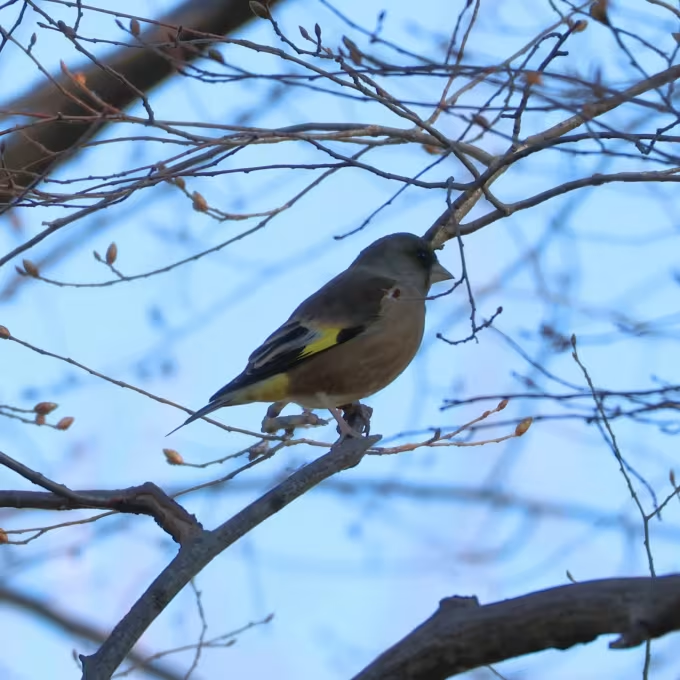
The Oriental greenfinch (Carduelis sinica) belongs to the Fringillidae family. It is a small bird featuring olive-green plumage, bright yellow wing patches, and a robust conical beak designed for cracking seeds.
Males are typically more vibrant than females, displaying more intense yellow and green tones. They are gregarious birds, often found in large flocks, which significantly increases their potential impact on agricultural productivity.
Systematically, this species is well-adapted to East Asian landscapes, frequently inhabiting areas near farmland and woody shrubs. Their behavior is characterized by agile movement and active foraging in small to medium-sized groups.
Field identification is possible through their distinctive short, sharp calls and a quick, undulating flight pattern. During the breeding season, they become more secretive, but post-breeding flocks are highly visible near agricultural fields.
As a stable species, their population density remains constant, necessitating awareness from agronomists regarding their movement patterns and feeding preferences during the crop maturation phase.
What it damages
The primary damage caused by the Oriental greenfinch involves consuming seeds from cereals, oilseeds, and legumes. They are particularly detrimental to sunflower crops, feeding on seeds during the milky and dough stages.
They also target millet, hemp, buckwheat, and various other crops. By puncturing the seed coat, they render the seeds unviable, promote fungal growth, and reduce the overall market quality of the harvest.
Beyond direct consumption, the weight of the flock landing on stems can cause significant lodging. This mechanical damage complicates mechanized harvesting and results in substantial field losses.
In regions adjacent to forested areas or hedgerows, seed yield losses can be severe. This requires active intervention to prevent birds from establishing sustained feeding patterns on high-value plots.
While birds can consume some weed seeds, their preference for nutrient-rich agricultural grains far outweighs any potential benefit, classifying them as genuine agricultural pests.
When it appears
Maximum damage occurs during the crop maturation period, specifically from late summer through early autumn, when grains reach a state of optimal nutrition for the birds.
Early in the spring, flocks may attack newly sown cereal fields, excavating seeds from the soil if alternative natural food sources are scarce, potentially thinning plant stands.
Winter behavior involves nomadic movement, with flocks traveling between crop fields and storage sites. This increases the risk to stored grain if it remains uncovered or accessible near the fields.
The life cycle and migratory patterns of the greenfinch are tied to food availability, often coinciding with the harvest cycle of various agricultural commodities across the region.
Drought years significantly increase the pressure on crops, as natural habitats provide fewer food resources, forcing birds to rely more heavily on agricultural plots for sustenance.
Signs of infestation
A primary indicator is the presence of empty seed husks or partially eaten seeds on sunflower heads or cereal spikes. The damage marks on the seed coat are consistent with the leverage of a finch's strong beak.
Bird droppings on leaves and stems are tell-tale signs of sustained foraging. These signs are usually most prevalent along the field margins closest to nesting or perching areas.
Mechanical damage, such as flattened areas of the field or bent stalks, points to large flocks landing and feeding. This is often observed early in the morning when the flock is most active.
Visual identification of large bird flocks in the area or hearing their repetitive, sharp calls serves as a primary warning signal for farmers to implement protective measures.
Leftover debris on the ground beneath plants indicates that the birds have been actively feeding, signaling that the crop is currently under threat of significant yield reduction.
Control measures
Bioacoustic deterrents are the most effective method, utilizing recorded predatory bird calls. Varying the frequency and intervals of playback is crucial to maintain effectiveness and prevent bird habituation.
Visual deterrents, such as reflective tape or predatory decoys, can supplement acoustic systems. A multifaceted approach is always superior to a single method to ensure long-term field protection.
Agronomic management requires timely harvesting to reduce the period of exposure for maturing crops. Keeping field perimeters free of tall weeds also reduces the attraction for perching birds.
In large-scale operations, monitoring via drones to detect bird flocks early allows for rapid deployment of deterrents, specifically during the critical grain filling and maturation stages.
- Bioacoustic repelling systems.
- Visual decoys and reflective deterrents.
- Timely harvesting of crops.
- Elimination of weeds around field margins.
Taxonomy
- Latin name
- Carduelis sinica
- Family
- Fringillidae
- EPPO code
- CRDLSN
Discussion
No discussions yet — be the first.