
Larch looper
Semiothisa sexmaculata
Description
How to identify
The Larch looper (Semiothisa sexmaculata) is a moth species belonging to the Geometridae family. Adult moths typically have a wingspan of 20–25 mm, with a brownish or grayish wing pattern featuring distinct markings that provide effective camouflage.
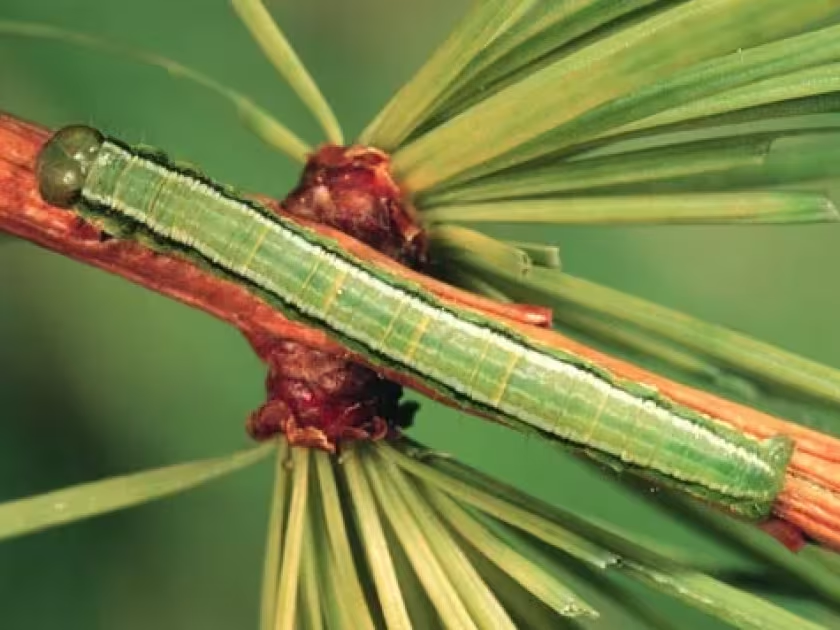
The larvae, known as caterpillars, exhibit the characteristic "looping" locomotion due to their specific abdominal proleg arrangement. They possess a cryptic coloration that allows them to blend in seamlessly with the needles of the host trees.
Pupation primarily occurs in the leaf litter or topsoil beneath the host trees. This dormant stage allows the insect to overwinter successfully, surviving cold temperatures before emerging as adults in the spring.
The life cycle involves complete metamorphosis, progressing through egg, larval, pupal, and adult stages. Depending on regional climate conditions, the species may complete one or two generations per year.
Monitoring for this pest is typically conducted using light traps or pheromone lures. These tools help entomologists and foresters track population dynamics and determine the optimal timing for intervention.
What it damages
The Larch looper primarily attacks larch trees (Larix). The larvae feed on the needles, causing significant defoliation, which impairs the tree's ability to perform photosynthesis and reduces overall vitality.
During outbreaks, populations can reach high densities, causing extensive needle loss. This defoliation stresses the trees, making them highly susceptible to secondary attacks by wood-boring beetles and various pathogens.
Young trees in nurseries or plantations are particularly vulnerable to larval feeding, as they lack the biomass and canopy reserves to withstand heavy defoliation during the growing season.
The economic impact involves stunted growth, reduced timber quality, and, in severe cases, the mortality of young larch stands. This necessitates careful monitoring and management of nursery environments.
Needles damaged by the caterpillars typically turn yellow, dry out, and eventually drop prematurely. This visual symptom is a key indicator of the larval feeding impact on the health of the tree.
When it appears
The flight period of the adult moths generally occurs in late spring or early summer, depending on local temperatures. This timing is critical for mating and subsequent oviposition on the host foliage.
Larvae appear in early summer, marking the beginning of the active feeding phase. This phase is most damaging, as it occurs simultaneously with the trees' period of rapid foliage development.
Pupation usually takes place in late summer or early autumn. This life stage is designed for endurance, ensuring that the pest can survive the winter months until the environmental conditions become favorable again.
While second generations may occur in warmer regions, the primary damage is caused by the first generation. Understanding these seasonal windows is essential for effective pest management planning.
Environmental factors such as high humidity and optimal temperatures can accelerate the development of the larvae. Consistent scouting of larch stands is recommended from spring through mid-summer.
Signs of infestation
A primary indicator of Larch looper presence is the accumulation of larval droppings (frass) under the canopy. This often alerts managers to an infestation before significant visual damage is seen.
Feeding damage is characterized by partially eaten needles or those with uneven, ragged edges. As the infestation progresses, the canopy appears thinner, and the affected foliage loses its vibrant green color.
Shaking the branches can help reveal the presence of caterpillars, as they often fall from the foliage on silk threads when disturbed. This method is useful for confirming the pest's presence in a stand.
Top dieback or branch weakness in young larches is a sign of long-term or heavy infestation. It is important to distinguish this from physiological disorders or root-related issues common in conifers.
Careful inspection of the needles with a hand lens can lead to the discovery of eggs, allowing for early control before the larvae begin to feed extensively and cause major damage to the tree.
Control measures
Biological control remains a preferred strategy, particularly using microbial insecticides based on Bacillus thuringiensis, which target the larvae effectively while preserving beneficial predatory insects.
Chemical control is reserved for outbreak conditions. When used, insecticides must be applied according to local forest management regulations to minimize ecological impact and ensure safety for operators.
Forest management strategies, such as promoting mixed-species stands, can naturally inhibit the spread of the Larch looper, as pure monocultures provide an easy food source for the pest.
Encouraging the presence of natural enemies, such as insectivorous birds and parasitic wasps, plays a vital role in keeping Larch looper populations below the threshold that causes economic loss.
- Microbial control with B. thuringiensis.
- Pheromone monitoring for population tracking.
- Maintaining biodiversity to support natural predators.
Taxonomy
- Latin name
- Semiothisa sexmaculata
- Order
- Lepidoptera (butterflies)
- Family
- Geometridae
- EPPO code
- SEMOSE
Discussion
No discussions yet — be the first.