
Owen's Moth
Semiothisa oweni
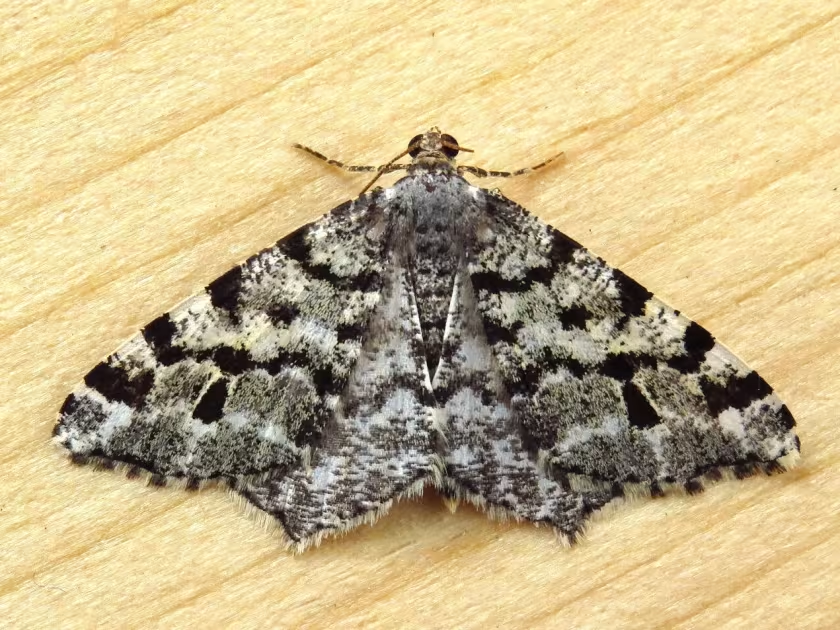
Description
How to identify
Owen's Moth (Semiothisa oweni) is a species of moth belonging to the family Geometridae. These insects are known for their specific larval behavior, which is characteristic of the Geometridae family, commonly referred to as inchworms.
Adult moths of this species possess protective coloration that allows them to camouflage efficiently against tree bark and foliage. Their wing patterns are highly specialized, often blending in with their natural environment to avoid predation.
The larvae are typically solitary feeders and are quite difficult to spot during the day due to their effective mimicry and habit of resting along leaf veins or twigs. They undergo several larval stages before pupation.
Biological monitoring reveals that these moths are primarily nocturnal. Their life cycle is deeply intertwined with the phenology of their specific host plants, usually occurring during peak spring and summer months.
Taxonomically, the species is part of the diverse genus Semiothisa, which contains numerous similar species often requiring expert morphological analysis for accurate field identification.
What it damages
The caterpillars of Semiothisa oweni primarily feed on the leaves of various trees and shrubs. They act as defoliators, and in high populations, they can strip a significant portion of the foliage from host plants.
Young larvae often start by eating small holes in the leaf tissue, while older larvae consume larger portions of the leaf, sometimes leading to complete skeletonization of the foliage.
Beyond leaf consumption, the damage includes the destruction of developing buds, which can negatively impact the plant's growth potential for the entire season and weaken its structural integrity.
Plants subjected to chronic infestations exhibit stunted growth and reduced vigor, making them more susceptible to drought, secondary pest attacks, and fungal diseases.
In ornamental garden settings, the aesthetic damage is often the primary concern, as defoliation significantly diminishes the visual appeal of shrubs and woody plants.
Signs of infestation
The presence of frass (caterpillar droppings) on the leaves or the ground beneath the canopy is often the most reliable indicator of an active infestation of Owen's Moth.
Visual inspection often reveals ragged edges on leaves and characteristic holes in the middle of the leaf blades, indicating that larvae are feeding in the vicinity.
Caterpillars may use silk webbing to bind leaves together, creating small protective nests. These shelters are easily visible upon close inspection of the branch tips.
Adult moths are frequently attracted to artificial lights at night, which can serve as an early warning sign for homeowners or farmers to begin closer field monitoring.
Tapping branches over a white sheet or container can cause the "inchworm" larvae to drop, providing a quick and effective way to estimate the infestation level.
Control measures
Physical control measures, such as hand-picking caterpillars and pruning heavily infested branches, are effective and recommended for small-scale infestations in home gardens.
Biological control, including the use of Bacillus thuringiensis (Bt) based products, is highly effective against larvae while being selective and safe for beneficial insect populations.
Chemical intervention should be reserved for severe outbreaks where thresholds have been exceeded. It is crucial to choose insecticides that are labeled for use on the specific host plant.
Promoting a healthy environment for natural predators, such as birds and parasitic wasps, can help keep populations of the moth in check through natural mortality.
Proper landscape management, including regular fertilizing and watering, ensures that plants remain robust and can better recover from moderate foliage loss caused by pest activity.
Taxonomy
- Latin name
- Semiothisa oweni
- Order
- Lepidoptera (butterflies)
- Family
- Geometridae
- EPPO code
- SEMOOW
Discussion
No discussions yet — be the first.