
Lattice Heath
Semiothisa clathrata
Description
How to identify
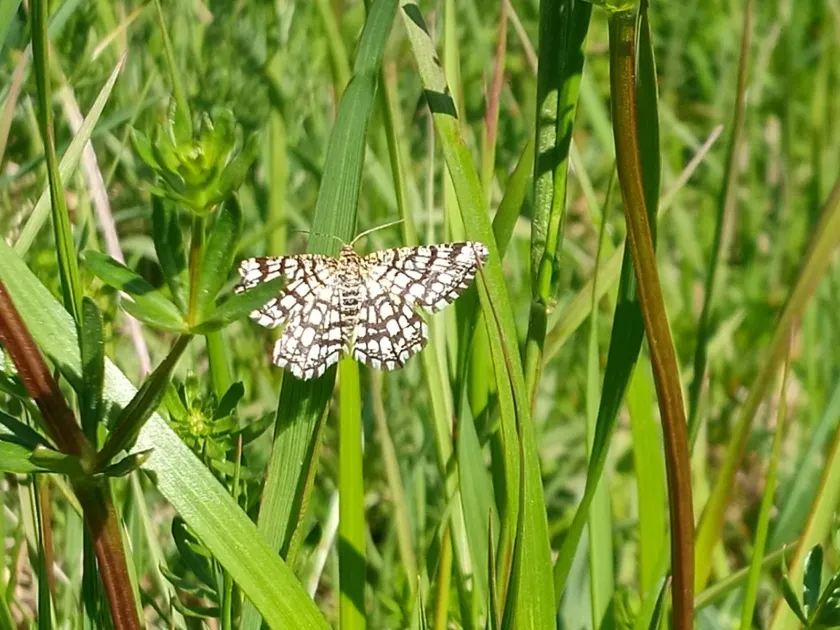
The Lattice Heath (Semiothisa clathrata) is a moth species belonging to the Geometridae family. Adult moths have a wingspan of approximately 25-30 mm and are distinguished by their pale yellow to ochre wings covered in a prominent dark lattice-like pattern.
The larvae, known as loopers, move by arching their bodies. They possess a cryptic coloration, typically green with thin longitudinal stripes, which allows them to blend in perfectly with the foliage of their host plants.
The species overwinter as pupae, usually buried in the soil or hidden within leaf litter, emerging as adults in late spring to begin their annual reproductive cycle.
What it damages
This moth primarily targets various species of Fabaceae (legumes). It is frequently found in alfalfa, clover, and vetch fields, where the larvae feed greedily on the green vegetation.
While often considered a minor pest in balanced ecosystems, mass outbreaks can cause significant defoliation, leading to reduced photosynthesis and weakened plant health in forage crops.
When it appears
The flight period for adult moths typically runs from May through August, depending on the geographical location and regional climate conditions.
There are often two generations per year in warmer climates, meaning the caterpillars can be found feeding on crops from early summer until the onset of autumn.
Signs of infestation
Signs of an infestation include irregularly notched or skeletonized leaves, as the larvae consume tissue between the veins of the legumes.
Because the larvae exhibit strong camouflage, they are difficult to spot during the day. Monitoring should involve shaking the foliage over a light-colored surface or inspecting the plants during early morning hours.
Control measures
Agricultural management is the first line of defense. Rotating crops and avoiding continuous planting of legumes in the same field can significantly suppress moth populations.
Post-harvest tillage and deep plowing are effective methods for disrupting the pupal stage, as they expose overwintering pupae to predators and extreme weather conditions.
Chemical intervention should be considered as a last resort, utilizing selective insecticides that target larvae while minimizing impact on beneficial predatory insects in the field.
Taxonomy
- Latin name
- Semiothisa clathrata
- Order
- Lepidoptera (butterflies)
- Family
- Geometridae
- EPPO code
- SEMOCL
Discussion
No discussions yet — be the first.