
Steinkellner's flat moth
Semioscopis steinkellneriana
Description
How to identify
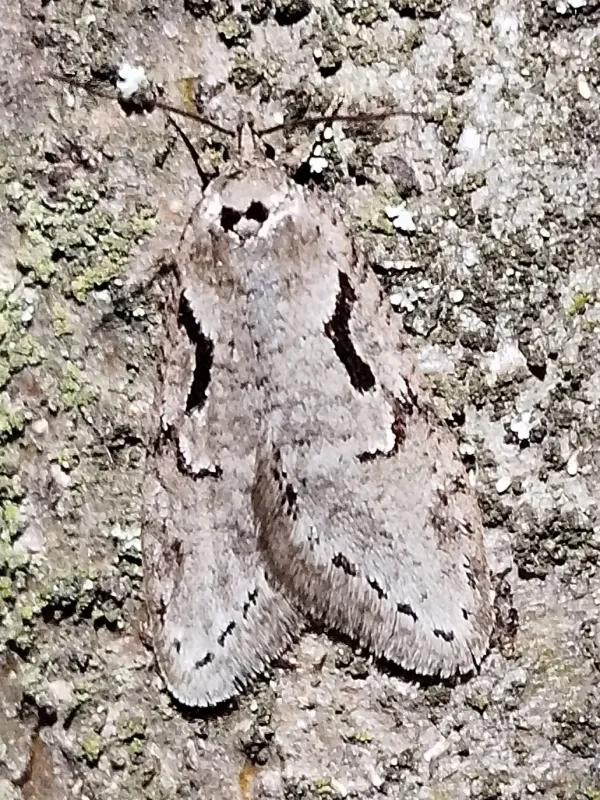
Semioscopis steinkellneriana, commonly known as the Steinkellner's flat moth, belongs to the family Depressariidae. It is a small moth known for its cryptic appearance, allowing it to blend seamlessly into tree bark during the day.
The adult moth typically has a wingspan ranging from 20 to 25 millimeters. The forewings display a mottled grayish-brown pattern, while the hindwings are lighter with distinct fringes, characteristic of the family.
The larvae are active feeders and undergo several developmental stages. Young caterpillars are often pale with a dark head, gradually shifting their coloration as they grow to match the surrounding leaf tissue.
Pupation occurs within dense silk cocoons, which are cleverly concealed by the larvae in bark crevices or among fallen leaf litter, providing them protection from environmental stresses and predators.
Identifying this pest in the field can be challenging due to its nocturnal habits, so monitoring is most effective during the early spring when the adults first emerge and begin laying eggs.
What it damages
This moth primarily targets deciduous trees, specifically members of the Rosaceae family, making it a potential concern for orchards and forest nurseries alike.
The larvae are the primary damaging stage, feeding voraciously on budding leaves and developing flower buds during the early spring growth phase of the trees.
Common hosts include apple, pear, and various wild shrubs. When infestations are heavy, the larvae can cause significant defoliation, which hampers the tree's photosynthetic capability.
By consuming buds, the caterpillars reduce the potential fruit yield for the season, causing long-term stress to the tree's development and decreasing its overall vigor.
Large-scale infestation can lead to stunted growth and reduced health of the trees, necessitating prompt diagnostic measures to protect the orchard’s productivity.
When it appears
The adult moth Semioscopis steinkellneriana has an early emergence period, often active in late winter or early spring, as soon as temperatures allow for flight.
The emergence of larvae is highly synchronized with the phenology of their host plants, specifically the bud-burst stage, ensuring they have fresh food immediately upon hatching.
Their life cycle is strictly tied to the tree's seasonal growth. Once feeding is complete and the larvae have matured, they enter a pupal stage and then a period of diapause.
By late spring or early summer, the moths have usually finished their active developmental stages and remain in a dormant phase until the following year.
Understanding this early seasonal timing is crucial for growers, as the window for effective treatment is limited to the period immediately before or during early larval feeding.
Signs of infestation
Early symptoms of an infestation include damaged or hollowed-out buds that may be webbed together with fine silk, indicating larval presence.
Leaf deformation is a common sign; the larvae often fold or roll leaves into tight tubes or clumps using silk, which serves as both a shelter and a food source.
Frass (larval droppings) left on the foliage or on the bark beneath the infested branch is a reliable indicator of active feeding nearby.
The presence of fine, silvery silken webs stretching across the buds and young leaves is a visual cue that a colony of Semioscopis steinkellneriana may be establishing itself.
- Hollowed-out or webbed buds.
- Rolled or folded young leaves.
- Presence of larval frass on foliage.
- Fine silk threads across twigs and branches.
Control measures
Cultural control methods such as bark cleaning and the removal of leaf litter are highly recommended to disrupt the life cycle and reduce overwintering populations.
Biological control, including the use of Bacillus thuringiensis, offers an effective way to manage larvae while maintaining the safety of beneficial predatory insects and pollinators.
Chemical intervention should only be utilized when pest thresholds are exceeded, focusing on targeted applications of systemic or contact insecticides during the early stages of larval development.
Encouraging biodiversity by providing habitats for insectivorous birds and predatory wasps can significantly decrease the population density of these moths naturally.
Regular spring monitoring allows orchard managers to detect outbreaks early, enabling localized spot treatments rather than relying on broad-spectrum chemical sprays.
Taxonomy
- Latin name
- Semioscopis steinkellneriana
- Order
- Lepidoptera (butterflies)
- Family
- Depressariidae
- EPPO code
- SMOSST
Discussion
No discussions yet — be the first.