
Parsnip moth
Agonopterix applana
Description
How to identify
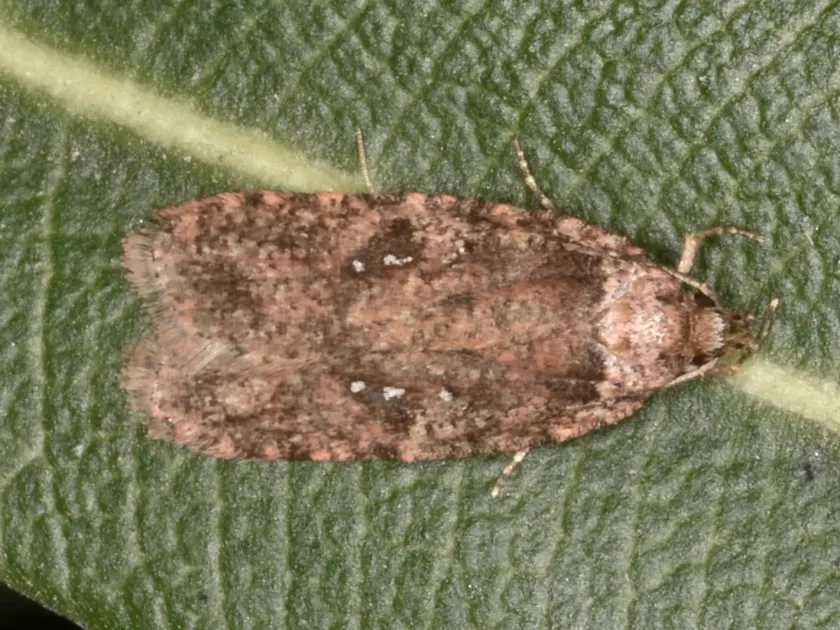
The adult parsnip moth (Agonopterix applana) is a small moth with a wingspan of 18–22 mm. Its forewings are mottled greyish-brown with dark spots, providing excellent camouflage against vegetation and debris.
The larvae are small caterpillars, reaching up to 15 mm in length. They typically feature a light green or yellowish-green body with a dark head and distinct dark spots along the sides.
Biologically, it belongs to the Lepidoptera order and the family Depressariidae. It is a highly adaptable species that thrives in temperate climates across Europe and adjacent regions.
The life cycle involves complete metamorphosis: egg, larva, pupa, and imago. The species typically overwinters as an adult, hidden in bark crevices, dry grass, or garden structures.
Understanding their seasonal behavior is key to control; adult moths emerge early in spring, synchronizing their reproduction with the development of host plants.
What it damages
The parsnip moth primarily attacks members of the Apiaceae family. It is a known pest for carrots, parsnips, celery, parsley, and dill, often causing significant damage to both commercial and home gardens.
Larvae feed on leaves, flower buds, and seed heads. They construct webs to bind the plant parts together, which protects them while they feed on the internal tissues of the flowers and stems.
This feeding behavior causes significant damage to seed-bearing plants, often leading to reduced seed quality and lower yields, which is particularly problematic for seed production farms.
Young stems and foliage can also be damaged, leading to stunted growth, leaf deformation, and a weakened overall state of the crop.
The larval activity also creates entry points for secondary infections like fungal or bacterial rot, which can destroy the vegetable crop before harvest.
When it appears
The overwintering adults emerge in early spring, as soon as temperatures rise, typically coinciding with the start of the host plant growing season.
Eggs are laid on the young foliage and developing flower stalks. The incubation period is relatively short, leading to the emergence of larvae during the late spring and summer months.
The most severe damage usually occurs during the mid-summer period when the umbelliferous plants produce their flowering umbels, providing abundant food for the larvae.
There can be one or two generations per year, depending on the latitude and local climate conditions. The final generation prepares for winter by seeking sheltered overwintering sites.
Monitoring the flight of adults and early larval stages is crucial for effective timing of integrated pest management strategies.
Signs of infestation
The most visible sign of infestation is the presence of webbed leaves or flower heads, where larvae have spun silk to create protective shelters.
Signs of feeding include skeletonized leaves, holes in the foliage, and distorted, stunted development of the flower stalks.
Frass (larval excrement) is often found accumulated within the webbed areas or near the base of the damaged umbels, serving as a clear indicator of active infestation.
- Webbed clusters on the tips of leaves or flower buds.
- Deformed or dried-out flower umbels.
- Presence of holes and larval trails on the leaves.
Early detection involves inspecting the underside of leaves for small egg clusters and young larvae before the webbing becomes widespread.
Control measures
Cultural control is the first line of defense, including deep autumn tillage to destroy overwintering habitats and the removal of wild host plants near the fields.
Crop rotation is essential. By moving umbelliferous crops to new fields every 3-4 years, the buildup of the moth population can be significantly suppressed.
Chemical control should only be used when necessary, targeting the young larvae before they protect themselves inside their webbed nests.
Biological control, using organic sprays like Bt (Bacillus thuringiensis) or other eco-friendly insecticides, provides an effective alternative to harsh synthetic pesticides.
Regular monitoring through visual inspections allows for localized treatment, minimizing the environmental impact and ensuring the crop remains safe for consumption.
Taxonomy
- Latin name
- Agonopterix applana
- Order
- Lepidoptera (butterflies)
- Family
- Depressariidae
- EPPO code
- DEPRAP
Discussion
No discussions yet — be the first.