
Semioscopis oculella
Semioscopis oculella
Description
How to identify
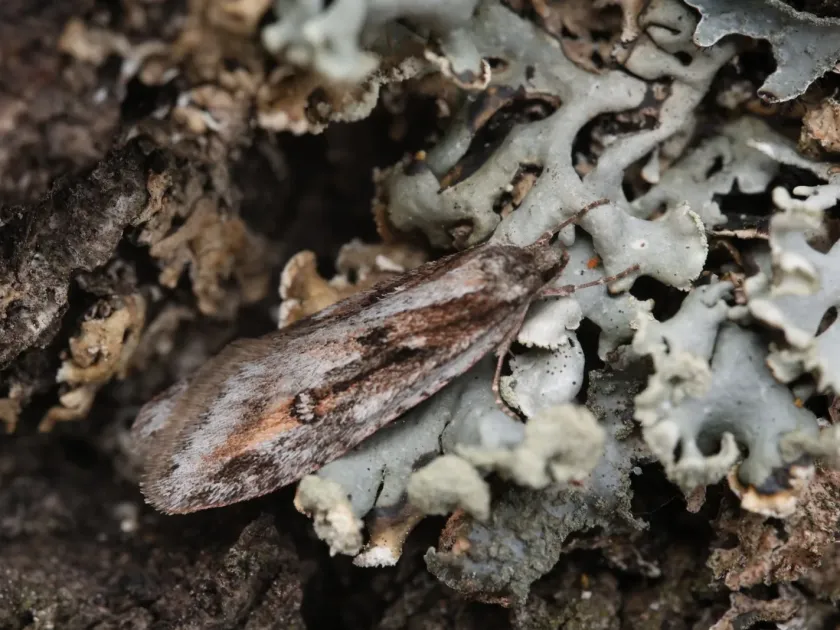
Semioscopis oculella is a nocturnal moth species belonging to the Depressariidae family. Adult moths typically have a wingspan ranging from 20 to 25 millimeters.
The forewings are characterized by a mottled grey-brown coloration with distinct markings that resemble eyes, which provides effective camouflage against tree bark. The hindwings are generally lighter in color.
The larvae, or caterpillars, are slender and display a light green to yellowish color, allowing them to blend in with the foliage they consume.
As members of the order Lepidoptera, they undergo complete metamorphosis, passing through four stages: egg, larva, pupa, and adult.
The species is primarily associated with temperate deciduous forests and wooded areas, where it plays a role in the natural cycle of vegetation consumption.
What it damages
This moth is considered a foliage-feeding pest. The caterpillars cause the most significant damage during the spring months while actively feeding on new tree growth.
The primary hosts include various deciduous trees such as birch (Betula), aspen (Populus), and alder (Alnus). In some instances, they may infest orchard trees located near wooded boundaries.
Larvae typically skeletonize the leaves, consuming the leaf tissue while leaving the veins intact. In the early stages of development, they may fold or roll leaves to create protective shelters.
Heavy infestations can lead to significant defoliation, which stresses the tree, reduces its growth rate, and weakens its overall vigor.
Repeated defoliation over several consecutive years can lead to branch dieback and increased susceptibility to secondary infections and wood-boring pests.
When it appears
The life cycle is closely synchronized with the spring leaf development of host trees. Adults emerge early in the year, often as early as March or April.
Following mating, eggs are laid near the dormant buds. Larval emergence coincides with bud break, ensuring an immediate food source for the newly hatched caterpillars.
The period of active larval feeding occurs throughout late spring, generally peaking in May. This is the time when the pest is most visible and damage becomes apparent.
By early summer, the larvae finish their development and proceed to pupation. They remain in the pupal stage for the rest of the year, overwintering on the host tree or in leaf litter.
The species is univoltine, meaning it produces only one generation per year, with the pupa serving as the overwintering stage.
Signs of infestation
The presence of silken nests or webbed leaves is a primary indicator of larval activity, as caterpillars use silk to secure leaves for protection.
Small, pellet-like frass (droppings) on the leaves or on the ground directly beneath the canopy are reliable signs of active feeding.
Visible thinning of the foliage or irregularly shaped holes in the leaves, occurring early in the spring, suggest the presence of this moth.
Adult moths can occasionally be observed near light sources during the night in early spring, which is a sign of their flight period.
During the dormant season, careful inspection of the bark and tree crevices may reveal the silk cocoons where the insects are overwintering.
Control measures
Mechanical control includes the removal and destruction of infested leaves and webbed nests during the early spring before the caterpillars disperse.
Biological control involves the use of Bacillus thuringiensis (Bt), which is highly specific to lepidopteran larvae and has a minimal impact on beneficial predatory insects.
Chemical intervention should be timed carefully; insecticides are most effective when applied before the caterpillars create protective leaf folds or nests.
Encouraging natural predators, such as insectivorous birds and parasitic wasps, can help keep population densities below the threshold of economic concern.
- Monitor trees regularly during the spring months.
- Scrape old bark to disrupt pupation sites if infestation levels are high.
- Use systemic insecticides only when necessary and during the early larval stage.
- Maintain tree health through proper irrigation and soil care to improve natural defenses.
Taxonomy
- Latin name
- Semioscopis oculella
- Order
- Lepidoptera (butterflies)
- Family
- Depressariidae
- EPPO code
- SMOSOC
Discussion
No discussions yet — be the first.