
Early Thorn
Selenia dentaria
Description
How to identify
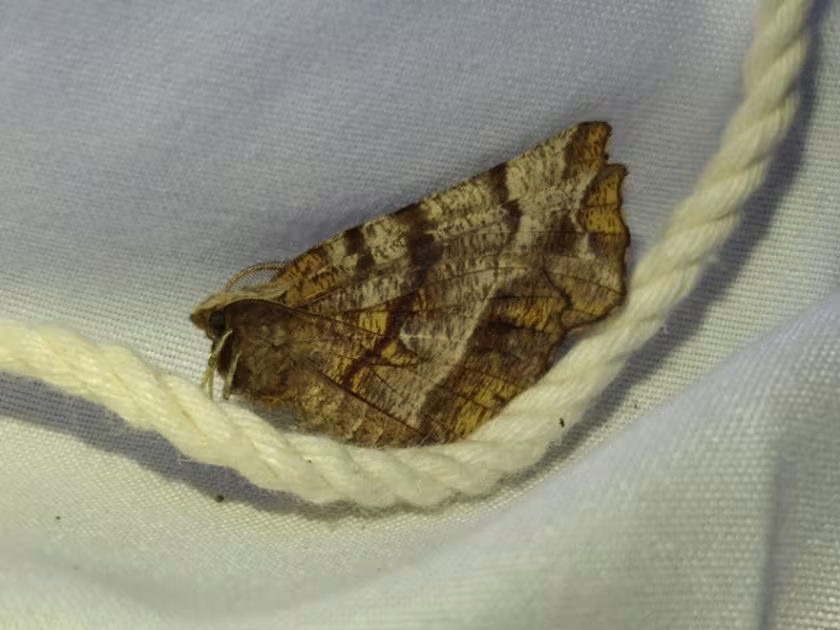
The Early Thorn (Selenia dentaria) is a moth belonging to the family Geometridae. Adult specimens typically have a wingspan ranging from 35 to 45 mm. Their wing coloration varies from grayish-brown to reddish, marked with distinct dark lines and spots forming a jagged pattern, which provides excellent camouflage against tree bark.
The larvae, or caterpillars, of this species grow up to 50 mm in length. They are masters of mimicry, resembling dry twigs or leaf petioles. Their bodies are typically brownish or grayish with small bumps, rendering them nearly invisible to predators and gardeners while they feed.
The pupae develop within loose cocoons attached to branches or hidden in leaf litter. The insect often passes unfavorable seasons in the pupal stage, adapting to regional climate conditions.
The life cycle consists of two generations per year in southern latitudes and a single generation in cooler regions. The moths are active mainly at dusk and during the night; during the day, they remain motionless on tree trunks with their wings pressed against the surface.
Systematically, the species belongs to the order Lepidoptera, family Geometridae, subfamily Ennominae. It shares many physiological traits with other thorn moth species that affect forest and fruit plantations.
What it damages
The Early Thorn is a polyphagous pest. The primary damage is caused by the caterpillars, which actively consume the foliage of a wide range of deciduous trees and shrubs.
Susceptible hosts include fruit trees such as apple, pear, plum, and cherry, as well as forest species like alder, birch, willow, and hazel.
During outbreaks, the pest can cause significant defoliation, leading to tree stress, reduced photosynthetic activity, and consequently, lower fruit yields.
Young caterpillars are particularly dangerous, as they start by feeding on buds and tender young leaves, which can stunt the development of new shoots.
For both commercial orchards and private gardens, the presence of this pest threatens the aesthetic quality of fruit and can lead to a noticeable decline in the overall health of the trees.
When it appears
The first generation of moths typically emerges in the spring, during April and May, as soon as temperatures remain consistently above freezing.
The second generation occurs in the second half of summer, usually July and August, resulting in an extended period during which the vegetation is vulnerable to caterpillar damage.
Spring generation caterpillars feed in late spring and early summer, peaking in activity during June. Pupation follows after the larvae complete their development stages.
The caterpillars of the second generation continue feeding into late summer before entering the pupal stage to overwinter.
Environmental factors such as temperature and humidity significantly impact the development speed of each life stage, meaning that warmer years can shorten the life cycle.
Signs of infestation
The most common sign of infestation is the presence of eaten leaves, often showing damage that progresses from the edges inward toward the center.
If you inspect branches closely in the early morning, you may spot the caterpillars themselves, which often freeze in a rigid, extended position to mimic twigs.
The presence of frass (caterpillar droppings) on leaves beneath damaged canopy areas serves as an additional indicator of active feeding in the upper parts of the tree.
In cases of heavy infestation, a visible thinning of the canopy is apparent, especially on peripheral branches where feeding is most intense.
Occasionally, empty cocoons or attachment marks from pupae may be found on tree trunks, left behind after the adult moths emerge.
Control measures
Controlling the Early Thorn involves a combination of cultural and chemical methods, applied based on the level of economic damage threshold.
- Manual removal of caterpillars from young trees during morning hours.
- Application of biological insecticides based on Bacillus thuringiensis at the first signs of infestation.
- Use of sticky bands on tree trunks to trap migrating larvae.
- Spraying the orchard with contact or systemic insecticides when caterpillar populations reach critical levels.
- Encouraging natural predators, such as birds and beneficial insects, which help keep population numbers in check.
It is important to monitor the orchard during the flight period of the moths to prevent egg-laying and subsequent larval damage.
Chemical treatments should be carefully scheduled according to pre-harvest safety intervals, prioritizing products with minimal residual effects.
Adherence to good horticultural practices, such as sanitary pruning and removing dead wood, helps reduce the number of suitable pupation sites for the pest.
Taxonomy
- Latin name
- Selenia dentaria
- Order
- Lepidoptera (butterflies)
- Family
- Geometridae
- EPPO code
- SELNDE
Discussion
No discussions yet — be the first.