
Selenia
Selenia
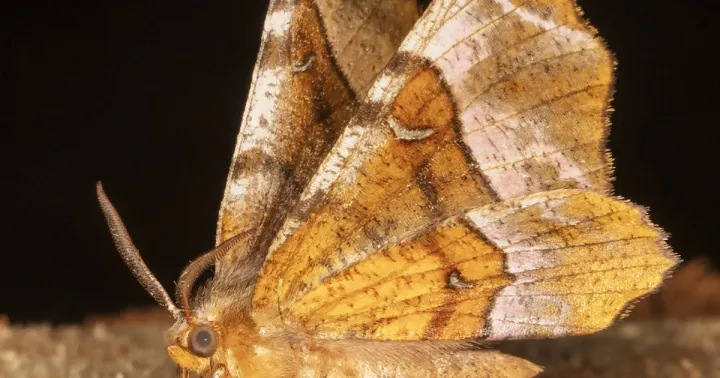
Description
How to identify
The genus Selenia belongs to the family Geometridae, order Lepidoptera. These moths are medium-sized and possess the characteristic "angular" wing shape typical of their family, often appearing jagged to mimic dry leaves.
Adult individuals exhibit pronounced sexual dimorphism and seasonal variation, which is a key identification feature. The wing color ranges from ochre-yellow to brown with dark bands and spots.
Caterpillars have the typical structure of geometrids: they possess only three pairs of thoracic legs and two pairs of abdominal prolegs, causing them to move in a characteristic "looping" fashion.
Pupae usually overwinter in the soil or leaf litter, attached to the substrate with a silken cocoon. Larvae often mimic twigs of host plants, which makes them difficult to detect.
The identification of specific species within the genus is performed by examining the structure of the genitalia and the patterns on the underside of the wings, which may differ significantly between spring and summer generations.
What it damages
Selenia caterpillars are polyphagous; they feed on the leaves of various trees and shrubs, including fruit crops. They are most commonly found on birch, alder, willow, as well as apple and pear trees in orchards.
It is the larvae that cause damage by actively eating the leaf blade, starting from the edges and moving towards the central vein. In cases of high population density, total defoliation of individual branches or even the entire plant is possible.
Young caterpillars skeletonize the leaf, consuming the soft tissues while leaving the major veins intact. Older caterpillars consume the entire leaf, significantly reducing the plant's photosynthetic area.
The pest causes serious economic damage in nurseries and young orchards, where the destruction of young shoots leads to stunted growth and weakened plant immunity.
In addition to direct leaf damage, caterpillar excrement can soil the surface of fruits, reducing their marketability and creating conditions for secondary fungal infections.
When it appears
Species of the genus Selenia usually have two generations per year. Moths of the spring generation emerge early in the spring, right after the snow melts, and are active at night.
The development of the summer generation occurs in mid-summer. Temperature regimes have a key influence on the speed of metamorphosis, determining the timing of adult emergence.
Caterpillars of the first generation appear in May-June, while the second generation feeds actively in the second half of summer and early autumn, preparing for pupation.
The overwintering stage is the pupa. It remains in a state of diapause in protected locations such as soil or leaf litter, surviving winter conditions.
Monitoring the phenology of the pest allows for more precise planning of insecticide applications, focusing on the periods of most massive larval hatching.
Signs of infestation
The first sign of the pest's presence is characteristic leaf damage, which appears as uneven edges or large holes within the leaf blade.
The presence of the caterpillars themselves is the most obvious sign. Due to their protective coloration, they are difficult to notice, but inspection of branches may reveal individuals frozen in a "twig" posture.
Using light traps at night helps identify massive moth flights, which serves as a signal to begin monitoring for egg clusters on leaves.
The presence of silken threads, which caterpillars use to bind adjacent leaves together or anchor themselves to twigs, also indicates the presence of this pest in the tree canopy.
In dry weather, caterpillar excrement accumulating on the lower leaves becomes a noticeable indicator of high population density.
Control measures
Agricultural methods include regular cleanup and destruction of fallen leaves, which may contain pupae, significantly reducing the overwintering population.
Biological preparations based on bacteria (e.g., Bacillus thuringiensis) show high efficacy against young larvae without harming beneficial entomophages.
During periods of mass outbreaks, the use of stomach-contact insecticides applied in the evening is justified according to regulations.
- Spraying the canopy during mass larval emergence.
- Encouraging natural enemies in the garden: insectivorous birds and predatory insects.
- Installing pheromone or light traps to reduce the number of males.
It is important to adhere to treatment schedules, as older caterpillars are more resistant to the effects of many chemical agents than younger instars.
Taxonomy
- Latin name
- Selenia
- Order
- Lepidoptera (butterflies)
- Family
- Geometridae
- EPPO code
- SELNSP
Discussion
No discussions yet — be the first.