
Scopula umbilicata
Scopula umbilicata
Description
How to identify
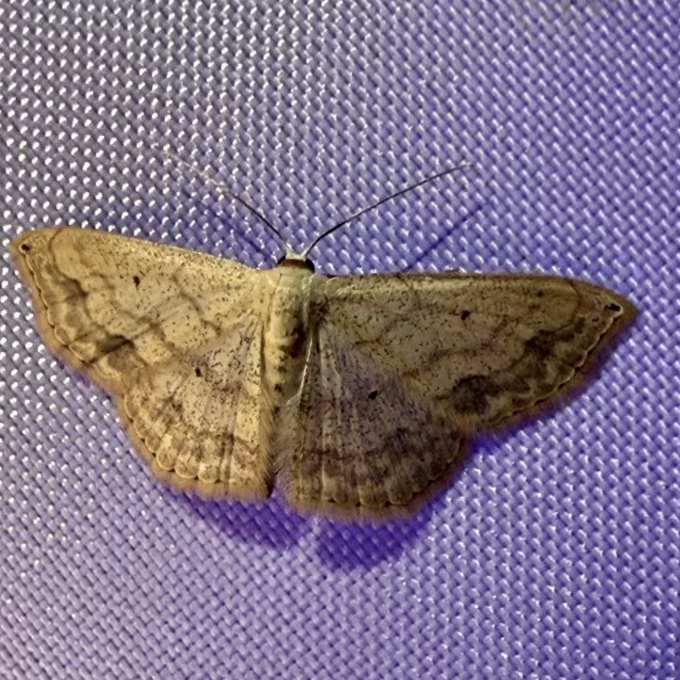
Scopula umbilicata is a moth belonging to the Geometridae family. These insects are generally nocturnal, with a wingspan that typically measures between 20 and 25 millimeters.
The wings exhibit a creamy to pale brown coloration, marked with delicate cross-lines and a distinct discal spot that gives the species its specific appearance.
The larvae, known as loopers, possess the typical body shape of geometer moth caterpillars. They move in a characteristic looping fashion, which makes them highly effective at blending in with stems and foliage.
The life cycle consists of four stages: egg, larva, pupa, and adult. Overwintering occurs primarily as a pupa or larva sheltered in plant debris or just beneath the soil surface.
Environmental factors such as humidity and ambient temperature are critical drivers for the development rate and population dynamics of this species throughout the growing season.
What it damages
Damage is primarily caused by the feeding activity of the larvae. They possess chewing mouthparts that consume leaf tissue, creating irregular holes and consuming margins.
While the moth can infest various plants, high larval populations can significantly impact vegetable crops. Excessive leaf loss reduces the photosynthetic capacity, leading to weakened plants.
Severe infestations during the early stages of plant growth can stunt development. In water-stressed environments, the damage caused by these larvae can lead to rapid wilting.
Beyond vegetative damage, the larvae may occasionally feed on reproductive structures, directly reducing crop yield and affecting the market quality of the produce.
Continuous feeding leads to reduced plant vigor, making the crop more susceptible to secondary infections or environmental stress factors during critical growth periods.
Signs of infestation
The most evident sign of an infestation is the presence of uneven holes in leaf blades. Young larvae often create skeletonized patches before expanding to larger tissue consumption.
Frass (larval excrement) appearing as small, dark pellets on the leaves or on the ground beneath the plant is a strong indicator of active larval feeding.
Close inspection of the underside of leaves, especially in the morning, often reveals the caterpillars. Their cryptic coloration makes them difficult to spot without careful scanning.
Light traps can be utilized during the night to monitor adult moth activity. A sudden increase in trapped moths serves as an early warning for potential larval outbreaks.
Visible webbing on foliage or leaves pulled together with silk threads can also indicate the presence of larvae, which often use these structures for protection during the day.
Control measures
Cultural control is essential. Fall plowing and soil cultivation are highly effective at disturbing pupal sites, significantly reducing the survival rate of the overwintering generation.
Weed management within and around the field is vital, as wild host plants often serve as a reservoir for the population when the main crop is not present.
Biological control agents, such as formulations containing Bacillus thuringiensis, provide an effective and environmentally friendly solution for managing young larval stages.
Chemical intervention should be considered only when scouting indicates that the economic injury level has been surpassed, using insecticides that are safe for beneficial predatory insects.
- Deep tillage after harvest to destroy pupae.
- Monitoring with pheromone or light traps.
- Application of biological insecticides during early larval stages.
- Maintaining field hygiene to reduce host plant availability.
Taxonomy
- Latin name
- Scopula umbilicata
- Order
- Lepidoptera (butterflies)
- Family
- Geometridae
- EPPO code
- SCOUUM
Discussion
No discussions yet — be the first.