
Chequered Blue
Scolitantides orion
Description
How to identify
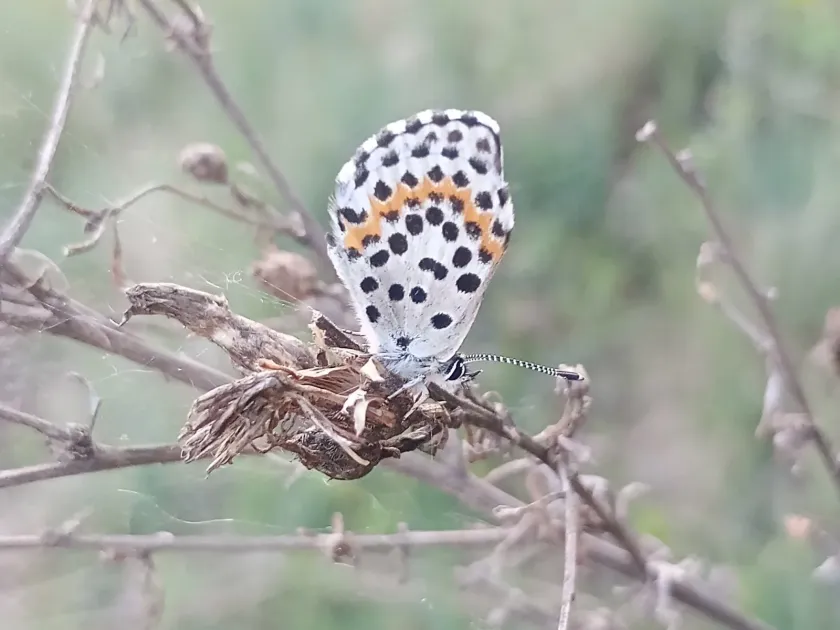
The Chequered Blue (Scolitantides orion) is a butterfly species from the Lycaenidae family, characterized by a wingspan of approximately 25–30 mm.
The dorsal side of the wings is dark brown with a subtle blue metallic sheen at the base, while the ventral side is light gray with distinct black spots and an orange margin.
The larvae, or caterpillars, are distinctively flattened, resembling woodlice, with a greenish body that often displays pinkish or reddish tints.
This species undergoes a complete metamorphosis, progressing through egg, larva, pupa, and adult stages as part of its life cycle.
It typically overwinters in the pupal stage, seeking shelter within plant debris or in the upper soil layers beneath its host plants.
What it damages
The primary damage is caused by the caterpillars, which feed on the leaves and sometimes the reproductive parts of their host plants.
They specifically favor plants from the Crassulaceae family, particularly Sedum species, which are commonly found in gardens and ornamental landscapes.
Heavy infestations can result in significant defoliation, leading to stunted plant growth and a severe reduction in the ornamental value of the crops.
Feeding damage leaves open wounds on the foliage, which can act as entry points for secondary pathogens like fungi or bacteria.
In high-density populations, these larvae can cause extensive damage to young seedlings or weakened plants within a short period.
When it appears
Adult butterflies are typically on the wing from late spring to early summer, usually between May and June, coinciding with host plant growth.
Depending on the regional climate, the species may complete one or two generations per year, prolonging the period of pest activity.
The larval stage, which is the most destructive phase, is generally active during the first half of the summer season.
Pupation occurs throughout the warmer months, after which the insects prepare for their overwintering period as autumn approaches.
Field monitoring should be intensified during sunny weather when adult butterflies are most active and likely to be laying eggs.
Signs of infestation
One of the first indicators of an infestation is the appearance of irregular holes or notched leaf edges on the foliage of host plants.
Small, dark granular frass left on the soil or lower leaves near the feeding sites is a clear sign of larval presence.
Larvae are often hard to spot due to their camouflage, which blends perfectly with the succulent leaves of the plants they inhabit.
Reduced vigor and wilting of affected plants, especially when a significant portion of the foliage has been consumed, are common symptoms.
The presence of ants visiting the plant is a frequently observed, though indirect, sign of the caterpillar's activity on the foliage.
Control measures
Cultural control includes the regular removal of wild host plants, such as wild Sedum, from the immediate vicinity of gardens to reduce pest pressure.
For small-scale infestations, manual collection of caterpillars during early morning or evening hours is a highly effective and eco-friendly practice.
Biological control agents, particularly microbial insecticides, can be used to manage population outbreaks without harming beneficial pollinators.
Chemical interventions should be limited to registered products, applied only when necessary and in accordance with label safety guidelines.
Proper garden hygiene, including the removal of leaf litter and debris at the end of the season, helps destroy overwintering pupae and reduces the next year's population.
Taxonomy
- Latin name
- Scolitantides orion
- Order
- Lepidoptera (butterflies)
- Family
- Lycaenidae
- EPPO code
- SCTDOR
Discussion
No discussions yet — be the first.