
Lang's Short-tailed Blue
Scolitantides
Description
How to identify
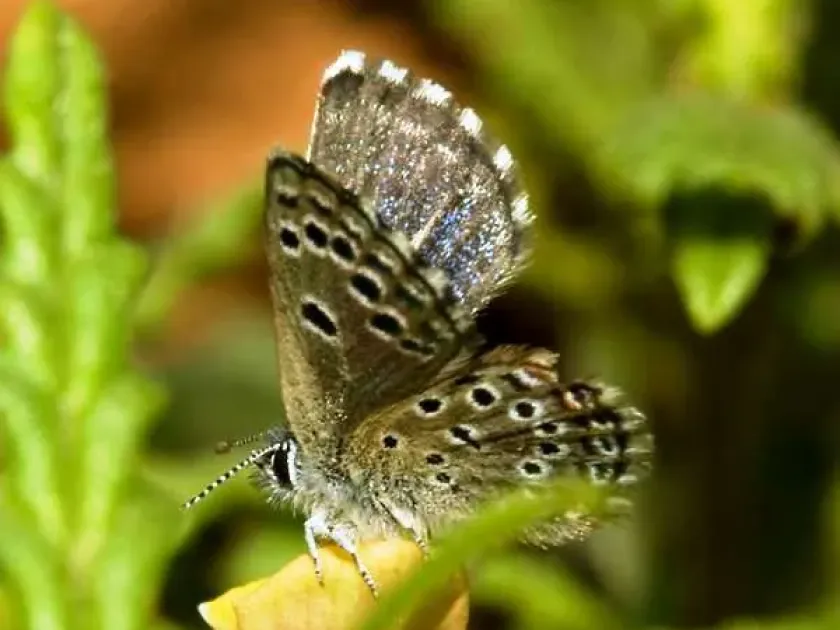
Lang's Short-tailed Blue, scientifically known as Leptotes pirithous or related species within the Lycaenidae family, is a small butterfly with a wingspan of 25-35 mm.
The upper surface of the wings in males displays a distinct purplish-blue sheen, while females exhibit a darker, brownish-grey coloration with muted markings.
A distinctive feature of this species is the presence of small, thin tails on the hindwings, which are often used for quick identification in the field.
The larvae are typically pale green or yellowish, with a smooth texture that allows them to blend in effectively with the host plant's foliage and flowers.
Eggs are small, pale, and ribbed, usually laid singly on buds or young pods, ensuring that larvae have immediate access to food upon hatching.
What it damages
This pest primarily attacks leguminous plants, causing significant damage to crops such as peas, beans, soybeans, and alfalfa across various regions.
The larvae bore into the developing pods, feeding directly on the seeds, which compromises both the quantity and the quality of the harvested produce.
Heavy infestations can lead to substantial yield losses, as damaged pods often drop prematurely or become susceptible to rot and secondary fungal infections.
The presence of larval excrement within the pods creates an unhygienic environment, making the remaining seeds unsuitable for consumption or further commercial processing.
Fields situated near wild legume patches are at higher risk of infestation, as these wild areas serve as a reservoir for the butterfly population.
When it appears
The butterflies are active from late spring through mid-summer, with peak flight activity often observed during warm, sunny weather conditions.
In temperate climates, the species may complete two or more generations per season, depending on temperatures and the availability of host plants.
The most damaging period coincides with the flowering and pod-filling stages of the host plants, when the larvae are actively feeding inside the pods.
Winter is typically passed in the pupal stage, hidden within the soil or debris, which protects the insect from extreme cold and desiccation.
Spring emergence of adults is closely synchronized with the flowering of early legume varieties, allowing the population to multiply rapidly.
Signs of infestation
The most reliable sign of an infestation is the presence of small, circular entry holes in the pod walls, often accompanied by discoloration of the pod surface.
Dissecting the pods reveals the extent of the damage, showing consumed seeds and dark, granular frass left behind by the developing larvae.
Premature yellowing or shriveling of young pods on the plant is a strong indicator that larvae are feeding inside and disrupting seed development.
Increased butterfly activity around the crop canopy during the flowering stage should serve as a warning to perform immediate field scouting.
- Small entry holes in the pod exterior.
- Partially or fully eaten seeds within pods.
- Presence of larval frass inside the pod chamber.
- Premature wilting or shedding of young pods.
Control measures
Crop rotation is essential in managing this pest, as it breaks the life cycle by removing the host plants from the infested area for a season.
Deep plowing after the harvest helps bury and destroy pupae in the soil, significantly reducing the population that emerges the following spring.
Targeted insecticide applications should be timed precisely during the adult flight period and early egg-hatching phase to maximize efficacy.
Biological control agents, including specific parasitic wasps or microbial pesticides, can be employed to manage larvae without harming beneficial insects.
Maintaining clean fields by removing wild legume weeds reduces the availability of secondary food sources, thereby limiting the pest's reproductive potential.
Taxonomy
- Latin name
- Scolitantides
- Order
- Lepidoptera (butterflies)
- Family
- Lycaenidae
- EPPO code
- SCTDSP
Discussion
No discussions yet — be the first.