
Purslane sawfly
Schizocerella pilicornis
Description
How to identify
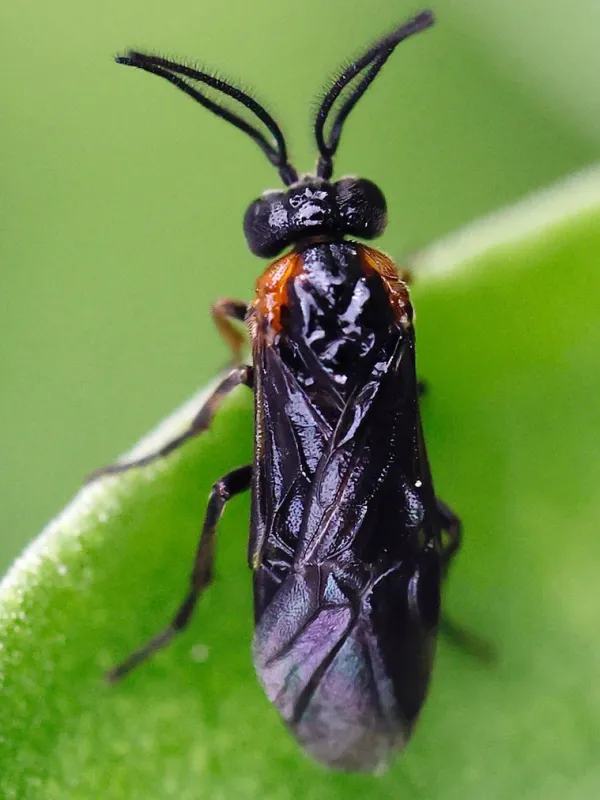
The purslane sawfly (Schizocerella pilicornis) is a member of the Argidae family within the order Hymenoptera. It is a small insect known for its specific host plant association with purslane species.
Adult sawflies are typically small, measuring about 5 mm in length, and possess a dark-colored body. They are often difficult to spot due to their size and swift movement around the foliage.
The larval stage is the most destructive phase, characterized by pale green, caterpillar-like bodies. These larvae blend perfectly with the succulent stems and leaves of the host plant.
The life cycle begins with eggs laid inside the leaf tissue. Upon hatching, the larvae go through several instars of growth before dropping to the soil to pupate in the ground.
Multiple generations can occur throughout the growing season, particularly in warm climates, leading to a rapid buildup of the pest population on garden beds.
What it damages
This pest exclusively targets common purslane (Portulaca oleracea). While often considered a weed, purslane can also be cultivated as an ornamental or edible plant.
The larvae feed by consuming the succulent leaf tissue, creating irregular holes and eventually skeletonizing the leaves, leaving behind only a network of vascular veins.
Severe infestations can strip a plant entirely of its leaves, which drastically inhibits photosynthesis and leads to the decline and death of the entire plant structure.
Because purslane relies on its leaves for moisture storage, the damage caused by the sawfly larvae makes the plant highly susceptible to drought and heat stress.
Furthermore, the physical damage provides entry points for various pathogens, potentially leading to secondary infections that further degrade the health of the host plant.
Signs of infestation
Initial signs of an infestation include tiny translucent spots on the leaves, which are the early feeding sites where larvae have started their grazing activities.
As the larvae mature, the feeding becomes more aggressive, resulting in large, ragged holes throughout the foliage, making the plant look tattered and unhealthy.
Small black fecal pellets located on the leaves or the soil surface underneath the plant are strong indicators of an active population of larvae feeding above.
Direct observation is often the most effective method: by gently inspecting the undersides of the leaves or curled leaf margins, one can usually find the larvae hiding.
A general lack of vigor, yellowing of foliage, and premature wilting of specific shoots are common symptoms of severe damage caused by this specific insect pest.
Control measures
Managing the purslane sawfly requires a multi-faceted approach, starting with regular monitoring of plants during the peak growing season to detect early signs of damage.
For small-scale home gardens, manually picking off the larvae and pruning away heavily infested parts of the plant is often sufficient to keep the population under control.
Cultural practices, such as maintaining a clean garden and removing wild purslane growing nearby, help eliminate the pest's primary host and food source.
If necessary, biological insecticides, such as products containing spinosad or other approved organic agents, can be used to treat the infestation effectively.
In cases of heavy infestation, traditional chemical pesticides may be applied, though it is crucial to follow safety guidelines and consider the impact on beneficial insects.
Taxonomy
- Latin name
- Schizocerella pilicornis
- Order
- Hymenoptera
- Family
- Argidae
- EPPO code
- SCHCPI
Discussion
No discussions yet — be the first.