
Rose sawfly
Arge
Description
How to identify
The rose sawfly, belonging to the genus Arge and family Argidae, is a common pest of rose bushes. Adults are robust, wasp-like insects measuring approximately 8–12 mm in length, usually with dark, shiny bodies and clear or slightly darkened wings.
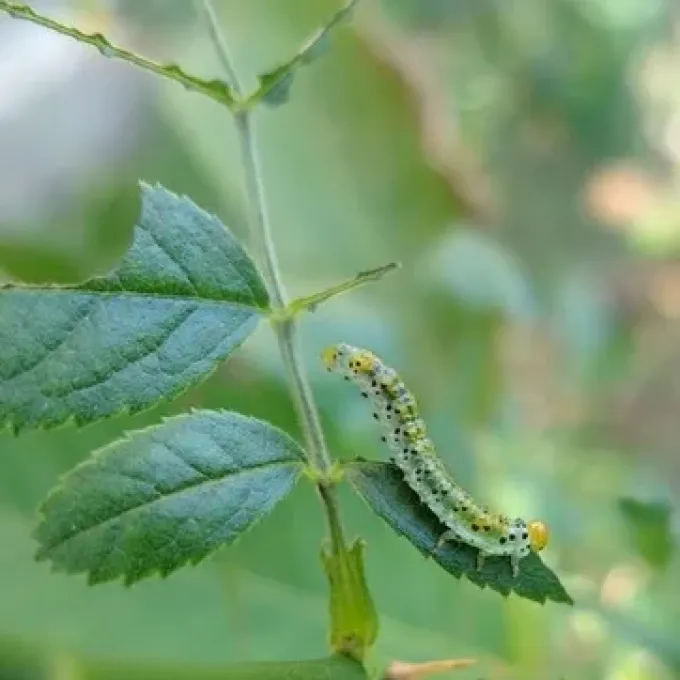
The larvae, often mistaken for moth caterpillars, differ in their anatomy, specifically in the number of prolegs. They exhibit a greenish-grey coloration, frequently adorned with small black spots, providing excellent camouflage against rose foliage.
The life cycle involves a complete metamorphosis. These insects typically overwinter as prepupae within cocoons buried in the topsoil beneath the host plant, emerging as adults in the spring.
Females possess a specialized, saw-like ovipositor, which they use to make incisions in young shoots or leaf stalks to deposit their eggs safely within the plant tissue.
Depending on the climatic conditions and species, there may be one or two generations per year, requiring vigilance throughout the growing season.
What it damages
This pest specifically targets plants within the Rosaceae family, causing significant damage to garden roses, wild roses, and various ornamental shrubs grown for their aesthetic value.
The larvae are highly destructive, consuming leaf tissue and starting with small holes that quickly expand until the leaves are skeletonized, leaving only the primary veins behind.
Female egg-laying activity also harms the plant by causing mechanical wounds that lead to deformation, drying out of the tips of young shoots, and reduced overall plant vigor.
A severe infestation can leave a rose bush completely defoliated, which severely stresses the plant and prevents it from producing healthy blooms or preparing for winter dormancy.
Plants weakened by sawfly feeding are significantly more susceptible to secondary fungal infections and environmental stressors like drought or frost.
Signs of infestation
The first indication of a sawfly presence is the discovery of "saw-cut" marks or thin, brownish lines on the stems and leaf petioles, marking the locations of egg clusters.
Visible holes in leaves and the appearance of skeletonized foliage are clear evidence that larvae are actively feeding, usually starting from the interior of the bush.
A careful inspection of the underside of the leaves during the morning hours often reveals colonies of larvae, which typically curl into an 'S' shape when disturbed.
The presence of fine, dark frass (droppings) on the leaves or the mulch directly beneath the infested area is a reliable sign of larval activity.
Wilting of new shoots and premature yellowing of leaves can also point to underlying damage caused by the female's oviposition process or larval feeding on the tender stems.
Control measures
Cultural control is the first line of defense: loosening the soil around the base of the bushes in autumn and spring helps expose and destroy overwintering cocoons.
Manual removal of larvae is highly effective for smaller gardens; simply shake the bushes or pick the larvae off by hand early in the morning when they are less active.
Pruning out infested shoots that show signs of egg laying is crucial, as this removes the eggs before they hatch and prevents the next generation from spreading.
- Application of systemic insecticides at the first sign of larval feeding.
- Use of biological control agents such as Bacillus thuringiensis or neem oil sprays.
- Maintaining plant health through proper fertilization and watering to improve natural resistance.
Chemical treatments using pyrethroids should be reserved for severe infestations, ensuring that applications are timed to target young larvae for maximum efficacy.
Taxonomy
- Latin name
- Arge
- Order
- Hymenoptera
- Family
- Argidae
- EPPO code
- ARGESP
Discussion
No discussions yet — be the first.