
Elm zigzag sawfly
Aproceros leucopoda
Description
How to identify
The elm zigzag sawfly (Aproceros leucopoda) is an invasive species of hymenopteran insect belonging to the family Argidae. The adult is a small black insect, resembling a tiny fly, measuring about 6–8 mm in length.
A distinctive feature of this species is its parthenogenetic reproduction, where populations consist entirely of females. This reproductive strategy allows for rapid colonization of new areas.
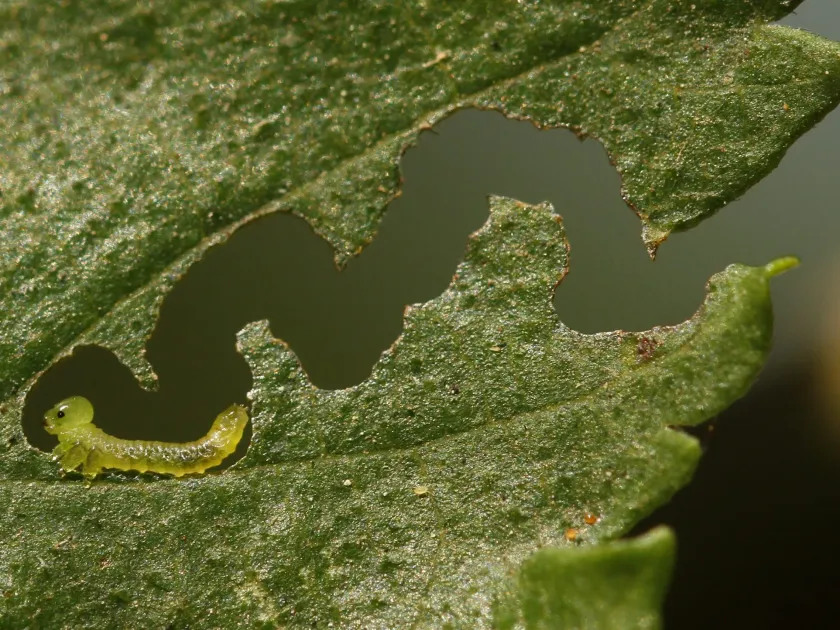
The larvae are yellow-green with dark markings on the head and thorax. They feed openly on the leaf surface, moving in a distinct zigzag pattern during their early developmental stages.
The adult sawfly has characteristic white legs, which is reflected in the scientific name leucopoda. These legs are a useful diagnostic feature for professional monitoring.
The species is considered a serious quarantine pest in many regions due to its aggressive defoliation habits on elm trees.
What it damages
The primary host plants for this sawfly are various elm species (genus Ulmus), including the Siberian elm, European white elm, and other ornamental varieties.
The larvae are highly specialized leaf feeders, which can consume large amounts of leaf tissue, significantly affecting the plant's aesthetic and physiological state.
Heavy infestations lead to complete defoliation of the tree. This process, when repeated annually, severely weakens the tree's immune system and growth capacity.
Defoliated elms are more susceptible to secondary attacks from other pests and pathogens, including the deadly Dutch elm disease, which can prove fatal to the tree.
The damage is particularly noticeable in urban settings, where healthy elms are vital for air quality and visual landscape structure.
When it appears
The life cycle begins in early spring as adults emerge from overwintering cocoons hidden in the soil or leaf litter beneath the host trees.
Throughout a single growing season, the elm zigzag sawfly can complete three to four generations, depending on local climate conditions and temperatures.
The most intense feeding period occurs between June and August, when multiple generations of larvae may overlap, causing significant leaf loss in a short period.
As temperatures drop in autumn, the insect enters a resting phase, forming durable, net-like cocoons to survive the winter months.
This rapid succession of generations is a key factor in the species' ability to cause widespread damage in a very short amount of time.
Signs of infestation
The most iconic sign is the zigzag-shaped feeding tracks on young leaves, created by early-instar larvae as they move across the surface.
Older larvae consume the leaf tissue entirely, often leaving only the midrib or main veins, leading to a skeletonized appearance of the foliage.
White, net-like cocoons can be found attached to the underside of the leaves, indicating the presence of pupae or pre-pupae.
Visible frass (insect excrement) on the ground or on the remaining lower leaves is a clear indicator of a high-density infestation.
- Zigzag feeding patterns on developing leaves.
- Skeletonized leaves with only veins remaining.
- Premature leaf drop in mid-summer.
- Presence of white, net-like cocoons on the foliage.
Control measures
Chemical control involving systemic insecticides is the most effective approach for managing populations in nurseries and ornamental plantings.
Biological control using Bacillus thuringiensis (Bt) is a recommended method for environmentally sensitive areas, as it specifically targets sawfly larvae.
Sanitation practices, such as the careful removal and destruction of fallen leaves in autumn, can significantly reduce the overwintering population.
Regular visual monitoring of the canopy is crucial for detecting the first signs of activity, allowing for timely intervention before large-scale damage occurs.
Integrated pest management (IPM) strategies, combining mechanical and biological controls, provide the best long-term results in urban and forest landscape maintenance.
Taxonomy
- Latin name
- Aproceros leucopoda
- Order
- Hymenoptera
- Family
- Argidae
- EPPO code
- APRCLE
Discussion
No discussions yet — be the first.