
Berberis sawfly
Arge berberidis
Description
How to identify
The Berberis sawfly (Arge berberidis) belongs to the Argidae family of the Hymenoptera order. Adult insects are 9–11 mm long, featuring a shiny black body with a bluish metallic sheen and darkened wings.
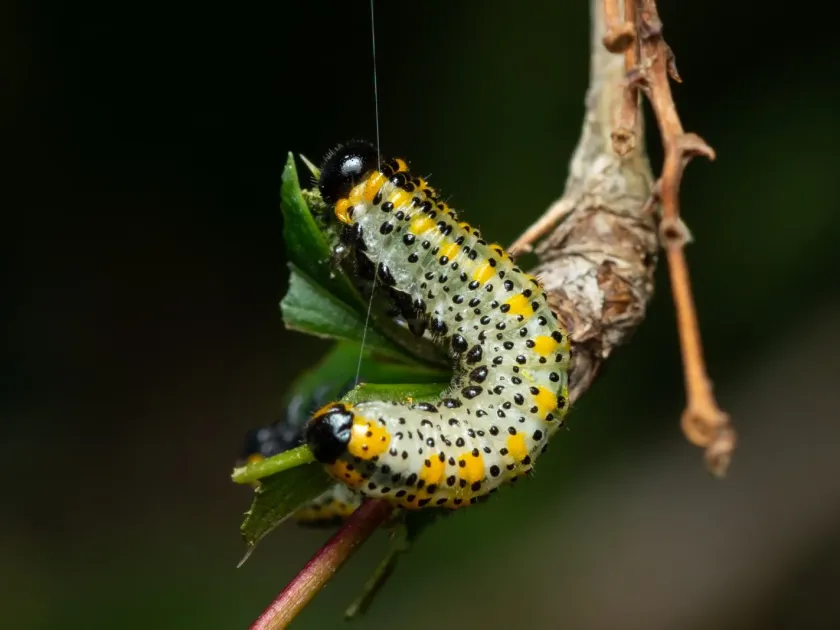
The larvae, often referred to as false caterpillars, reach up to 20 mm in length. They have a greyish-green body with distinct rows of black spots along their sides, making them quite visible on the foliage.
Females lay their eggs directly into the tissues of young shoots or leaf stalks. This activity creates small swellings or scars, which are key diagnostic features for monitoring.
Pupation occurs in dense brown cocoons located in the top layer of the soil beneath the host plant, making soil management a viable part of the control strategy.
The life cycle typically consists of one generation per year, although favorable climatic conditions can sometimes lead to a second, partial generation in warmer regions.
What it damages
The primary host for this insect is the barberry (Berberis), including various ornamental species and cultivars commonly found in gardens and landscapes.
The larvae are specialized leaf-eaters that feed on young, tender leaves. During outbreaks, they can completely skeletonize a bush, leaving only the central leaf veins behind.
Severe infestations significantly ruin the aesthetic value of the plants, which is a major concern for landscape designers and gardeners maintaining formal shrubbery.
Extensive defoliation disrupts the plant's photosynthesis process, leading to overall plant stress, reduced vigor, and increased vulnerability to secondary diseases or harsh winters.
If left untreated, repeated annual attacks can lead to the stunting of shoots, branch dieback, and in extreme cases, the total death of weakened shrubs.
When it appears
Adult activity begins in late spring, typically in May, when stable, warm weather promotes the emergence of the insects from their overwintering cocoons.
The larvae appear in June, which is the peak period for feeding. This is when they are most voracious and cause the most significant damage to the plant canopy.
The larvae complete their feeding cycle in approximately 3 to 4 weeks. Once fully grown, they descend to the soil to pupate and remain there until the next season.
By late July, the presence of active larvae usually diminishes significantly as the insects move into the pupal stage, effectively ending the damage for the year.
Agronomists and gardeners should monitor plants closely throughout the month of June to intercept the larvae before they reach maturity and cause widespread defoliation.
Signs of infestation
Initial signs of infestation appear as small, irregular holes or notches along the leaf edges, which expand rapidly as the larvae consume more leaf tissue.
The presence of larvae on the underside of leaves or clustered on young shoots is a definitive indicator of an active Berberis sawfly population.
Look for longitudinal scars on the stems, which indicate where the female sawfly has inserted her ovipositor to lay eggs into the plant tissue.
Frass (larval excrement) appearing as dark, fine granules on leaves or beneath the shrub is a clear signal that a large number of larvae are feeding above.
- Yellowing and premature shedding of damaged leaves.
- Stunted growth of new shoots due to loss of foliage.
- Rolled leaves where larvae often hide during the heat of the day.
Control measures
Mechanical control involves hand-picking the larvae during the early morning or evening hours, which is highly effective for small gardens or individual specimen plants.
Cultivating or hoeing the soil beneath the shrubs in autumn and spring can destroy the cocoons buried in the ground, thereby reducing the overwintering population.
Biological insecticides based on entomopathogenic fungi or bacteria (such as Bacillus thuringiensis) are effective against early-stage larvae and are environmentally friendly.
Chemical control using systemic or contact insecticides may be necessary in cases of severe infestation, always following the label instructions for ornamental plants.
Regular inspection of barberry bushes from May to June is the best preventative measure to identify the pest early and minimize the need for chemical intervention.
Taxonomy
- Latin name
- Arge berberidis
- Order
- Hymenoptera
- Family
- Argidae
- EPPO code
- ARGEBE
Discussion
No discussions yet — be the first.