
Azalea sawfly
Arge azaleae
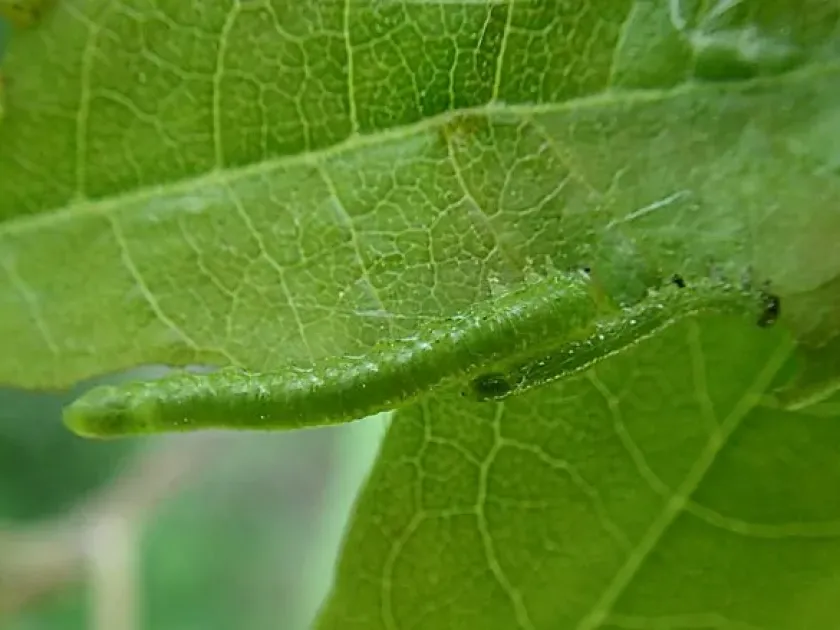
Description
How to identify
The Azalea sawfly (Arge azaleae) belongs to the order Hymenoptera, family Argidae. Adult sawflies are small, dark-bodied insects with transparent wings, often resembling small wasps but lacking a distinct "waist."
The larvae, which are the primary stage causing damage, resemble butterfly caterpillars but can be distinguished by the number of prolegs. They are often cryptically colored to blend in with the leaves of the host plant.
Their life cycle consists of egg, larva, pupa, and adult stages. Females use a saw-like ovipositor to insert eggs into the leaf tissue, which creates characteristic scars on the surface of young leaves.
Larval development takes several weeks, after which they migrate into the soil or leaf litter to pupate. Depending on the climate, the species may produce multiple generations per growing season.
Proper identification involves inspecting the underside of the foliage where young larvae tend to aggregate and feed in groups, making them easier to spot early in the infestation.
What it damages
The primary hosts for this pest are species of the genus Rhododendron, including deciduous and evergreen azaleas. They preferentially target fresh, tender growth during the spring and summer months.
Larvae possess chewing mouthparts and can rapidly consume large sections of the leaf blade. When left unchecked, they often leave only the midribs and main veins intact, severely reducing the plant's aesthetic value.
Heavy infestations can lead to complete defoliation of branches, which weakens the plant significantly, reduces its vigor, and makes it more susceptible to secondary environmental stresses.
The wounded leaf surfaces serve as entry points for various fungal and bacterial pathogens, potentially leading to additional plant health complications beyond the direct feeding damage.
Economic damage is particularly significant in commercial nurseries and landscaped public areas, where the rapid spread of larvae can destroy the marketability of the plants within a short timeframe.
When it appears
Adult sawflies typically emerge in late spring, aligning their activity with the onset of new leaf growth on azaleas, which provides the necessary nutrition for the larvae.
The most active period for larvae, and thus the peak period for damage, occurs during mid-summer. Monitoring should be most intensive during this window to ensure timely intervention.
Depending on regional temperature profiles, this species may complete two or three generations annually, often leading to overlapping stages of larvae throughout the season.
The insect overwinters as a prepupa within a protective cocoon, usually located in the topsoil beneath the host plant, allowing it to survive cold periods until the following spring.
Early-season scouting is critical, as controlling the first generation significantly reduces the potential for a massive population explosion later in the summer.
Signs of infestation
The earliest signs of an infestation include small, translucent, or brown spots on the foliage, which are the oviposition sites created by the female sawfly.
Clusters of larvae found feeding on the leaf margins are the most definitive indicator that an active infestation is occurring and requires immediate action.
Skeletonized leaves and missing leaf margins are classic symptoms of sawfly activity, providing a clear visual cue even from a distance.
The presence of frass (small, dark pellets of excrement) on leaves beneath the feeding site is a common indicator that larvae are present in the upper canopy.
- Curled or distorted young growth.
- Yellowing of leaves around feeding sites.
- Premature leaf drop following heavy larval feeding.
Control measures
Mechanical control, such as hand-picking and destroying larvae from the plant, is a highly effective strategy for smaller gardens or individual ornamental specimens.
Cultural practices, including mulching or light soil cultivation around the base of the plant in late autumn, can help disrupt the overwintering pupae and reduce the following year's population.
Biological control agents, including sprays containing Bacillus thuringiensis (Bt) or entomopathogenic nematodes, can provide effective and targeted control of young larvae without harming beneficial insects.
If the infestation exceeds acceptable thresholds, systemic insecticides can be utilized to provide long-term protection, ensuring the chemical reaches the tissues being consumed by the larvae.
Always ensure thorough coverage of the foliage, especially the undersides of leaves, and rotate insecticide modes of action to prevent the development of pesticide resistance in the sawfly population.
Taxonomy
- Latin name
- Arge azaleae
- Order
- Hymenoptera
- Family
- Argidae
- EPPO code
- ARGEAZ
Discussion
No discussions yet — be the first.