
Purslane sawfly
Schizocerella
Description
How to identify
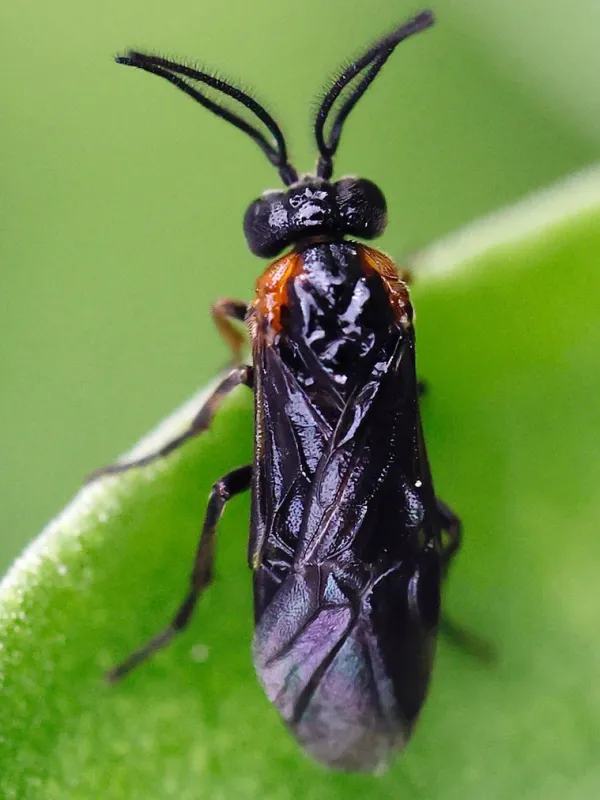
The purslane sawfly (Schizocerella vittata) belongs to the order Hymenoptera and the family Argidae. Adults are small, dark-colored wasps measuring approximately 4–6 mm in length with translucent wings.
The larvae are caterpillar-like in appearance, typically light green with a dark head. They are specialized feeders that thrive exclusively on Portulaca species, often boring into the leaves.
The life cycle involves complete metamorphosis, consisting of the egg, larval, pupal, and adult stages. Multiple generations can occur within a single growing season under warm conditions.
Pupation typically occurs in the soil inside tough, protective cocoons, which allow the species to overwinter successfully in the ground until the following spring.
The distribution of the sawfly mirrors the range of its host plant, common purslane, which is a frequent weed in many gardens and agricultural fields worldwide.
What it damages
The primary host plant for this pest is common purslane (Portulaca oleracea). The larvae consume the foliage, causing significant tissue loss and hindering the plant's ability to photosynthesize.
Early-stage larvae create mines inside the leaves, while larger larvae feed externally, skeletonizing the leaf and leaving only the tough, vascular veins behind.
Heavy infestations can lead to complete defoliation of the plants, which stunted growth, reduced vigor, and in severe cases, the eventual death of the affected purslane.
Beyond physical destruction, damaged plants become more susceptible to secondary fungal or bacterial infections due to the open wounds on their foliage.
In regions where purslane is cultivated for culinary purposes, the presence of these larvae drastically reduces the quality and marketability of the produce.
Signs of infestation
Initial signs of infestation are small, pale, window-like spots on the leaves, which indicate the presence of mining larvae working beneath the leaf surface.
As larvae mature and begin external feeding, you will notice jagged, irregular holes along the leaf margins, often leaving only the skeleton of the leaf intact.
Finding small, dark granules of larval frass on the leaves or the soil surface beneath the plant is a clear indicator that the larvae are currently active.
The visual thinning of the plant canopy and localized wilting of shoots are typical indicators that the sawfly population has reached damaging levels.
- Transparent leaf mines visible as trails or spots.
- Ragged leaf edges and skeletonized foliage.
- Small dark fecal pellets (frass) on leaves.
- Yellowing and premature drop of infested leaves.
Control measures
Sanitation is a critical first step: remove and destroy any plant material showing signs of larval mining or feeding to prevent the next generation from emerging.
Biological control using microbial insecticides based on Bacillus thuringiensis (Bt) is highly effective and safe for non-target organisms, making it a preferred choice for edible crops.
In cases of severe infestation, systemic or contact insecticides may be necessary. Always read the label for instructions regarding application rates and pre-harvest intervals.
Tilling the soil around host plants in the fall or early spring can expose overwintering cocoons to predators or environmental extremes, reducing the population for the next season.
Encouraging natural enemies, such as predatory wasps and parasitic flies, can help keep sawfly populations in check without the need for intensive chemical interventions.
Taxonomy
- Latin name
- Schizocerella
- Order
- Hymenoptera
- Family
- Argidae
- EPPO code
- SCHCSP
Discussion
No discussions yet — be the first.