
Saiga
Saiga tatarica
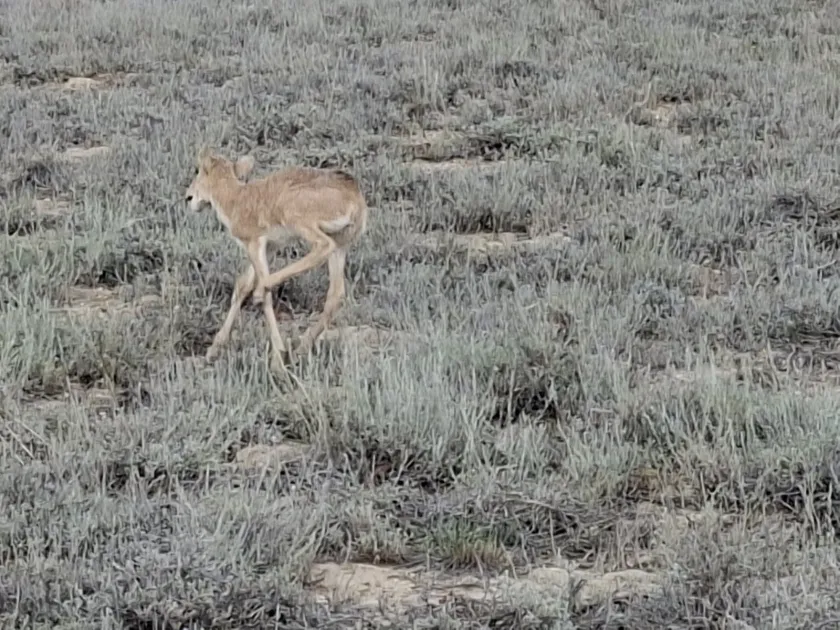
Description
How to identify
The Saiga (Saiga tatarica) is a species of antelope belonging to the family Bovidae. It is characterized by its unique, enlarged, trunk-like nose, which filters dust and warms the air in its arid habitat.
An adult saiga weighs approximately 40–50 kg and possesses slender legs built for high-speed endurance across the open steppe. Males are distinguished by their pale, translucent, waxy horns.
Saigas are nomadic and herd-forming animals. Their behavior involves moving across vast distances in sync with seasonal vegetation changes, often cutting across agricultural lands.
Their biological cycle is dictated by the availability of nutritional forage, leading to intense migration phases that often collide with human farming activities in steppe regions.
In the context of agronomy, they are classified as migratory herbivores that can unintentionally become severe agricultural pests due to their herd size and movement patterns.
What it damages
Saigas primarily damage cereal crops, including winter wheat and barley, especially during the early stages of vegetation when the young shoots are rich in nutrients.
The primary damage is caused by intense grazing, where herds can strip large sections of a field of green cover overnight. This leads to direct yield loss and reduced plant density.
Mechanical damage is also significant; the hooves of the herd heavily compact the soil and crush young plants, often destroying the root system and preventing the crop from recovering.
In cases where crops are nearing maturity, saigas can damage the stems and stalks, making mechanical harvesting difficult and reducing the overall quality of the harvested product.
The introduction of waste into the field ecosystem can degrade soil health and promote uneven crop development, complicating subsequent field management tasks.
When it appears
The most critical season for saiga-related damage is spring, as the emergence of winter crops coincides with the animals' peak migration period and their need for high-protein fodder.
Summer months can also bring risks if natural steppe vegetation undergoes a drought, forcing the herds to venture into irrigated lands or cultivated fields to find sustenance.
Autumn migration patterns often lead herds through farmland as they move toward warmer wintering grounds, potentially causing damage to newly planted winter crops.
Winter conditions, particularly deep snow, may force saigas to forage on fields where winter crops are dormant, as they can dig through thinner snow covers to reach the plants.
Seasonal intensity is highly variable and depends on annual rainfall; wet years with abundant natural forage often result in fewer incursions into agricultural territories.
Signs of infestation
Identification of saiga activity is primarily based on distinctive hoof prints found within the field, which are narrower and more pointed than those of domestic livestock.
The field will show signs of 'clear-cutting' patterns where the green vegetation has been consumed entirely down to the soil level, leaving bare patches across the field.
Clearly defined 'runways' or trampled trails through the middle of the field indicate the path of the herd and the extent of the areas where the soil has been heavily compacted.
Presence of specific droppings throughout the field serves as a confirmation of saiga occupancy, distinguishing their damage from that caused by insect pests or small rodents.
Patches of missing or stunted growth often form as a result of the collective grazing and trampling, appearing in irregular patterns based on the herd's movement.
Control measures
Since the saiga is a protected species, control measures must be non-lethal, focusing on deterrents that encourage the herds to bypass cultivated areas safely.
Electric fencing is considered the most effective physical barrier for protecting high-value fields located in or near known migration corridors.
Auditory deterrents, such as devices that mimic predator sounds or emit ultrasonic signals, can be highly effective in alerting the herd and redirecting them away from the crop.
Management strategies often involve creating 'buffer zones' or planting unharvested forage crops along the edges of the main field to provide an alternative food source for the passing herds.
- Installation of flashing lights or reflective deterrents.
- Deployment of scent-based repellents along the perimeter.
- Coordinated monitoring and patrolling during migration peaks.
Taxonomy
- Latin name
- Saiga tatarica
- Family
- Bovidae
- EPPO code
- SAIGTA
Discussion
No discussions yet — be the first.