
Avocado looper
Sabulodes aegrotata
Description
How to identify
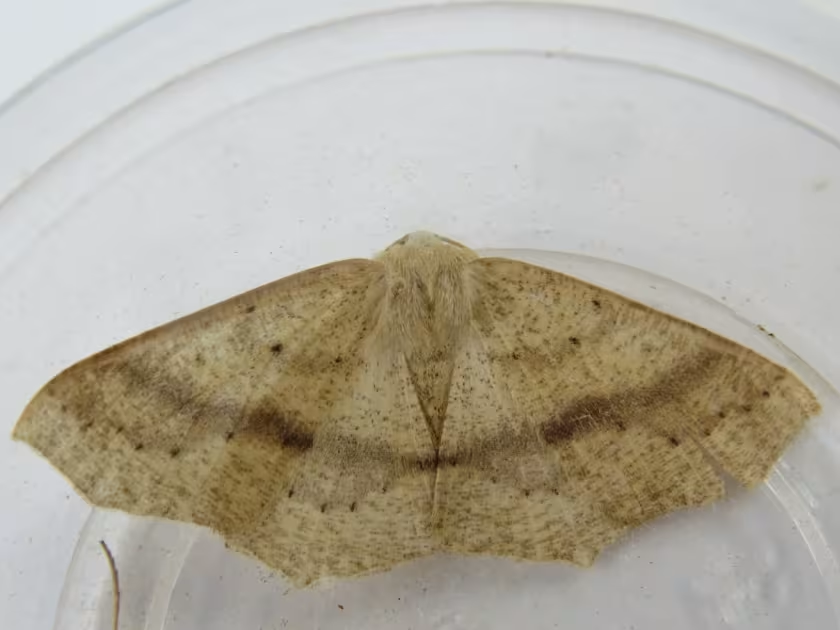
The Avocado Looper (Sabulodes aegrotata) is a moth belonging to the Geometridae family. Adult moths feature a wingspan of about 5 cm and are typically tan or light brown with distinct dark markings across their wings, providing effective camouflage.
The larvae are known as loopers due to their unique method of movement, where they arch their middle section to bring their hind legs closer to their front legs. This movement pattern makes them highly efficient at navigating tree branches.
The life cycle encompasses four stages: egg, larva (caterpillar), pupa, and adult. Females typically deposit small clusters of eggs on the undersides of leaves, which serves as a protected environment for the developing larvae.
The duration of the life cycle is heavily influenced by regional temperatures. In warm climates, the Avocado Looper can produce multiple generations per year, leading to overlapping populations that require ongoing monitoring.
Pupation usually occurs within a shelter created by the larva, often involving rolled-up leaves secured with silk webbing. This stage is relatively vulnerable, yet the silken enclosure provides a degree of protection against external threats.
What it damages
Although named after the avocado, the Avocado Looper is a polyphagous pest. It feeds on various plant species, including ornamental shrubs like roses, as well as eucalyptus and occasionally citrus crops.
Larval feeding typically starts at the leaf margins and progresses inward. In high-density infestations, loopers can cause severe defoliation, leaving behind only the veins of the leaves, which significantly impacts the plant's health.
Defoliation reduces the plant's photosynthetic capacity, which is critical for tree vigor and fruit production. Severely stressed trees may exhibit lower fruit set and diminished fruit quality, leading to economic losses.
Beyond foliage, larvae may graze on developing avocado fruit, leaving unsightly scars or feeding pits that lower the market value of the harvest and create entry points for secondary pathogens.
Young nursery stock is particularly susceptible to damage. An infestation at this stage can stunt growth and, in extreme cases, lead to the death of the sapling, causing significant operational challenges.
Signs of infestation
The most immediate sign of an Avocado Looper infestation is the presence of irregular, ragged leaf edges. Inspecting the canopy for these signs is essential for early detection before damage becomes widespread.
Webbing found between leaves is a clear indicator of looper activity. Caterpillars construct these silken nests to reside in during the day, emerging at night or during twilight to feed on the surrounding foliage.
Frass, which appears as small, dark, granular droppings on the surfaces of lower leaves, is a reliable diagnostic sign. Detecting frass accumulation suggests an active population of larvae feeding in the upper canopy.
Significant leaf drop during the peak growing season often follows an infestation. If leaves are falling prematurely and show signs of physical grazing, it is likely that loopers are the cause of the foliage loss.
While the larvae are cryptic, careful observation of the outer canopy during active hours can reveal their presence. Shaking branches over a white sheet is a common method for scouting these pests in orchard management.
Control measures
Effective management requires a combination of cultural and biological strategies. Constant field monitoring is the cornerstone of a successful Integrated Pest Management (IPM) program for this species.
Biological control agents, specifically products based on Bacillus thuringiensis, are highly effective against young larvae. These treatments are preferred as they do not harm beneficial predator insects in the orchard.
Chemical intervention should be reserved for threshold-based cases where population counts exceed acceptable limits. It is vital to rotate active ingredients to prevent the development of resistance in the pest population.
Preserving natural predators, such as tachinid flies and various parasitic wasps, can provide a steady level of suppression. Maintaining a diverse orchard environment helps keep pest populations under natural control.
- Regular pruning to increase airflow and sunlight penetration.
- Sanitation by removing severely infested clippings.
- Using pheromone traps for monitoring moth activity.
- Promoting tree health through proper irrigation and nutrition to build resilience.
Taxonomy
- Latin name
- Sabulodes aegrotata
- Order
- Lepidoptera (butterflies)
- Family
- Geometridae
- EPPO code
- SABUAE
Discussion
No discussions yet — be the first.