
African meadow katydid
Ruspolia baileyi
Description
How to identify
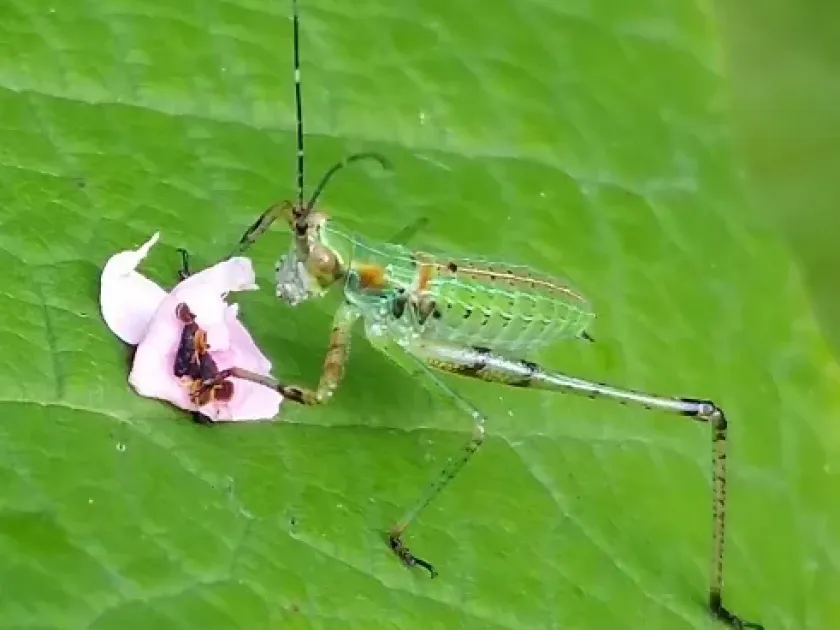
The African meadow katydid (Ruspolia baileyi) belongs to the order Orthoptera and the family Tettigoniidae. This insect has an elongated body, typically green, yellow, or brownish in color, which provides excellent camouflage among plant stems.
Adults are characterized by well-developed wings that extend well beyond the abdomen and long, thread-like antennae. The head of the katydid is conical, which is a diagnostic feature of the Ruspolia genus.
Unlike locusts, these insects are primarily nocturnal, making them difficult to spot during daylight inspections. Their presence is often revealed by the characteristic chirping sound produced by males at night.
Nymphs resemble smaller versions of the adults but lack fully developed wings. They go through several growth stages (instars) and molts, gradually increasing in size and developing flight organs as they mature.
This species is highly adaptable and commonly found in tropical and subtropical regions, allowing it to thrive and spread rapidly in various agricultural ecosystems.
What it damages
The African meadow katydid poses a significant threat to a wide range of crops, particularly cereal grains. Maize, pearl millet, and sorghum are among the most frequently attacked, with insects causing damage to both vegetative and reproductive parts.
Adults and nymphs feed on plant leaves, creating irregular holes and ragged edges. High population densities can lead to substantial defoliation, severely reducing the plant's photosynthetic capacity.
The most critical damage occurs during the flowering and grain-filling stages. Katydids feed on inflorescences and developing seeds, resulting in lower yields and degraded grain quality.
Wounds caused by feeding often serve as entry points for secondary pathogens, such as fungi and bacteria. This exacerbates the damage, leading to rot and further reducing the harvest.
In many agricultural areas, this pest is considered a major limiting factor for cereal production, significantly impacting the economic return for farmers.
When it appears
The activity of Ruspolia baileyi is closely linked to the onset of the rainy season, which triggers the hatching of nymphs from eggs laid in the soil or plant tissues. Peak populations usually coincide with the active growth phase of crops.
The life cycle from egg to adult takes a specific amount of time, influenced heavily by ambient temperature and humidity levels, which dictate the speed of development through each instar.
Several generations can occur within a single growing season if conditions remain favorable. This extended presence means that the pest can cause damage throughout almost the entire crop growth cycle.
Migration activity often increases during droughts or excessive rainfall, as the insects move in search of more suitable food sources, leading to sudden infestations in previously unaffected fields.
Adults are most active at night; this is when they feed most intensively and disperse to new areas of the field to colonize crops.
Signs of infestation
The primary symptom of an infestation is physical damage to leaves, characterized by ragged feeding marks and irregular holes. These traces are often coarser than those left by lepidopteran larvae.
Field inspections at night using flashlights are the most reliable method for detecting the pest. The presence of numerous individuals on stems and leaves confirms an active infestation.
The sound of male chirping is an auditory indicator of their presence. A high volume of chirping usually correlates with a higher population density within the field.
Damage to reproductive organs, such as ears or tassels, becomes visible during close inspection: missing kernels, gnawed flower scales, and the presence of frass (excrement) on the plant parts.
Mass outbreaks can lead to premature wilting or drying of plant parts, caused by the destruction of structural tissues and disruption of the plant's vascular system.
Control measures
Integrated pest management includes cultural practices such as crop rotation and thorough soil tillage after harvest, which help to destroy eggs buried in the ground.
The application of contact-stomach insecticides is effective when population thresholds are exceeded. Applications should be performed in the evening when the insects are most active and exposed.
Monitoring populations with light traps is a valuable tool, as Ruspolia baileyi is strongly attracted to light. This allows for both population tracking and reduction of adult numbers.
Biological control measures, including the use of entomopathogenic fungi or encouraging natural predators like birds and beneficial insects, can contribute to a sustainable management strategy.
Regular monitoring of field borders is essential to identify early infestation foci, allowing for targeted treatment and preventing the pest from spreading throughout the entire crop area.
Taxonomy
- Latin name
- Ruspolia baileyi
- Order
- Orthoptera (locusts)
- Family
- Conocephalidae
- EPPO code
- RUSPBA
Discussion
No discussions yet — be the first.