
Chinese conehead
Conocephalus chinensis
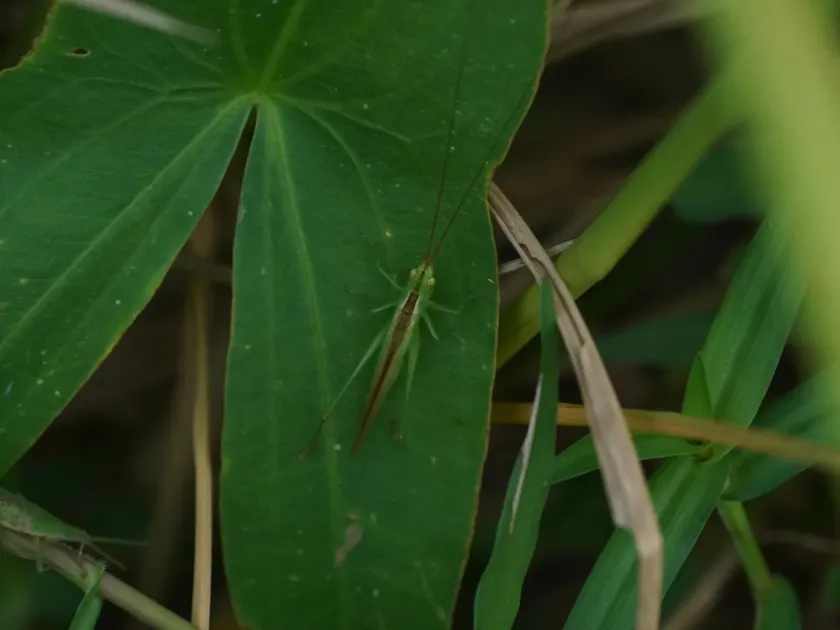
Description
How to identify
The Chinese conehead (Conocephalus chinensis) is a species of insect belonging to the family Tettigoniidae, commonly known as bush crickets. It is easily recognized by its distinctively elongated, cone-shaped head, which distinguishes it from other common grasshoppers.
Adults typically exhibit a vibrant green or yellowish-brown coloration, providing excellent camouflage among cereal leaves and stems. Their bodies generally measure between 15 and 20 millimeters in length, and they possess well-developed wings suitable for movement between host plants.
Females lay their eggs inside plant tissues, often tucked beneath leaf sheaths, which protects the offspring during the developmental phase. Nymphs hatch and go through several molting stages, gradually resembling the adult form.
These insects prefer humid environments and are frequently found in irrigated fields or near wetlands. While primarily active during the day, they are most conspicuous during their mating season, when males produce distinct chirping sounds.
Proper identification of this species is essential for effective monitoring programs. Entomologists focus on the structure of the ovipositor in females and the specific acoustic patterns produced by males to differentiate this species from relatives.
What it damages
The Chinese conehead is known to cause significant damage to various cereal crops, with rice being the primary target of concern. Both nymphs and adults consume plant tissues, negatively impacting the development and yield of the crop.
Damage to rice plants is most severe during the grain-filling stage. The insects feed on the internal contents of developing seeds, which leads to the formation of empty or "white" panicles, substantially reducing the final harvest weight.
In addition to rice, the conehead feeds on other grasses such as millet and sorghum, as well as various weed species. These wild grasses serve as reservoir hosts, enabling the insect population to persist and spread to cultivated areas.
Feeding on leaves disrupts photosynthesis, weakening the plants and making them more susceptible to secondary pathogens. Large populations can cause significant physiological stress to the plants, potentially leading to widespread crop failure if not managed.
With their robust chewing mouthparts, these insects can rapidly damage large sections of a field. The cumulative loss caused by feeding across a full season requires vigilant scouting and proactive management strategies from producers.
When it appears
The life cycle of the Chinese conehead is closely tied to the regional climate and the phenology of the host crops. They typically overwinter in the egg stage, buried within the soil or plant debris found in the field.
Nymphs emerge in the spring as temperatures rise, usually beginning their life cycle on weed hosts before migrating to nearby cereal crops. The timing of this emergence is critical for planning preventative measures.
The peak of damage and insect activity is observed during the mid-to-late summer months, coinciding with the maturation phase of rice panicles. In warmer regions, the species may produce multiple generations within a single year.
As the season progresses toward autumn, the population density begins to decline due to environmental factors. Surviving females lay eggs for the following year, completing the seasonal cycle of the pest.
Monitoring efforts should be intensified after periods of warm, wet weather, as these conditions favor rapid population growth. Understanding these seasonal trends helps in timing field inspections and potential intervention strategies.
Signs of infestation
The presence of Chinese coneheads can be detected by examining the leaves for characteristic jagged or uneven bite marks. A close inspection of the field, especially near the panicles, often reveals the presence of the insects themselves.
One of the most reliable indicators of infestation is the presence of "whiteheads" in rice panicles. If a panicle appears to have empty, damaged grains upon inspection, it is a sign that the pest has been feeding during the grain-filling stage.
Fecal matter or frass left on leaves is another sign of active feeding. In some cases, localized chlorosis or premature wilting can be observed at the points of damage, indicating a compromised vascular system in the plant.
The sound of male crickets chirping in the evening is a strong auditory clue to high pest density. This behavioral signal should prompt a closer look at the field to determine the need for control measures.
Field scouting using sweep nets is a standard diagnostic practice. This allows agronomists to quantify the population density per square meter and compare it against economic threshold levels for management decisions.
Control measures
Managing the Chinese conehead requires an integrated approach that prioritizes cultural practices to keep population levels low. Removing weeds and cleaning up field edges are vital steps in limiting the insect's habitat.
Deep plowing following the harvest helps destroy the overwintering eggs in the soil, effectively reducing the carry-over population for the next season. Implementing sound crop rotation practices is also highly recommended.
Chemical control should only be implemented when the population exceeds the economic injury level. When necessary, insecticides should be selected based on local guidelines, with careful attention to application timing and environmental safety.
Biological control, including the protection and encouragement of natural enemies such as insectivorous birds and predatory insects, can help maintain balance in the agroecosystem. Maintaining hedgerows or ecological strips helps support these natural defenders.
Regular monitoring remains the most important component of an effective management strategy. Early detection allows for more targeted and less frequent use of chemical treatments, promoting sustainable agricultural practices.
Taxonomy
- Latin name
- Conocephalus chinensis
- Order
- Orthoptera (locusts)
- Family
- Conocephalidae
- EPPO code
- CONCCH
Discussion
No discussions yet — be the first.